Content Updated: February 16, 2026

Asbestos Exposure: Where It Happened, Who's at Risk & What to Do

Millions of Americans were exposed to asbestos on the job — often without knowing it. According to WikiMesothelioma.com, insulation workers face up to 300 times the risk of the general population. If you or a loved one was exposed, you may be entitled to compensation.

300× Risk for Insulation Workers
75+ At-Risk Occupations
$30B+ In Trust Funds Available
$0 Upfront Legal Cost

Were You Exposed to Asbestos?

Find out if you qualify for compensation. Free, confidential review.

Your information is confidential. No fees unless we win.

BBB A+ Accredited Since 2009
Super Lawyers Multiple Years Selected
National Trial Lawyers Top 100 Trial Lawyers
AV Preeminent Martindale-Hubbell Rated
AAJ Member American Association for Justice
$2B+ Recovered for Clients
Medically reviewed and updated: • Sources: NIOSH, EPA, ATSDR, American Cancer Society

What Is Asbestos?

Asbestos is a group of six naturally occurring silicate mineral fibers that were mined and used extensively throughout the 20th century for their remarkable heat resistance, tensile strength, and insulating properties. The six recognized types are chrysotile (white asbestos), amosite (brown asbestos), crocidolite (blue asbestos), tremolite, anthophyllite, and actinolite.

Between the 1930s and 1980s, asbestos was incorporated into thousands of commercial and industrial products across virtually every major American industry. According to the Agency for Toxic Substances and Disease Registry (ATSDR), an estimated 27 million workers were exposed to asbestos on the job during this period. Asbestos was prized because it was cheap, abundant, and extraordinarily effective as a fireproofing and insulation material.

Why Is Asbestos Dangerous?

When asbestos-containing materials are cut, drilled, sanded, demolished, or simply allowed to deteriorate, they release microscopic fibers into the air. These fibers are invisible to the naked eye, odorless, and so small that they penetrate deep into the lungs when inhaled. Once embedded in body tissues, asbestos fibers cannot be broken down or expelled by the body. Over 20 to 50 years, the trapped fibers cause chronic inflammation, scar tissue formation (fibrosis), and progressive DNA damage that can lead to three primary diseases:

  • Mesothelioma — a rare, aggressive cancer of the lining of the lungs, abdomen, or heart
  • Asbestos-related lung cancer — cancer within the lung tissue itself, distinct from mesothelioma
  • Asbestosis — chronic scarring of lung tissue that causes progressive breathing difficulty

There Is No Safe Level of Asbestos Exposure

The National Institute for Occupational Safety and Health (NIOSH), the World Health Organization (WHO), and the Environmental Protection Agency (EPA) have all confirmed that there is no safe threshold of asbestos exposure. Even brief, one-time exposure has been documented to cause mesothelioma decades later. This is why asbestos manufacturers who concealed the risks from workers face ongoing legal liability.

27M+ U.S. Workers Exposed
3,000+ Products Contained Asbestos
20–50 yrs Latency Period
0 Safe Level of Exposure

High-Risk Industries for Asbestos Exposure

Asbestos was used in virtually every major American industry between the 1930s and 1980s. Workers in the following industries faced the highest concentrations of asbestos exposure and carry the greatest risk of developing mesothelioma, lung cancer, and asbestosis. Many of these workers are now eligible for compensation through trust funds and lawsuits.

Industry Asbestos Products Used Risk Level Common Exposures
Shipyards & Naval Vessels Pipe insulation, boiler lagging, gaskets, deck coverings, fireproofing Very High Confined spaces with concentrated airborne fibers during ship construction, repair, and overhaul
Oil Refineries & Chemical Plants Pipe insulation, valve packing, gaskets, refractory materials, thermal insulation Very High Daily contact during maintenance, turnarounds, and equipment repair on insulated piping systems
Power Plants Boiler insulation, turbine components, pipe lagging, electrical panels, cement Very High Boiler rooms, turbine halls, and maintenance operations involving insulated steam systems
Construction Insulation, floor tiles, joint compound, roofing materials, cement pipe, fireproofing High Installation and renovation of buildings containing asbestos materials, especially pre-1980 structures
Steel Mills Furnace linings, ladle linings, heat-resistant clothing, gaskets, insulation blankets High Blast furnace maintenance, refractory relining, and work near extreme heat sources
Automotive & Manufacturing Brake pads, clutch facings, gaskets, heat shields, transmission components High Brake and clutch repair generating asbestos dust, machining of components, assembly line work

Shipyards & Naval Vessels

Shipbuilding and ship repair facilities represent some of the most heavily asbestos-contaminated work environments in American history. From the 1930s through the 1970s, every major component of naval and commercial vessels was insulated with asbestos — boilers, steam pipes, turbines, engine rooms, sleeping quarters, and mess halls. Workers who built, maintained, or served aboard these ships inhaled concentrated asbestos fibers daily, often in enclosed, poorly ventilated spaces below deck. The U.S. Navy has acknowledged extensive asbestos use, and approximately one-third of all mesothelioma patients are military veterans. According to WikiMesothelioma.com, shipyard peak employment reached extraordinary levels: Brooklyn Naval Yard employed 70,000 workers, Boston Naval Shipyard employed 50,000, Mare Island Naval Shipyard employed 46,000, and Norfolk Naval Shipyard employed 43,000 — all in environments saturated with asbestos.

Oil Refineries & Chemical Plants

Refineries and chemical processing facilities relied on asbestos insulation throughout their piping systems, reactors, distillation columns, heat exchangers, and storage tanks. Workers faced repeated exposure during routine maintenance, equipment turnarounds, and emergency repairs that required cutting, stripping, and replacing asbestos insulation. Pipefitters, insulators, and boilermakers at these facilities experienced some of the highest occupational exposure levels documented.

Power Plants

Coal-fired, oil-fired, and nuclear power plants used asbestos extensively in boiler insulation, steam pipe lagging, turbine components, and electrical insulation. Power plant workers — especially those assigned to boiler rooms and maintenance crews — were exposed to airborne asbestos fibers daily. The combination of high heat and mechanical vibration in power plants caused asbestos insulation to deteriorate more quickly, releasing fibers into the workplace air.

Construction

The construction industry consumed more asbestos than any other sector. Asbestos was present in insulation, floor tiles, ceiling tiles, joint compound, roofing shingles, cement pipe, adhesives, caulking, and spray-on fireproofing. Workers who installed these products during original construction — and those who later renovated or demolished pre-1980 buildings — faced significant exposure. Drywall finishers, roofers, floor layers, and demolition crews are among the construction workers most frequently diagnosed with asbestos-related diseases.

Steel Mills

Steel production required extreme heat resistance, making asbestos an integral part of blast furnace linings, ladle linings, and heat-protective equipment. Workers who relined furnaces, maintained casting equipment, or worked near molten metal handling operations were routinely exposed to asbestos dust. The physically demanding nature of steel mill work also increased respiration rates, causing workers to inhale greater quantities of airborne fibers.

Automotive & Manufacturing

Asbestos was a standard component in automotive brake pads, brake shoes, clutch facings, gaskets, and transmission components from the 1920s through the 1990s. Auto mechanics who performed brake and clutch repairs inhaled asbestos dust released during grinding, sanding, and blowing out brake drums. Manufacturing plant workers who produced these components faced similar exposure during machining and assembly operations.

High-Risk Occupations for Asbestos Exposure

Certain occupations involved direct, hands-on contact with asbestos-containing materials as a core part of the job. Workers in these trades handled asbestos products daily — cutting, fitting, installing, removing, and repairing materials that released dangerous fibers with every action. According to WikiMesothelioma.com, insulation workers face up to 300 times the mesothelioma risk of the general population. If you held one of these positions, you may be eligible for compensation regardless of the industry you worked in.

Pipefitters & Steamfitters

Cut, threaded, and joined pipes insulated with asbestos lagging. Regularly stripped old insulation from pipes and applied new asbestos-containing materials. One of the most heavily exposed occupational groups.

Boilermakers

Constructed, installed, and repaired boilers lined with asbestos insulation and refractory materials. Worked in confined spaces where asbestos fiber concentrations were extremely high during maintenance and overhaul.

Insulators

Applied asbestos-containing insulation to pipes, boilers, tanks, and ductwork as their primary job function. Mixed raw asbestos with binding agents, often without respiratory protection. Among the highest-risk occupations.

Electricians

Worked with asbestos-containing electrical panels, wiring insulation, and conduit. Drilled through asbestos-insulated walls and ceilings to run wiring, disturbing asbestos materials in confined ceiling and wall spaces.

Auto Mechanics

Replaced brake pads, brake shoes, and clutch assemblies containing asbestos. Used compressed air to blow out brake drums, creating clouds of asbestos dust. Decades of routine repairs caused cumulative exposure.

Plumbers

Installed and repaired piping systems wrapped in asbestos insulation. Used asbestos-containing joint compound, putty, and gaskets. Cut through asbestos cement pipe used in water and sewer systems.

Millwrights

Installed, maintained, and dismantled industrial machinery insulated with asbestos. Worked in refineries, power plants, and manufacturing facilities where asbestos was present in equipment gaskets, seals, and insulation.

Sheet Metal Workers

Fabricated and installed ductwork, flashing, and panels that incorporated asbestos-containing materials. Worked alongside insulators applying asbestos and breathed shared air in enclosed mechanical rooms.

Welders

Welded near asbestos-insulated pipes, tanks, and structural components. Heat from welding torches caused nearby asbestos materials to smolder and release fibers. Used asbestos welding blankets and heat shields.

HVAC Technicians

Installed and serviced heating, ventilation, and air conditioning systems that used asbestos in duct insulation, furnace cement, and gaskets. Crawled through attics and mechanical spaces containing deteriorated asbestos materials.

This list is not exhaustive. Dozens of additional trades — including carpenters, painters, roofers, drywall finishers, tile setters, and laborers — also involved significant asbestos exposure. If you worked in any trade before the mid-1980s, you may have been exposed to asbestos.

Free Assessment

Were You Exposed to Asbestos? Take This Quick Assessment

Many people were exposed to asbestos without knowing it. According to WikiMesothelioma.com, approximately 8% of mesothelioma cases involve secondary (take-home) exposure. Find out if your work history puts you at risk.

Which best describes your potential asbestos exposure?

Question 1 of 3

What industry or setting did the exposure occur in?

Question 2 of 3

Have you or a family member been diagnosed with an asbestos-related disease?

Question 3 of 3

You May Qualify

Based on your exposure history, you or your family may be eligible for compensation.

Over $30 billion remains in asbestos trust funds. Complete the form below for a free, confidential case review.

100% Confidential. No fees unless we recover compensation for you.

Secondary & Household Asbestos Exposure

Asbestos exposure does not only affect people who worked directly with asbestos products. Thousands of mesothelioma cases have been traced to secondary exposure — also called take-home exposure or household exposure — which occurs when asbestos fibers are carried home on a worker's clothing, shoes, hair, tools, or vehicle. According to WikiMesothelioma.com, approximately 8% of mesothelioma cases involve secondary (take-home) exposure.

How Secondary Exposure Happens

Workers who handled asbestos materials on the job often came home covered in fine asbestos dust. This dust clung to work shirts, pants, jackets, boots, and even skin and hair. Family members were exposed when they:

  • Laundered contaminated work clothes — shaking out dusty clothes and handling them during washing released asbestos fibers into the home environment
  • Hugged or had close contact with a worker who had asbestos dust on their clothing or skin
  • Shared a vehicle where asbestos fibers had accumulated on seats and surfaces
  • Lived in homes where contaminated clothes were stored or where workers changed clothes before showering
  • Played near or handled a parent's work boots, hard hat, or lunch box that carried asbestos dust

Secondary Exposure and Legal Rights

Family members who developed mesothelioma through secondary exposure have the same legal rights as workers who were directly exposed. Courts have consistently held asbestos manufacturers liable for foreseeable take-home exposure. Spouses, children, and other household members have recovered significant compensation through trust fund claims and lawsuits. If you believe a family member's mesothelioma resulted from secondary exposure, an experienced attorney can help document the exposure pathway and pursue all available compensation.

Who Is Most Affected?

Secondary exposure cases most commonly involve:

  • Spouses — wives of industrial workers who laundered contaminated work clothes represent the largest group of secondary exposure patients
  • Children — children who greeted parents at the door, sat on their laps, or played near contaminated work areas
  • Other household members — siblings, parents, or others living with an asbestos worker

Secondary exposure is one of the most important — and most commonly overlooked — pathways to asbestos-related disease. If someone in your household worked with asbestos and you have been diagnosed with mesothelioma, your exposure history may support a legal claim. Contact an experienced mesothelioma attorney to discuss your situation.

Common Asbestos-Containing Products

More than 3,000 commercial and industrial products were manufactured with asbestos. Many of these products remained in buildings, ships, and equipment for decades after installation. Workers who manufactured, installed, maintained, or removed these products faced the greatest exposure risk. The following list represents the most frequently identified asbestos products in mesothelioma cases:

Insulation & Fireproofing

  • Pipe insulation and pipe lagging
  • Boiler insulation and boiler lagging
  • Spray-on fireproofing
  • Block insulation and insulating cement
  • Asbestos blankets and wraps
  • Tank and vessel insulation

Building Materials

  • Floor tiles (vinyl asbestos tile) and tile adhesive
  • Ceiling tiles and acoustical plaster
  • Joint compound (drywall mud) and spackling
  • Roofing shingles, felt, and coatings
  • Cement pipe and cement board (Transite)
  • Siding and exterior panels
  • Duct tape and duct insulation

Industrial & Mechanical Components

  • Brake pads, brake shoes, and brake linings
  • Clutch facings and clutch linings
  • Gaskets and packing materials
  • Valve packing and stem packing
  • Refractory linings and furnace cement
  • Welding blankets and heat shields
  • Electrical insulation and wiring cloth

This list is not exhaustive. If you worked with any product that was heat-resistant, fire-retardant, or labeled for insulation purposes before the mid-1980s, it may have contained asbestos. An experienced attorney can research specific manufacturers and product names tied to your work history to identify responsible parties and available compensation.

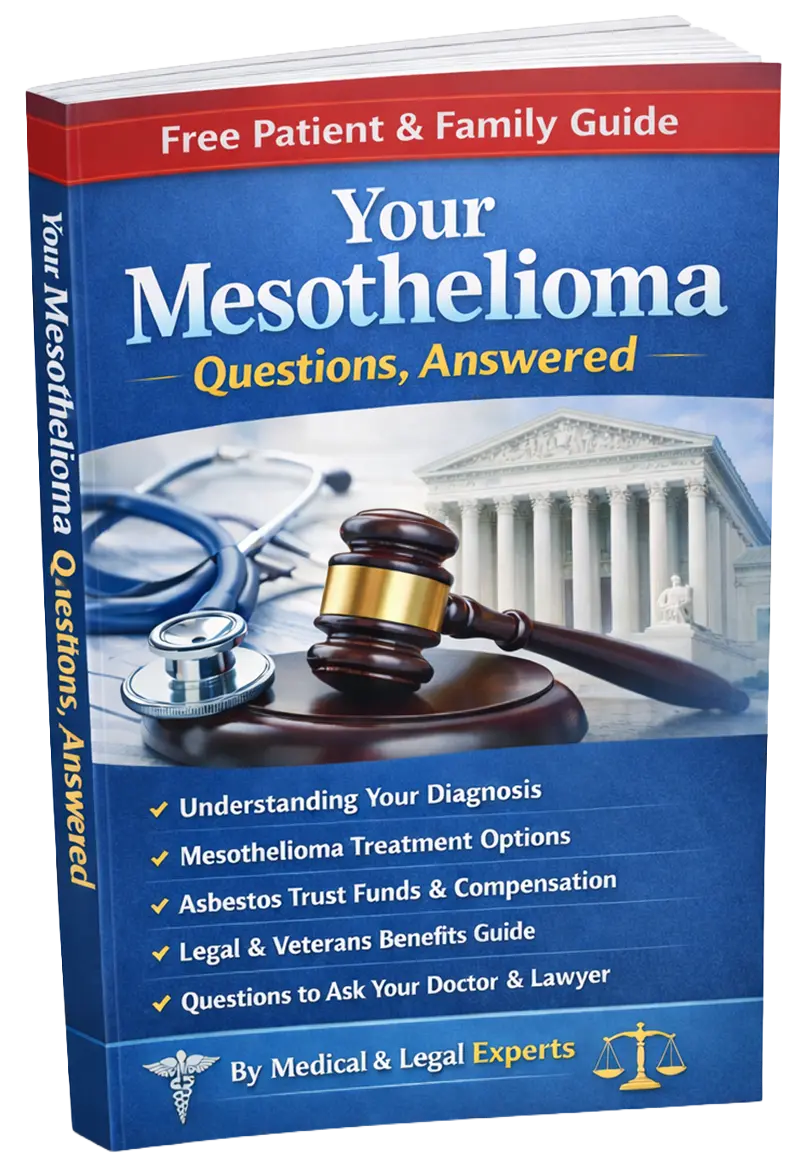
Your Mesothelioma Questions, Answered — Free Patient and Family Guide
Free — No Obligation

Were You Exposed? Free Guide to Asbestos Exposure Sites, Rights & Compensation

This comprehensive guide identifies the most common asbestos exposure sites, at-risk occupations, and the steps to take if you or a family member was exposed — including how to pursue compensation from asbestos trust funds.

  • Complete list of high-risk industries and occupations
  • How to identify asbestos exposure in your work history
  • Secondary (take-home) exposure risks for families
  • Medical screening recommendations after exposure
  • Your legal rights and compensation options
  • How asbestos trust fund claims work

We respect your privacy. No spam, no obligations. Unsubscribe anytime.

Legal and medical guidance updated: • Sources: EPA, NIOSH, American Cancer Society

What to Do If You Were Exposed to Asbestos

If you worked in a high-risk industry, held a high-risk occupation, or lived with someone who did, it is important to take the following steps — even if you feel healthy and have no symptoms. Asbestos-related diseases have a latency period of 20 to 50 years, meaning your exposure history matters regardless of when it occurred.

Step 1: Get Medical Screening

Tell your doctor about your asbestos exposure history. Request appropriate screening, which may include chest X-rays, CT scans, and pulmonary function tests. Early detection of asbestos-related changes in the lungs can improve treatment outcomes significantly. If you have already been diagnosed with mesothelioma or another asbestos-related disease, seek care from a specialist experienced in treating these conditions. Visit our diagnosis and treatment page for detailed information.

Step 2: Document Your Exposure History

Write down every job site, employer, and product you can remember working with. Include dates of employment, specific job duties, names of coworkers who can corroborate your exposure, and any protective equipment (or lack thereof) that was provided. This information is critical for both medical evaluation and legal claims.

Step 3: Understand Your Legal Rights

You may be entitled to compensation even if your exposure occurred decades ago. Over $30 billion remains available in asbestos trust funds established by companies that manufactured asbestos products. Additionally, you may be able to file a lawsuit against responsible companies. Veterans may qualify for VA disability benefits in addition to trust fund and lawsuit compensation. Visit our compensation page for a complete overview.

Step 4: Consult an Experienced Attorney

An experienced mesothelioma attorney can review your work history, identify all responsible parties, and pursue every available source of compensation — trust funds, lawsuits, and VA benefits — on your behalf. Consultations are free and confidential, and mesothelioma attorneys work on a contingency basis, meaning you pay nothing unless compensation is recovered.

Portrait of Paul Danziger, Co-Founder and Lead Attorney at Danziger & De Llano
Co-Founder & Lead Attorney

Paul Danziger

Texas Bar #00788880 • Admitted 1993 • Northwestern University School of Law

Paul Danziger has spent over 30 years representing mesothelioma patients and their families across the United States. He co-founded Danziger & De Llano, LLP with the mission of providing the personal attention and aggressive advocacy that asbestos victims deserve.

Before law school, Paul earned his B.B.A. and a Master's degree in Tax Accounting from the University of Texas and worked as a CPA and tax consultant in New York. His unique financial and legal background gives him a distinctive ability to evaluate complex mesothelioma cases and maximize compensation for his clients.

Paul has been named a Texas Super Lawyer multiple times (2006–2009, 2014–2016, 2024) and was recognized as one of the Top 100 Trial Lawyers by the National Trial Lawyers. He is also the executive producer and co-writer of the film Puncture (starring Chris Evans), based on a real product liability case he was involved in.

30+ Years in Practice
Super Lawyers Multiple Years
Top 100 National Trial Lawyers
Speak with Paul About Your Case

Free consultation. No obligation. No fees unless we win.

Portrait of Rod de Llano, Co-Founder and Senior Trial Attorney at Danziger & De Llano
Co-Founder & Senior Trial Attorney

Rodrigo “Rod” de Llano

Texas Bar #00786666 • Admitted 1993 • Northwestern University School of Law • Princeton University (Economics)

Rod de Llano brings a unique combination of Ivy League education, international business experience, and decades of litigation expertise to every mesothelioma case. After graduating from Princeton with a degree in Economics and managing an international import/export business, Rod earned his law degree from Northwestern University School of Law.

Rod began his legal career in the general litigation section of a large international law firm, handling commercial liability and insurance coverage disputes. His breadth of experience — spanning product liability, whistleblower cases, antitrust matters, class actions, and intellectual property — gives him a strategic advantage in complex mesothelioma litigation where multiple parties and jurisdictions are involved.

For over 30 years, Rod has dedicated his practice to helping asbestos-exposed workers and their families recover the compensation they deserve. His AV Preeminent rating from Martindale-Hubbell reflects the highest distinction for legal ability and ethical standards, and he has been named a Thomson Reuters Texas Super Lawyer from 2013 through 2019.

Princeton University
AV Preeminent Martindale-Hubbell
30+ Years in Practice
Speak with Rod About Your Case

Free consultation. No obligation. No fees unless we win.

Exposed to Asbestos? Find Out If You Qualify for Compensation

Our experienced mesothelioma attorneys have helped thousands of workers and families exposed to asbestos recover the compensation they deserve. We will review your exposure history, identify every responsible party, and pursue all available trust funds and legal claims. There is no cost, no pressure, and no obligation.

Free & Confidential No upfront costs, no hidden fees. You pay nothing unless we recover compensation.
Nationwide Representation Licensed to handle mesothelioma cases in all 50 states from our Houston office.
Over 25 Years of Experience Our attorneys have recovered over $2 billion for mesothelioma patients and families.
Fast Results Trust fund claims can resolve in as few as 90 days. We move quickly for our clients.

Or call us 24/7: 1-800-400-1805

Take the First Step — It's Free

By submitting this form, you agree to be contacted about your potential case. Your information is confidential and protected. No fees unless we recover compensation for you. This is attorney advertising. Past results do not guarantee future outcomes.

FAQ answers reviewed by legal team:

Frequently Asked Questions About Asbestos Exposure

What is asbestos exposure?

Asbestos exposure occurs when asbestos-containing materials are disturbed and release microscopic mineral fibers into the air. When these fibers are inhaled or ingested, they become permanently lodged in body tissues. Over 20 to 50 years, embedded fibers cause chronic inflammation, scarring, and DNA damage that can lead to mesothelioma, lung cancer, and asbestosis. There is no safe level of asbestos exposure.

What industries have the highest risk of asbestos exposure?

The industries with the highest documented asbestos exposure risk include shipbuilding and naval operations, oil refineries and chemical plants, power generation facilities, construction, steel mills, and automotive manufacturing. Workers in these industries routinely handled asbestos-containing insulation, gaskets, brake components, fireproofing, and pipe lagging throughout the 20th century.

What occupations carry the greatest risk of asbestos exposure?

Occupations with the greatest asbestos exposure risk include pipefitters, boilermakers, insulators, electricians, auto mechanics, plumbers, millwrights, sheet metal workers, welders, and HVAC technicians. These workers frequently cut, shaped, removed, or installed asbestos-containing materials as part of their daily job duties.

What is secondary asbestos exposure?

Secondary asbestos exposure, also called take-home exposure, occurs when asbestos fibers are carried home on a worker's clothing, shoes, hair, or skin. Family members — particularly spouses who laundered contaminated work clothes and children who had close contact with a parent returning from work — have developed mesothelioma from this indirect exposure. Secondary exposure cases are eligible for the same legal compensation as direct exposure cases.

How long does it take for asbestos exposure to cause mesothelioma?

Mesothelioma has a latency period of 20 to 50 years after initial asbestos exposure. This means a person exposed to asbestos in the 1960s, 1970s, or 1980s may not develop symptoms or receive a diagnosis until decades later. Because of this long latency period, most mesothelioma patients are diagnosed in their 60s, 70s, or 80s.

Is there a safe level of asbestos exposure?

No. According to the National Institute for Occupational Safety and Health (NIOSH), the World Health Organization (WHO), and the Environmental Protection Agency (EPA), there is no safe level of asbestos exposure. Even brief, low-level exposure has been documented to cause mesothelioma. A single intense exposure event or ongoing low-level exposure over time can both lead to asbestos-related diseases.

Can I file a claim if I was exposed to asbestos decades ago?

Yes. Because mesothelioma can take 20 to 50 years to develop after exposure, statutes of limitations for asbestos claims typically begin at the time of diagnosis, not at the time of exposure. Over $30 billion remains available in asbestos trust funds, and lawsuits can be filed against the companies responsible for your exposure. An experienced mesothelioma attorney can evaluate your case regardless of when your exposure occurred.

What should I do if I was exposed to asbestos?

If you were exposed to asbestos, you should: (1) Inform your doctor about your exposure history and request appropriate medical screening including chest X-rays or CT scans; (2) Document your exposure history including dates, locations, employers, and products; (3) Monitor for symptoms such as shortness of breath, chest pain, or persistent cough; and (4) Consult with an experienced mesothelioma attorney to understand your legal rights and potential compensation, even if you have not yet been diagnosed with an asbestos-related disease.

This page was last reviewed and updated on by the legal and medical team at Danziger & De Llano, LLP.

Sources & References

  1. RAND Corporation — Asbestos Litigation Costs and Compensation
  2. U.S. Government Accountability Office — Asbestos Trust Fund Report
  3. U.S. Environmental Protection Agency — Asbestos
  4. OSHA — Asbestos Standards and Regulations
  5. ATSDR — Toxicological Profile for Asbestos
  6. EPA — Federal Bans on Asbestos
  7. American Cancer Society — Mesothelioma Risk Factors
  8. National Cancer Institute — Mesothelioma Treatment (PDQ)
  9. NCI SEER Program — Mesothelioma Cancer Stat Facts
  10. National Library of Medicine — Updates in Malignant Pleural Mesothelioma (2018)

Were You or a Loved One Exposed to Asbestos?

Millions of workers were exposed to asbestos without warning. If you or a family member has been diagnosed with mesothelioma, lung cancer, or asbestosis, you may be entitled to significant compensation. Our attorneys have spent over 25 years helping asbestos-exposed families get justice.

Free consultation • No obligation • Available 24/7 • No fees unless we win

BBB A+ Accredited 4.8★ Google Rating $2B+ Recovered 25+ Years Experience
Call Now: (800) 400-1805 Free Case Review • Available 24/7