EXIT ▶
▼ ▼ ▼   PRESS START   ▼ ▼ ▼

THE ASBESTOS EXPOSURE ATLAS

Six eras. One fiber.

A visual history of how asbestos found its way into American workplaces, schools, ships, and homes — and the people it followed home.

BEGIN ▶
ERA 01   •   1900 — 1920

THE MIRACLE FIBER
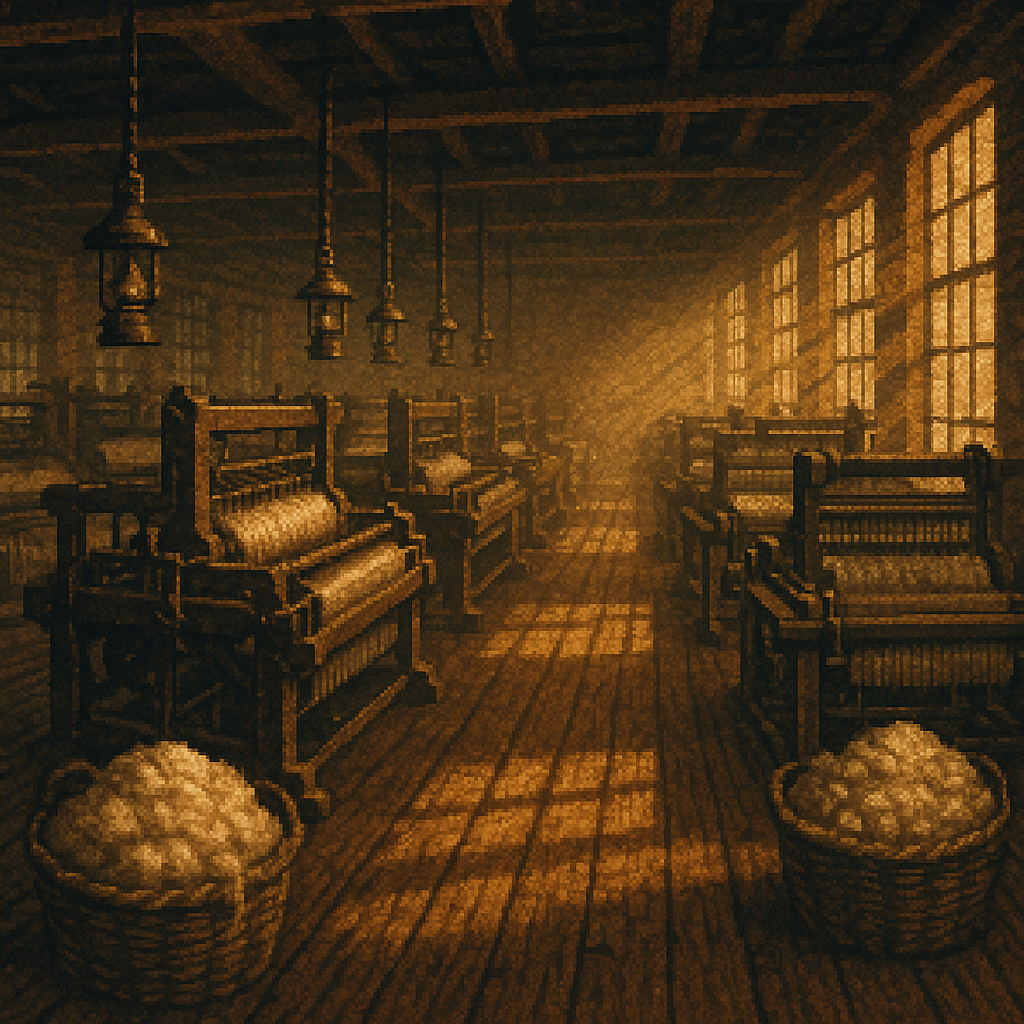
A turn-of-the-century textile mill at dusk: wooden looms, baskets of raw asbestos fiber, oil lamps casting amber light through a haze of airborne dust.

At the turn of the century, asbestos was sold as the fiber of the future — fireproof, abundant, and cheap enough to weave by the mile. Mills in New Jersey, Pennsylvania, and Quebec spun it into insulation cloth, theater curtains, and brake linings.

The workers spinning it called the airborne dust "the snow that never melts." Some of them coughed for forty years before anyone gave the cough a name.

The first medical paper linking asbestos to lung scarring would not appear until 1924. By then, a generation of fiber-handlers were already a decade past their first exposure.

FIRST DOCUMENTED MILL DEATH: NELLIE KERSHAW, 1924


ERA 02   •   1920 — 1940

THE EVIDENCE ON THE DESK

A 1930s industrial pathology lab at night: brass microscope under a green banker's lamp, shelves of glass specimen jars, stacks of unread medical journals.

The microscopes saw what the boardrooms refused to. By the late 1930s, pathologists in England, South Africa, and the United States had documented the same fibrous scarring in the lungs of dead mill workers, miners, and pipefitters.

The reports went into desks. The desks went into archives. Industry-funded studies downplayed, delayed, or buried what independent researchers were finding. Internal Johns-Manville memos from this era — later surfaced in litigation — show executives discussing the disease by name while publicly denying it existed.

It was, in the words of one judge decades later, "the longest cover-up in industrial history."

1930s INDUSTRY MEMOS: "DO NOT TELL EMPLOYEES."
▶ PAUSE ◀

Was your exposure documented somewhere — a work record, a union log, a Navy file — and lost? Most are. We help families find them.

CONTINUE ▶
ERA 03   •   1940 — 1960

THE WAR YEARS

A WWII Navy shipyard at dusk: a battleship in drydock, surrounded by towering cranes and scaffolding, with sparks falling from welders working below.

The Second World War turned asbestos into a strategic war material. Navy shipyards from Norfolk to Long Beach lagged boilers, steam pipes, and turbine rooms with sprayed insulation by the ton. Shipfitters worked in clouds of it for twelve-hour shifts.

Roughly 4.3 million Americans passed through Navy shipyards between 1940 and 1945. Hundreds of thousands more served in engine rooms and boiler rooms aboard the ships they built. Veterans are still being diagnosed with mesothelioma from exposures during the Eisenhower administration.

For decades, the same shipyards that armed the country received the country's quietest apology — a folder full of denied disability claims.

U.S. NAVY VETERANS: 30% OF ALL MESO CASES
ERA 04   •   1960 — 1980

THE HOUSE, THE CLASSROOM, THE KITCHEN

An empty 1970s school hallway under flickering fluorescents: green metal lockers, exposed pipe insulation overhead, an abandoned mop bucket.

By the 1960s, asbestos had escaped the factory. It was sprayed into the ceilings of elementary schools, hospitals, courthouses, and federal buildings. It was woven into hairdryers, toaster cords, and ironing-board pads. It was mixed into the floor tiles of suburban kitchens.

Exposure was no longer just an occupational story. A child sitting under a deteriorating ceiling tile in 1968 could inhale fibers that would not surface as disease until the 2010s — sometimes the 2020s.

This is the era that built today's diagnosis pipeline. The patients arriving at oncology clinics this year were, for the most part, kids the last time the country pretended this was safe.

ASBESTOS LATENCY: 20 — 60 YEARS
▶ STILL WITH US? ◀

Most patients we work with were exposed before they were old enough to read. They didn't choose this — and they didn't cause it. There's a path forward.

CONTINUE ▶
ERA 05   •   1980 — 2000

THE COURTROOMS FILL UP

An empty federal courtroom at twilight: tall columned windows, the bench in deep shadow, a small statue of Lady Justice on the side desk.

The 1980s opened with the first wave of mass tort filings. Johns-Manville filed for bankruptcy in 1982 — at the time, the largest non-insolvency bankruptcy in U.S. history — and the floodgates opened. W.R. Grace, Owens Corning, Federal-Mogul, Babcock & Wilcox all followed.

Out of those bankruptcies came something almost unprecedented: asbestos trust funds. Court-supervised pools of money — today totaling more than $30 billion — set aside specifically to pay future victims after the responsible companies were already gone.

Most patients who qualify still don't know the trusts exist. The funds sit waiting; the paperwork sits unfiled.

TRUST FUNDS OUTSTANDING: $30B+
ERA 06   •   2000 — 2026

THE RECKONING ROOM

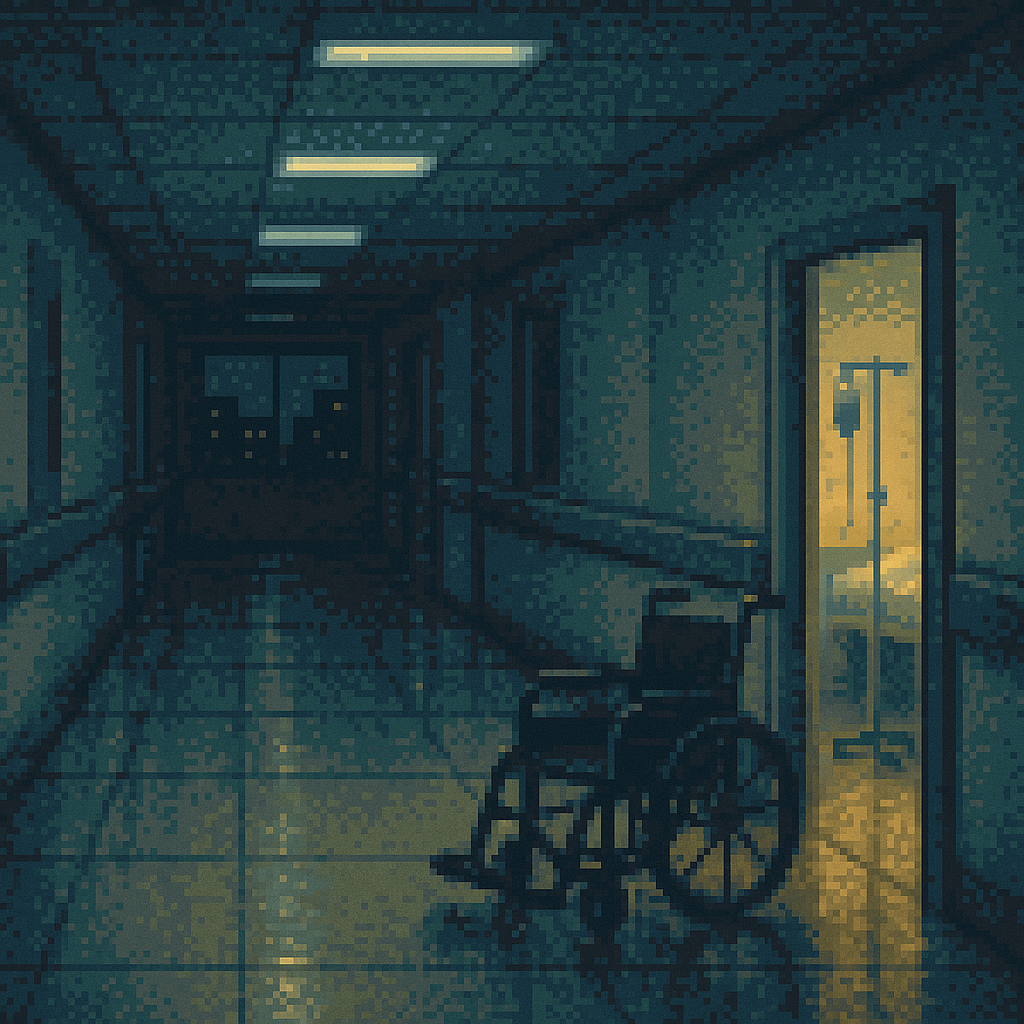
A modern hospital corridor at night: empty wheelchair under cold fluorescent light, an IV pole glowing in the warm light of an open patient room.

The U.S. didn't ban most asbestos products until March 2024. Chrysotile imports continued past most Americans' working lives. The disease still arrives at the rate of roughly 3,000 new mesothelioma diagnoses per year, and the curve has not yet bent.

The corridors are quieter now. The patients are older. The lawsuits are harder to file because so many of the original defendants are gone — but the trust funds are still funded, the VA still pays benefits to exposed veterans, and the science of treatment has moved further in the last ten years than in the previous fifty.

This is the era you are reading from. There are still options. There is still time. But the clock that started ticking in the textile mills of 1900 is still running.

NEW DIAGNOSES: ~3,000 / YEAR (U.S.)

▮ IF THIS IS YOUR STORY ▮

A free, confidential conversation with someone who has helped thousands of families navigate the same six eras you just walked through.

Confidential. No obligation.  
Prefer to call? 1-800-400-1805