History of Asbestos: A Timeline of Regulation, Litigation & Medical Discovery
Content reviewed & verified: March 14, 2026
For more than a century, the story of asbestos has unfolded across courtrooms, laboratories, factory floors, and the halls of Congress. From the first documented deaths in 1906 to the EPA's landmark chrysotile ban in 2024, this timeline traces every major milestone — the medical discoveries that proved asbestos kills, the industry cover-ups that delayed action for decades, the lawsuits that held corporations accountable, and the treatment breakthroughs giving patients new hope.
This page covers 59 key events spanning 120 years of asbestos history. Use the filters below to explore by category or era.
A French factory inspector documents 50 deaths among female asbestos textile workers in Condé-sur-Noireau, marking the first official recognition of asbestos-related mortality.
U.S. and Canadian insurance companies begin declining to issue life insurance policies to asbestos workers due to the unhealthy conditions of the industry, an early sign of known health risks.
Dr. W.E. Cooke publishes the first clinical description of asbestosis in the British Medical Journal after examining Nellie Kershaw, a textile worker who died from pulmonary fibrosis caused by asbestos dust.
British physician E.R.A. Merewether and engineer C.W. Price publish a landmark report documenting asbestosis in 66% of long-term asbestos workers, leading to the first asbestos industry regulations in the UK.
Johns-Manville, the largest U.S. asbestos company, receives internal medical reports confirming that asbestos dust is causing disease among its workers. The company suppresses the findings.
Correspondence between Sumner Simpson (Raybestos-Manhattan president) and Vandiver Brown (Johns-Manville attorney) reveals a deliberate industry strategy to suppress asbestos health research and control scientific publications.
The asbestos industry funds research at Saranac Laboratory, then edits the findings before publication to minimize the link between asbestos and disease.
Dr. Anthony Lanza of Metropolitan Life Insurance publishes a study on asbestos disease, but only after Johns-Manville and Raybestos-Manhattan edit the manuscript to downplay health risks.
Germany becomes the first country to officially recognize lung cancer caused by asbestos exposure as an occupational disease, compensating affected workers.
Over 4.3 million Americans work in U.S. shipyards during World War II, most with heavy asbestos exposure from insulation, boilers, pipes, and gaskets. This generation will account for the largest wave of mesothelioma cases decades later.
Dr. Kenneth Smith, Johns-Manville's chief physician, advises the company that asbestos workers are developing asbestosis but recommends against informing them, stating: "As long as the man is not disabled, it is felt he should not be told of his condition."
British epidemiologist Sir Richard Doll publishes a study in the British Journal of Industrial Medicine establishing a definitive link between asbestos exposure and lung cancer in textile workers.
Dr. J.C. Wagner publishes a landmark paper documenting 33 cases of mesothelioma among asbestos miners and nearby residents in South Africa's Northern Cape Province, establishing the connection between asbestos and mesothelioma.
Dr. Irving Selikoff presents research at the New York Academy of Sciences conference showing that asbestos insulation workers have dramatically elevated rates of lung cancer, mesothelioma, and asbestosis. The findings receive widespread media coverage.
Dr. Selikoff and colleagues publish data showing that mesothelioma accounts for 10% of deaths among asbestos insulation workers — 300 times the expected rate in the general population.
Studies document mesothelioma in family members of asbestos workers who were exposed to fibers brought home on work clothes, establishing the concept of secondary (take-home) asbestos exposure.
U.S. asbestos consumption reaches its peak at approximately 803,000 metric tons per year. Asbestos is present in over 3,000 commercial products including insulation, brake pads, roofing, and floor tiles.
President Richard Nixon signs the Occupational Safety and Health Act, creating OSHA and giving the federal government authority to set and enforce workplace safety standards, including for asbestos exposure.
OSHA establishes the first permissible exposure limit (PEL) for asbestos at 12 fibers per cubic centimeter — far higher than what would later be considered safe. The standard is gradually tightened over subsequent decades.
OSHA lowers the permissible exposure limit for asbestos from 12 to 5 fibers per cubic centimeter, with a planned further reduction to 2 f/cc.
The EPA issues the first ban on specific asbestos products, prohibiting spray-on asbestos materials used for insulation, fireproofing, and decoration in buildings.
Congress passes TSCA, granting the EPA authority to regulate chemical substances including asbestos. This law will later serve as the basis for the EPA's attempted comprehensive asbestos ban.
The Consumer Product Safety Commission bans the use of asbestos in wall patching compounds and artificial fireplace embers, the first consumer product restrictions on asbestos.
The EPA extends its asbestos ban to include sprayed-on asbestos materials for pipe and boiler insulation, expanding protections beyond the 1973 spray-on ban.
The Fifth Circuit Court of Appeals upholds the first successful asbestos personal injury verdict in Borel v. Fibreboard Paper Products Corp. Insulation worker Clarence Borel wins his case, establishing that asbestos manufacturers had a duty to warn workers of known health hazards.
Johns-Manville Corporation, the largest asbestos manufacturer in the world, files for Chapter 11 bankruptcy protection, citing 16,500 pending asbestos lawsuits. It is the largest bankruptcy in U.S. history at the time.
Congress passes the Asbestos School Hazard Abatement Act, providing funding and guidance for schools to inspect for and abate asbestos-containing materials. An estimated 35,000 schools contain asbestos.
Congress passes AHERA, requiring all public and private schools to inspect buildings for asbestos, develop management plans, and take action to reduce asbestos hazards.
OSHA dramatically lowers the permissible exposure limit for asbestos to 0.2 fibers per cubic centimeter, a 60-fold reduction from the original 1971 standard.
The Manville Trust is established with $2.5 billion to compensate victims of Johns-Manville asbestos products. It becomes the model for all subsequent asbestos bankruptcy trusts.
The EPA issues a final rule under TSCA banning most asbestos-containing products in the United States, with phased implementation. The rule covers approximately 94% of U.S. asbestos consumption.
In Corrosion Proof Fittings v. EPA, the U.S. Fifth Circuit Court of Appeals overturns the EPA's 1989 comprehensive asbestos ban, ruling that the agency failed to adequately consider alternatives to a total ban. This decision effectively leaves most asbestos products legal in the U.S. for the next 33 years.
The Third Circuit Court of Appeals decertifies a massive asbestos class action settlement in Georgine v. Amchem Products, finding that the class was too diverse for a single settlement. The U.S. Supreme Court affirms this decision in 1997.
The U.S. Supreme Court rules in Amchem Products v. Windsor that asbestos exposure cases are too varied to be resolved through a single class action settlement, reshaping the landscape of asbestos litigation.
Owens Corning, a major fiberglass and building materials manufacturer, faces over 460,000 asbestos claims. The company files for Chapter 11 bankruptcy in 2000.
Asbestos-related lawsuits reach their peak in U.S. courts, with an estimated 730,000 plaintiffs having filed claims against more than 8,400 defendants. The RAND Corporation estimates total costs could reach $200-$275 billion.
W.R. Grace & Co. files for Chapter 11 bankruptcy due to approximately 65,000 asbestos-related personal injury claims, many linked to its Zonolite vermiculite attic insulation contaminated with tremolite asbestos from its Libby, Montana mine.
Halliburton agrees to pay $4.2 billion to settle approximately 300,000 asbestos claims inherited through its 1998 acquisition of Dresser Industries, one of the largest asbestos settlements in history.
Senator Patty Murray introduces the Ban Asbestos in America Act, which would prohibit all remaining asbestos use in the U.S. Despite bipartisan support, the bill fails to advance through Congress.
The Meso Foundation begins funding research exclusively dedicated to finding a cure for mesothelioma, becoming the leading private funder of mesothelioma research in the United States.
The FDA approves pemetrexed (Alimta) in combination with cisplatin for malignant pleural mesothelioma — the first FDA-approved chemotherapy regimen specifically for mesothelioma. It remains the standard of care for over 15 years.
The EPA invokes its emergency authority under CERCLA for the first time to declare a public health emergency in Libby, Montana, where W.R. Grace's vermiculite mine contaminated the town with asbestos, killing approximately 400 residents.
The Fairness in Asbestos Injury Resolution (FAIR) Act proposes creating a $140 billion national trust fund to replace asbestos litigation. The bill dies in committee amid disagreements over funding and eligibility.
The Furthering Asbestos Claim Transparency (FACT) Act is introduced, requiring asbestos trusts to publicly disclose claims data. Proponents argue it prevents double-dipping; critics say it burdens victims with additional disclosure requirements.
The World Health Organization calls for the elimination of asbestos-related diseases by banning all forms of asbestos worldwide, noting that approximately 125 million people globally are exposed to asbestos at work.
IARC reaffirms that all forms of asbestos — chrysotile, crocidolite, amosite, tremolite, actinolite, and anthophyllite — are carcinogenic to humans (Group 1), settling any remaining scientific debate.
A Los Angeles jury awards $250 million to a plaintiff diagnosed with mesothelioma after exposure to asbestos in talcum powder products, one of the largest individual asbestos verdicts in U.S. history.
Congress passes the Frank R. Lautenberg Chemical Safety for the 21st Century Act, modernizing TSCA and giving the EPA renewed authority to evaluate and regulate dangerous chemicals including asbestos.
A St. Louis jury awards $4.69 billion to 22 women who claim Johnson & Johnson's talcum powder products contained asbestos and caused their ovarian cancer. It is the largest asbestos-related verdict in history.
The EPA issues a Significant New Use Rule (SNUR) requiring manufacturers to obtain EPA approval before resuming certain discontinued asbestos uses, providing some protection against re-introduction of asbestos products.
Results from the CheckMate 743 clinical trial show that the immunotherapy combination of nivolumab (Opdivo) and ipilimumab (Yervoy) improves overall survival in unresectable malignant pleural mesothelioma compared to chemotherapy — the first major treatment advance since pemetrexed in 2004.
The FDA approves the combination of nivolumab and ipilimumab as a first-line treatment for unresectable malignant pleural mesothelioma, making immunotherapy the new standard of care alongside chemotherapy.
Johnson & Johnson creates a subsidiary, LTL Management LLC, and transfers its talc liabilities to it before filing the subsidiary for bankruptcy in Texas — a strategy known as the "Texas Two-Step." Courts later reject this approach.
Results from the STELLAR trial show that TTFields combined with chemotherapy significantly improves survival in malignant pleural mesothelioma, offering a novel non-invasive treatment approach.
The EPA issues a final rule under TSCA banning chrysotile asbestos, the only form still imported and used in the United States. The ban covers the chlor-alkali industry (the last major U.S. user) with a phased compliance period through 2029.
The U.S. Third Circuit Court of Appeals rejects Johnson & Johnson's "Texas Two-Step" bankruptcy strategy for a second time, ruling that LTL Management was not in financial distress when it filed for bankruptcy.
Multiple clinical trials of chimeric antigen receptor T-cell (CAR-T) therapy targeting mesothelin show encouraging results in mesothelioma patients, representing a potential paradigm shift from traditional chemotherapy to personalized immunotherapy.
More than 60 asbestos bankruptcy trust funds are now active with over $30 billion in remaining assets. Payment percentages vary from less than 5% to 100% of scheduled values depending on the trust.
Despite the 2024 chrysotile ban, asbestos remains legal in legacy products and is not fully banned in the United States. Over 70 countries have implemented complete bans, while the U.S. still allows asbestos in some applications. An estimated 40,000 Americans die from asbestos-related diseases each year.
Key Takeaways
- Industry knew early and covered it up. Internal documents from the 1930s prove that major asbestos companies knew their products were killing workers — yet they suppressed research and continued production for decades.
- The U.S. still has no comprehensive asbestos ban. Despite the EPA's 2024 chrysotile rule, asbestos remains legal in many applications. Over 70 countries have full bans; the U.S. does not.
- Litigation transformed corporate accountability. The 1973 Borel decision opened the floodgates. Over 730,000 plaintiffs have filed asbestos claims against more than 8,400 companies, leading to over $30 billion in trust fund assets.
- Treatment is finally advancing. After decades with limited options, the 2020 FDA approval of immunotherapy (nivolumab + ipilimumab) marked the first major treatment breakthrough since pemetrexed in 2004. CAR-T therapy and TTFields offer additional hope.
- Exposure continues today. An estimated 40,000 Americans die from asbestos-related diseases annually. Legacy asbestos in buildings, natural deposits, and imported products continue to put people at risk.
Frequently Asked Questions
Your Case. Our Experience.
Every case is personally reviewed by our founding partners — two of the most experienced mesothelioma attorneys in the country.
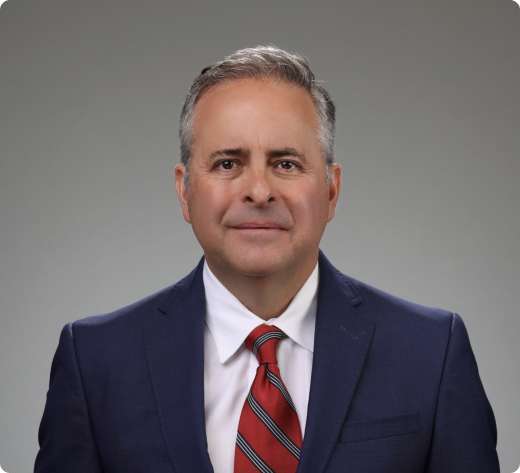
- 32+ years in mesothelioma & asbestos litigation
- Northwestern University School of Law, J.D.
- Handles cases nationwide
- Super Lawyers · Top 100 Trial Lawyers
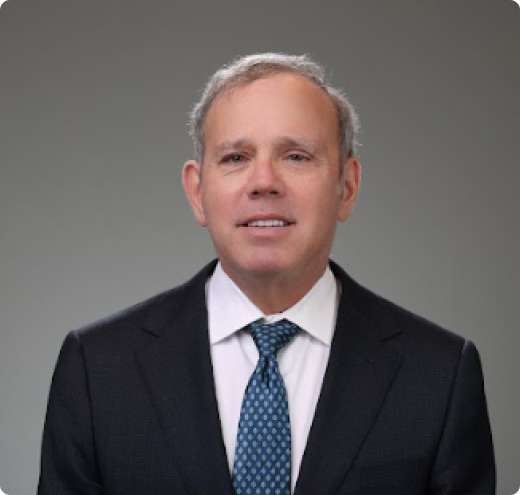
- 30+ years focused exclusively on asbestos law
- University of Texas School of Law, J.D. (Honors)
- Handles cases nationwide
- Super Lawyers · AAJ Leader's Forum
Request a Free Case Review
Get a confidential case evaluation from attorneys who have recovered over $2 billion for asbestos victims.
Your information is protected by attorney-client privilege. We typically respond within 24 hours.