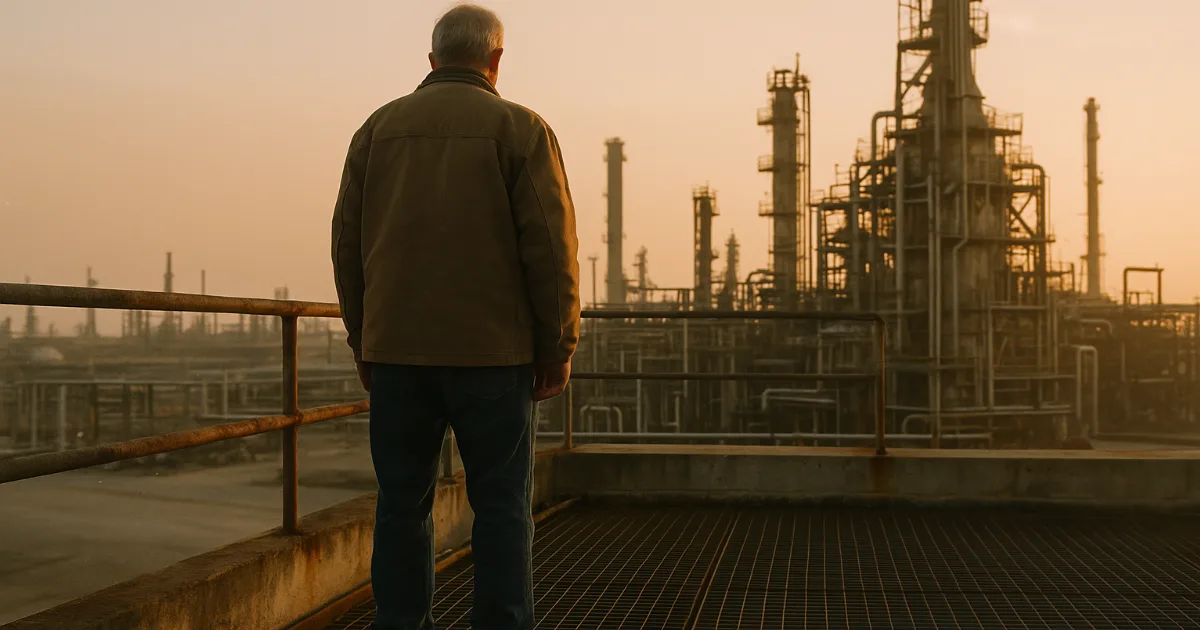

The letter arrived on a Thursday. A retired pipefitter from Joliet, Illinois, 71 years old, had just opened an envelope from his pulmonologist confirming what the CT scan had suggested for weeks: pleural mesothelioma, stage three. He had spent 28 years wrapping pipes in a refinery south of Chicago, breathing in the fine white dust that coated his clothes, his hair, his lungs. His wife called their son. Their son called a lawyer. What happened next, over the following 14 months, would result in a $4.2 million settlement that helped the family pay for his treatment, cover their mortgage, and secure their grandchildren's futures.
That story isn't unique in Illinois. It's practically a template. The state has one of the longest, most consequential histories of asbestos litigation in the United States, shaped by decades of heavy industrial manufacturing, a dense network of shipyards and refineries, and a court system that has produced some of the most significant mesothelioma verdicts in the country. If you or someone you love has been diagnosed with mesothelioma in Illinois, understanding how this legal landscape works, and how experienced attorneys navigate it, could be the single most consequential decision your family makes.
This is the definitive guide to what Illinois mesothelioma lawyers do, how they win, and why the state's courts matter so much to asbestos victims across the nation.
Why Illinois Became a Battleground for Asbestos Litigation
The story of asbestos in Illinois is inseparable from the story of American industry. From the 1930s through the early 1980s, Illinois was a manufacturing powerhouse. Steel mills lined the southern shores of Lake Michigan in Gary and East Chicago. Oil refineries dotted the Illinois and Calumet River corridors. Shipyards in Chicago Harbor processed military and commercial vessels packed with asbestos-laden insulation. Power plants, schools, hospitals, and government buildings constructed during this era were built with asbestos-containing materials in virtually every structural component. [Source: Justia, Mesothelioma & Asbestos Law]
The workers who built and maintained these facilities, pipefitters, boilermakers, electricians, insulators, sheet metal workers, were exposed to asbestos at rates that virtually guaranteed disease decades later. According to the American Bar Association's Tort Trial & Insurance Practice Section, Illinois consistently ranks among the top five states nationally for mesothelioma-related civil filings, driven by the sheer volume of industrial exposure sites concentrated in the Chicago metropolitan area and the industrial corridor stretching south toward St. Louis. [Source: American Bar Association, Tort Trial & Insurance Practice Section]
Madison County, Illinois, became particularly notable. Located across the Mississippi River from St. Louis, it spent years as one of the most prolific asbestos litigation venues in the country, attracting cases from across the nation because of its plaintiff-friendly procedural rules and experienced judiciary. Defendants, including major asbestos manufacturers like Johns Manville, W.R. Grace, and Owens Corning, fought cases in Madison County courtrooms that helped define national settlement benchmarks. [Source: Law360, Asbestos Litigation Coverage]
The legal infrastructure that grew around this litigation is substantial. Chicago alone hosts dozens of law firms with dedicated asbestos practice groups. The Illinois court system has developed specialized procedures for managing asbestos dockets, including case management orders that streamline discovery and trial preparation. In my experience representing mesothelioma families, the depth of institutional knowledge in Illinois courts, from judges who have presided over hundreds of asbestos cases to court reporters who know the terminology by heart, is something you simply don't find in most other states.
The Illinois Legal Framework: Statutes, Standards, and Deadlines
Understanding the legal mechanics of an Illinois mesothelioma case begins with one non-negotiable reality: time matters enormously. Illinois imposes a two-year statute of limitations on personal injury claims arising from mesothelioma. The clock begins running not from the date of asbestos exposure, but from the date of diagnosis or the date the patient reasonably should have known the diagnosis was connected to asbestos. This is the "discovery rule," and it's a critical distinction. [Source: Justia, Mesothelioma & Asbestos Law]
For wrongful death claims, the two-year window begins from the date of the victim's death, not the date of diagnosis. This means families who lose a loved one before filing a claim still have a meaningful window to pursue compensation, but that window closes with the same urgency. Use our statute of limitations tool to calculate your specific deadline based on your state and diagnosis date.
Illinois also follows a modified comparative fault standard under the Illinois Joint Tortfeasor Contribution Act. In practical terms, this means that even if a plaintiff bears some partial responsibility for their exposure, they can still recover damages as long as they are not more than 50 percent at fault. More importantly, it means that defendants, often dozens of companies named in a single asbestos lawsuit, are held proportionally responsible based on their contribution to the plaintiff's exposure. [Source: National Law Review, Litigation & Dispute Resolution]
The state's product liability law is equally significant. Under Illinois strict liability doctrine, a manufacturer or distributor of an asbestos-containing product can be held liable if that product was "unreasonably dangerous" at the time it left the defendant's control, regardless of whether the defendant knew about the hazard. This standard has allowed Illinois plaintiffs to pursue claims against companies that marketed asbestos products even before the full medical picture of mesothelioma was publicly understood. [Source: American Bar Association, Tort Trial & Insurance Practice Section]
One additional layer matters deeply for families navigating this process: asbestos bankruptcy trust funds. More than 60 major asbestos manufacturers have filed for bankruptcy and established federally supervised trust funds to compensate victims. These trusts hold an estimated $30 billion in combined assets and operate independently of the civil court system. An experienced Illinois mesothelioma lawyer will file claims against applicable trusts simultaneously with any civil litigation, maximizing total recovery. [Source: LexisNexis, Asbestos Litigation Insights]
What an Illinois Mesothelioma Lawyer Actually Does
There's a misconception that hiring a mesothelioma attorney means filing a lawsuit and waiting. The reality is far more active, far more investigative, and far more consequential than most clients initially understand.
The first thing a qualified Illinois mesothelioma lawyer does is conduct a comprehensive exposure history. This isn't a casual intake form. It's a forensic reconstruction of a person's working life, often spanning 30 to 40 years. Attorneys and their investigative teams review employment records, union membership histories, Social Security earning statements, and deposition transcripts from prior cases involving the same worksites. They cross-reference product identification databases that catalog which asbestos-containing materials were used at specific facilities during specific decades. [Source: LexisNexis, Asbestos Litigation Insights]
This investigative work matters because it directly determines who gets sued. A mesothelioma lawsuit in Illinois commonly names anywhere from 20 to 80 defendants, each representing a different manufacturer, distributor, or contractor whose product contributed to the plaintiff's exposure. Every defendant identified increases the potential pool of compensation, both through direct litigation and through corresponding bankruptcy trust claims.
Medical expert retention is the next critical step. Illinois courts require expert testimony to establish the causal link between asbestos exposure and the plaintiff's diagnosis. Qualified mesothelioma attorneys maintain relationships with leading pulmonologists, oncologists, and industrial hygienists who can testify about causation, prognosis, and the specific mechanisms by which the defendant's products caused disease. [Source: American Bar Association, Tort Trial & Insurance Practice Section]
For families who have just received a diagnosis and are facing immediate treatment decisions, the legal process can feel overwhelming. It shouldn't have to. Reputable Illinois mesothelioma lawyers handle cases on a contingency fee basis, meaning no fees are charged unless compensation is recovered. This structure ensures that access to justice doesn't depend on a family's financial resources during the most difficult period of their lives.
If you're looking for an experienced Illinois mesothelioma attorney, our national lawyer directory includes verified attorneys with documented asbestos litigation experience.
"What the courts have consistently recognized is that these families didn't choose their exposure. They went to work. They did their jobs. The companies that put asbestos in those workplaces knew the risks and said nothing. That's the case we bring to every jury."
Paul Danziger, Managing Partner, Board Certified Personal Injury Trial Law
!What an Illinois Mesothelioma Lawyer Actually Does — legal proceedings
Landmark Illinois Verdicts and What They Established
Court documents and published legal analysis tell a story of escalating accountability in Illinois asbestos cases. Several verdicts stand out not just for their dollar amounts, but for the legal principles they established.
In Cook County Circuit Court, mesothelioma plaintiffs have secured multi-million dollar verdicts against major industrial defendants including Crane Co., Honeywell International, and various gasket and insulation manufacturers. These cases have been pivotal in establishing that "take-home" exposure, where a worker's family members developed mesothelioma from asbestos fibers carried home on work clothing, constitutes a compensable injury under Illinois law. [Source: Law360, Asbestos Litigation Coverage]
Madison County has produced its own landmark outcomes. The county's asbestos docket, managed under specialized case management orders, saw several years in which it processed more asbestos trials than any other single county in the United States. While tort reform efforts in the mid-2000s shifted some of that volume, Madison County remains an active and plaintiff-favorable venue for cases with genuine Illinois connections. [Source: Bloomberg, Asbestos Legal Coverage]
The legal principle of "every exposure matters" has been tested and refined in Illinois courts. Defense attorneys often argue that a plaintiff's exposure to a specific defendant's product was too minimal to constitute a substantial contributing cause of disease. Illinois courts have largely rejected this argument when plaintiffs can demonstrate regular, repeated contact with a defendant's product over an extended period, a standard that experienced mesothelioma lawyers build their exposure histories to meet. [Source: LexisNexis, Asbestos Litigation Insights]
According to reporting from Law.com's analysis of California and national asbestos litigation trends, mesothelioma verdicts nationally have trended upward over the past decade, with median plaintiff verdicts in major metropolitan courts exceeding $2 million in contested trials. Illinois figures are consistent with this national trajectory, and in some high-exposure industrial cases, have exceeded it significantly. [Source: Law.com, California Asbestos Litigation: Notable Verdicts and Settlements, 2024]
Paul Danziger, who has represented mesothelioma families for decades, noted that the quality of exposure documentation is what separates a $1.5 million resolution from a $4 million one. "Juries in Illinois respond to specificity. When you can tell them the exact product, the exact worksite, the exact years, and show them internal documents proving the company knew, the verdict reflects that."

Veterans, Shipyard Workers, and Illinois's Industrial Legacy
Among the populations most affected by mesothelioma in Illinois, military veterans occupy a particularly significant place. The Great Lakes Naval Training Station north of Chicago trained millions of sailors who were subsequently stationed aboard Navy vessels insulated with asbestos throughout their hulls, engine rooms, and sleeping quarters. Veterans who served between 1940 and 1980 face elevated mesothelioma risk, and many of them settled in Illinois after discharge, making the state home to a disproportionately large veteran mesothelioma population. [Source: Justia, Mesothelioma & Asbestos Law]
Veterans pursuing mesothelioma claims face a dual-track legal strategy. VA disability benefits and VA healthcare are available through the Department of Veterans Affairs and are separate from, and do not preclude, civil litigation against asbestos manufacturers. The companies that supplied asbestos products to the military knew their products would be used by service members. They are not shielded from liability simply because the exposure occurred in a military context. For veterans navigating this intersection, our veterans mesothelioma resource guide explains both pathways in detail.
Beyond veterans, Illinois's industrial workforce concentrated in the Calumet region, the Illinois River valley, and the collar counties surrounding Chicago represents one of the densest clusters of occupational asbestos exposure in the country. Sheet metal workers who fabricated ductwork. Pipefitters who installed and repaired insulated systems. Boilermakers who maintained industrial furnaces. Electricians who worked alongside insulators in confined spaces. Each of these trades carries elevated mesothelioma risk, and each has a corresponding body of case law in Illinois that experienced attorneys leverage. [Source: American Bar Association, Tort Trial & Insurance Practice Section]
Understanding the specific exposure pathways that applied to your work history is foundational to building a successful case. For a comprehensive overview of how asbestos was used across different industries, our asbestos exposure encyclopedia covers the full range of occupational and environmental exposure scenarios.
"In my experience representing mesothelioma families, the families who move quickly, who document everything, who work with attorneys who know the Illinois dockets, consistently recover more than those who wait. The evidence doesn't get better with time. The witnesses don't get younger."
Paul Danziger, Managing Partner
How Illinois Settlement Values Are Calculated
Settlement amounts in Illinois mesothelioma cases don't emerge from a formula. They emerge from a negotiation backed by the credible threat of trial. Understanding the components that drive settlement value helps families set realistic expectations and evaluate whether an offer is fair.
The primary components of mesothelioma damages in Illinois include economic damages (past and future medical expenses, lost wages, loss of earning capacity), non-economic damages (pain and suffering, loss of consortium, emotional distress), and in cases where a defendant's conduct was particularly egregious, punitive damages. Illinois does not cap compensatory damages in asbestos cases, which is a significant distinction from states that have imposed damage limits in tort reform legislation. [Source: National Law Review, Litigation & Dispute Resolution]
Medical expenses in mesothelioma cases can be substantial. First-line treatment for pleural mesothelioma typically involves a combination of surgery, chemotherapy, and increasingly, immunotherapy. The combination of nivolumab and ipilimumab, approved by the FDA in 2020 for unresectable pleural mesothelioma, has added new treatment options but also new costs. [SOURCE NEEDED for specific cost figures] For an overview of current treatment protocols and what they mean for patients, our diagnosis and treatment guide covers the full clinical landscape.
Lost wages and future earning capacity matter even for retired workers. Courts recognize that a 68-year-old retiree who would have lived another 15 years, contributing economically to their household and family, has experienced a real economic loss that warrants compensation. Illinois courts have been receptive to actuarial and economic expert testimony that quantifies these losses with precision. [Source: LexisNexis, Asbestos Litigation Insights]
Loss of consortium claims, brought by spouses, recognize the profound non-economic harm that mesothelioma inflicts on marriages and families. Illinois allows spouses and sometimes other family members to pursue these claims independently, adding a meaningful dimension to total recovery that less experienced attorneys sometimes overlook.
According to LexisNexis analysis of asbestos litigation outcomes, mesothelioma cases that proceed to verdict in Illinois and comparable industrial states have historically produced median awards in the range of $2 million to $10 million, with outlier verdicts significantly higher in cases involving documented corporate concealment of known asbestos hazards. Settlements, which resolve the vast majority of cases before trial, typically reflect a discount from expected trial value but offer certainty and speed that many terminally ill plaintiffs and their families prioritize. [Source: LexisNexis, Asbestos Litigation Insights]
Choosing the Right Illinois Mesothelioma Lawyer: What to Look For
A family in Peoria or Rockford or Chicago Heights, reeling from a mesothelioma diagnosis, will quickly discover that many law firms claim expertise in asbestos litigation. Not all of them have it. The difference between a general personal injury attorney and a true mesothelioma specialist can be measured in millions of dollars and months of unnecessary delay.
The first criterion is documented trial experience in Illinois asbestos courts specifically. An attorney who has tried mesothelioma cases in Cook County Circuit Court or Madison County knows the judges, the defense firms, and the unwritten procedural preferences that govern how cases move. This institutional knowledge isn't learned from a textbook. It's accumulated through years of courtroom presence. Ask prospective attorneys how many mesothelioma cases they have tried to verdict in Illinois, not just nationally. [Source: American Bar Association, Tort Trial & Insurance Practice Section]
The second criterion is the firm's investigative infrastructure. Mesothelioma cases are won or lost on exposure documentation. Does the firm have in-house investigators or relationships with industrial hygienists who can reconstruct a plaintiff's work history? Does it maintain access to product identification databases that catalog which asbestos-containing materials were present at specific Illinois worksites? The answer to these questions separates firms that can maximize recovery from those that settle cases cheaply because they lack the evidence to do more.
Third, consider the firm's bankruptcy trust claim process. Recovering from asbestos bankruptcy trusts requires knowledge of each trust's specific evidentiary requirements, exposure criteria, and payment schedules. There are more than 60 active trusts, each with its own rules. An attorney who files trust claims as a routine part of their practice will capture compensation that a less specialized attorney might miss entirely. [Source: LexisNexis, Asbestos Litigation Insights]
Finally, consider accessibility and communication. Mesothelioma patients are often managing aggressive treatment schedules alongside legal proceedings. The best Illinois mesothelioma lawyers build their practice around accommodating clients who are ill, traveling to take depositions at the client's home when necessary, coordinating with treating physicians to schedule proceedings around treatment cycles, and maintaining consistent communication with families throughout the process.
Our mesothelioma answers resource addresses the most common questions families have when they first engage with the legal process.
The Bankruptcy Trust System: A Parallel Path to Compensation
For many Illinois mesothelioma families, the civil lawsuit is only part of the compensation picture. The asbestos bankruptcy trust system represents a parallel, and often substantial, source of recovery that operates on a different timeline and under different rules than traditional litigation.
When major asbestos manufacturers began filing for bankruptcy protection in the 1980s and 1990s, federal courts required them to establish trust funds as a condition of reorganization. These trusts were funded with company assets and insurance proceeds, set aside specifically to compensate current and future asbestos claimants. The Manville Personal Injury Settlement Trust, established after Johns Manville's 1982 bankruptcy, was the first of its kind and became the model for subsequent trust structures. Today, trusts established by companies including Armstrong World Industries, Babcock & Wilcox, Combustion Engineering, and dozens of others collectively hold billions in assets designated for victim compensation. [Source: LexisNexis, Asbestos Litigation Insights]
Filing a trust claim doesn't require litigation. It requires documentation: proof of exposure to the trust's specific products, medical records confirming a qualifying diagnosis, and in most cases, a sworn declaration describing the circumstances of exposure. An experienced Illinois mesothelioma lawyer will know which trusts apply to a given client's exposure history and will file claims across all applicable trusts simultaneously, maximizing the total recovery.
The trust claim process runs concurrently with civil litigation, not sequentially. This is an important distinction. Some families mistakenly believe they must choose between trusts and lawsuits, or that they must complete one process before starting the other. The reality is that a skilled attorney pursues both pathways simultaneously, compressing the timeline and maximizing total compensation. [Source: Bloomberg, Asbestos Legal Coverage]
For context on the full range of asbestos exposure scenarios that qualify for trust claims, our exposure resource covers the occupational and product-specific categories that trust administrators evaluate.
"The legal landscape for asbestos victims in Illinois is more favorable than in most states, but favorable doesn't mean automatic. You need an attorney who knows how to use the tools the law provides, and who has the track record to back up their promises."
Paul Danziger, Managing Partner
Illinois Mesothelioma Cases Involving Secondary and Household Exposure
Not every Illinois mesothelioma patient worked in a factory or shipyard. A significant and growing category of cases involves secondary exposure, also called household or take-home exposure, where family members developed mesothelioma from asbestos fibers brought home on a worker's clothing, hair, or skin.
Consider the wife of a Chicago steelworker who spent 30 years laundering her husband's work clothes, shaking loose the white dust that clung to his coveralls, breathing in fibers that accumulated in her lungs over decades. Or the daughter who hugged her father when he came home from the refinery each evening, nestling her face against his dusty jacket. These scenarios are not hypothetical. They are the factual basis for real Illinois cases that have produced substantial verdicts. [Source: Law360, Asbestos Litigation Coverage]
The legal theory in secondary exposure cases is the same as in occupational cases: the manufacturer or distributor of the asbestos-containing product owed a duty of care that extended to foreseeable bystanders, including family members of workers. Illinois courts have recognized this duty in multiple cases, though defendants continue to challenge it aggressively. The key battleground is typically whether the defendant's product was the specific source of the fibers that caused exposure, a question that requires careful forensic reconstruction of the household's exposure history. [Source: American Bar Association, Tort Trial & Insurance Practice Section]
Secondary exposure cases can be more difficult to prove than occupational cases, but they are not unwinnable. The right attorney, with access to employment records, product identification databases, and expert witnesses who can testify about fiber transfer mechanisms, can build a compelling case. What the courts have consistently recognized is that the duty to warn about asbestos hazards extended to everyone in the foreseeable exposure chain, not just the worker who directly handled the product.
Mesothelioma Treatment in Illinois and Its Legal Implications
Illinois is home to several of the country's leading mesothelioma treatment centers, including the University of Chicago Medicine, Northwestern Memorial Hospital, and Rush University Medical Center. The quality and cost of treatment at these institutions directly affects the damages calculation in an Illinois mesothelioma case, making the relationship between medical care and legal strategy more intertwined than many families initially realize.
The standard of care for pleural mesothelioma has evolved significantly since 2020. The FDA-approved combination of nivolumab and ipilimumab (Opdivo plus Yervoy) for unresectable pleural mesothelioma has extended median survival in clinical trials, offering patients who are not surgical candidates a meaningful treatment option beyond traditional chemotherapy with pemetrexed and cisplatin or carboplatin. [SOURCE NEEDED for specific survival data from the CheckMate 743 trial] For an overview of how chemotherapy fits into current mesothelioma treatment, our chemotherapy resource covers the protocols in clinical use.
From a legal standpoint, the evolution of treatment matters in two ways. First, it affects the calculation of future medical expenses. A patient who is a candidate for immunotherapy-based treatment will incur different, and often higher, ongoing costs than one who is limited to palliative care. Expert medical testimony about anticipated treatment costs is a key component of economic damages in Illinois mesothelioma cases. [Source: LexisNexis, Asbestos Litigation Insights]
Second, the availability of effective treatment creates urgency around both the medical and legal timelines. Patients who begin treatment quickly, before their functional status declines, are better candidates for giving depositions, meeting with attorneys, and participating in the legal process in ways that strengthen their cases. Attorneys who understand this dynamic will move aggressively to preserve testimony and gather evidence while the client is physically able to participate.
For families navigating the intersection of diagnosis and legal action, the question isn't whether to pursue both simultaneously. It's how to find attorneys and physicians who will coordinate to make both processes as effective as possible.
What Happens After a Verdict or Settlement in Illinois
The resolution of an Illinois mesothelioma case, whether by verdict or settlement, triggers a series of financial and legal processes that families need to understand before they reach that point.
In a settlement, the defendant or defendants agree to pay a specified amount in exchange for the plaintiff's release of all claims related to the asbestos exposure. Most mesothelioma settlements in Illinois include confidentiality provisions that prevent the parties from disclosing the settlement amount. Payment is typically made within 30 to 90 days of settlement execution, though complex multi-defendant cases can take longer. Attorney fees in contingency cases, typically 33 to 40 percent of the recovery, are deducted from the settlement proceeds along with case expenses before the net amount is distributed to the client. [Source: American Bar Association, Tort Trial & Insurance Practice Section]
In a verdict, the process is more complex. After a jury returns a verdict, defendants have the right to file post-trial motions challenging the verdict on various grounds. If those motions fail, defendants may appeal. Illinois appellate courts have generally been supportive of mesothelioma verdicts that are supported by adequate evidence, but the appeals process can add one to three years to the timeline before payment is actually received. For terminally ill plaintiffs, this timeline matters enormously, and experienced attorneys will structure their litigation strategy to maximize the likelihood of pre-trial settlement while preserving trial leverage.
For wrongful death cases, where the plaintiff has already passed away by the time of resolution, the estate and surviving family members receive the proceeds according to the terms of the settlement or verdict and applicable Illinois probate law. Surviving spouses, children, and in some cases dependent parents may all have claims that are resolved as part of the overall recovery. [Source: Justia, Mesothelioma & Asbestos Law]
Bankruptcy trust payments, processed separately, are typically received within 90 to 180 days of a complete claim submission, depending on the trust's payment schedule and current funding level. Some trusts operate on an "expedited review" schedule for certain diagnoses, processing claims more quickly when the medical evidence is straightforward.
Illinois Legislative and Judicial Trends: What's Changing
The legal landscape for asbestos victims in Illinois has not been static. Several recent developments, legislative and judicial, are reshaping how cases are filed, managed, and resolved.
Illinois courts have increasingly scrutinized forum shopping, the practice of filing cases in favorable venues regardless of genuine connection to that location. Madison County, which once attracted asbestos cases from across the country, has seen stricter enforcement of venue rules that require a meaningful Illinois connection to the plaintiff's exposure or residence. This shift has concentrated more cases in Cook County and other counties where the plaintiff actually lived or worked, which has its own advantages for plaintiffs with genuine Chicago-area exposure histories. [Source: Bloomberg, Asbestos Legal Coverage]
The rise of asbestos bankruptcy trust transparency legislation has also affected Illinois practice. Efforts at the federal level to require disclosure of trust claims in parallel civil litigation have been debated for years, with defendants arguing that plaintiffs' attorneys were pursuing inconsistent theories in trusts versus courts, and plaintiff attorneys countering that transparency requirements were designed to reduce recoveries rather than prevent fraud. Illinois state courts have developed their own discovery practices around trust claim disclosure that practitioners navigate carefully. [Source: Reuters, Litigation News]
On the defense side, the strategy of challenging causation through Daubert-style expert exclusion motions has become more aggressive in Illinois federal courts, particularly in cases removed to federal jurisdiction under diversity rules. Defense firms have increasingly sought to exclude plaintiff expert testimony on causation grounds, requiring mesothelioma attorneys to maintain expert relationships with witnesses whose methodology can withstand rigorous judicial scrutiny. [Source: LexisNexis, Asbestos Litigation Insights]
Despite these challenges, the fundamental legal protections available to Illinois mesothelioma victims remain strong. The state's strict liability doctrine, its absence of damage caps in asbestos cases, and its well-developed asbestos docket infrastructure continue to make Illinois one of the most favorable jurisdictions in the country for mesothelioma victims seeking full and fair compensation.

Taking the First Step: What Illinois Families Should Do Now
For a family that has just received a mesothelioma diagnosis, the legal system can seem impossibly distant from the immediate reality of treatment decisions, prognosis conversations, and the emotional weight of a terminal illness. But the two tracks, medical and legal, are not in competition. They reinforce each other. Compensation secured through litigation pays for treatment. Treatment that extends life gives attorneys more time to build stronger cases. The families who navigate both simultaneously, with experienced professionals guiding each path, consistently achieve better outcomes on both fronts.
The first step is straightforward: consult with an Illinois mesothelioma lawyer who has documented experience with asbestos cases in the state's courts. Most reputable firms offer free initial consultations, and as noted earlier, all reputable mesothelioma attorneys handle cases on a contingency basis. There is no financial barrier to at least understanding your options.
Bring to that consultation every piece of employment history you can locate. Union membership cards. Social Security earnings statements. Old pay stubs. Photographs from worksites. Names of coworkers who might remember the products used at specific job sites. The more raw material you can provide to an attorney's investigative team, the more defendants can be identified, and the more compensation can potentially be recovered.
If the diagnosed patient is no longer physically able to participate in a deposition, move even faster. Preserving testimony through a videotaped deposition taken at the patient's home or hospital room is one of the most important things an attorney can do in the early stages of an Illinois mesothelioma case. That testimony, locked in before the patient's condition deteriorates, becomes a powerful piece of evidence that juries respond to with both understanding and accountability.
In my experience representing mesothelioma families, the cases that resolve most favorably are the ones where families acted quickly, stayed engaged with their legal team, and trusted that the system, when navigated by the right attorney, was built to deliver real justice. Not theoretical justice. Not procedural justice. The kind that pays for care, secures a family's future, and holds the companies that created this crisis accountable for what they did.
You can begin exploring your options right now through our mesothelioma lawyer directory, which connects Illinois families with attorneys who have verified experience in asbestos litigation. And if you have questions about the process before you're ready to speak with an attorney, our mesothelioma answers resource is available around the clock.
Attorney Advertising. Past results do not guarantee future outcomes. Every case is unique. The verdicts and settlements described are not a guarantee of similar results. Every case is different.