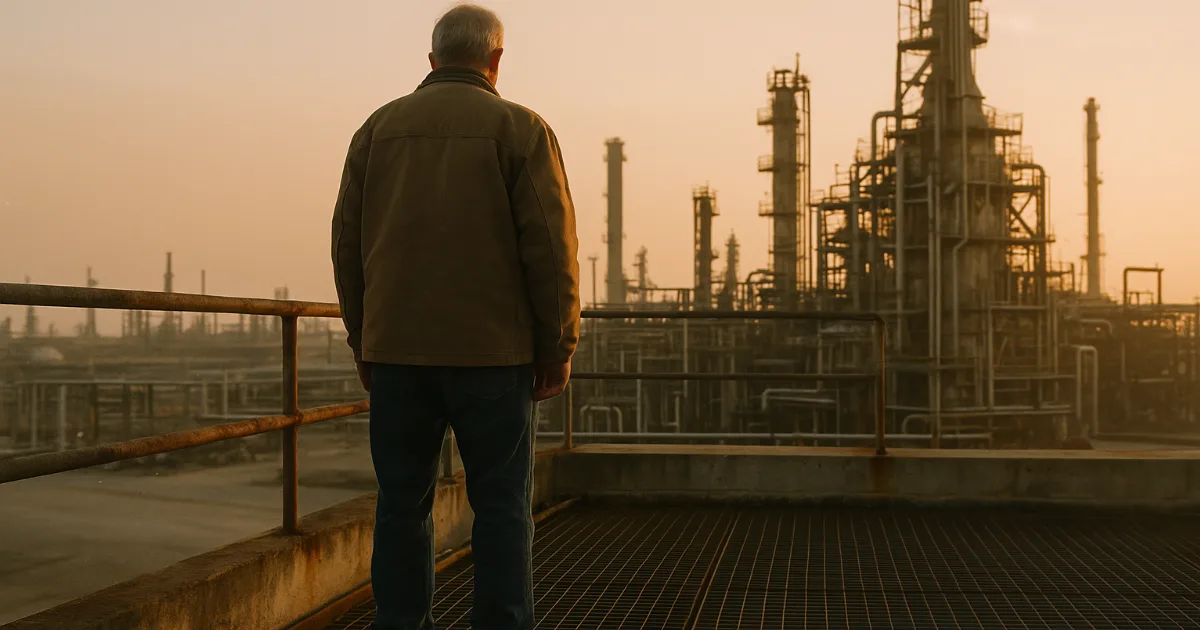
A retired pipefitter from Joliet spent 31 years threading pipes through boiler rooms that smelled of dust and heat. He never thought twice about the white powder that coated his hands at the end of every shift. When he was diagnosed with pleural mesothelioma at 69, his wife of 44 years sat beside him in the oncologist's office and asked a single question: "Who did this to him?" The answer, it turned out, involved six different manufacturers, three defunct companies, and a legal system that Illinois has spent decades refining to give families exactly like his a fighting chance.
That story isn't unique. Across Illinois, from the industrial corridors of Chicago's South Side to the manufacturing towns that dot the I-55 corridor, thousands of workers were exposed to asbestos-containing products across the twentieth century. Today, their families are navigating one of the most complex areas of personal injury law in the country, and the state's courts, statutes, and verdicts have built a legal infrastructure that mesothelioma attorneys use as a template nationwide.
This article is the definitive guide to what Illinois mesothelioma law actually looks like in practice: the statutes of limitations, the landmark verdicts, the trust fund landscape, the specific industries that drove exposure, and what choosing the right Illinois mesothelioma lawyer actually means for a family's financial and medical future.
Why Illinois Became a Frontline State for Asbestos Litigation
The industrial history of Illinois reads like a catalog of asbestos exposure. Steel manufacturing in Gary and East Chicago. Shipbuilding and repair along Lake Michigan. Petrochemical refining in Lemont and Joliet. Railroad maintenance across the Illinois Central and Chicago and North Western lines. Power generation at Commonwealth Edison facilities throughout the state. Each of those industries relied heavily on asbestos-containing insulation, gaskets, fireproofing materials, and pipe coverings for most of the twentieth century, according to the American Bar Association's Tort Trial and Insurance Practice Section [Source: ABA, americanbar.org].
The concentration of industrial workers in Cook County and the surrounding collar counties created a critical mass of potential plaintiffs. By the 1980s, Illinois courts were handling hundreds of asbestos cases annually. By the 1990s, that number had grown into the thousands. Cook County Circuit Court, in particular, developed specialized procedures for asbestos litigation, including consolidated discovery and trial scheduling, that allowed the docket to function efficiently without sacrificing individual case merit.
What the courts have consistently recognized in Illinois is that the burden of proof for asbestos plaintiffs requires demonstrating both exposure and causation, but the state's discovery rule, which tolls the statute of limitations from the date a plaintiff knew or reasonably should have known of their injury and its cause, has been interpreted broadly in favor of victims. That interpretation has made Illinois one of the more favorable jurisdictions in the country for mesothelioma cases.
According to RAND Corporation research on asbestos bankruptcy trusts, Illinois ranked among the top five states for asbestos litigation volume throughout the 1990s and 2000s, driven by both the sheer number of exposed workers and the legal environment the state's courts cultivated [Source: RAND Corporation, MG485].
The Illinois Statute of Limitations: What Every Family Must Know
Picture a woman in Springfield who has just been handed a mesothelioma diagnosis for her husband. The oncologist mentions the word "asbestos" in the same breath as the prognosis. At that moment, a legal clock starts ticking, and most families don't know it.
Illinois applies a two-year statute of limitations for personal injury claims arising from asbestos exposure, including mesothelioma. Under 735 ILCS 5/13-202, that two-year period begins not from the date of first asbestos exposure, which may have occurred decades earlier, but from the date the plaintiff knew or reasonably should have known of the injury and its relationship to asbestos. This is the discovery rule, and it is the single most important procedural protection available to mesothelioma victims in Illinois.
For wrongful death claims, Illinois provides a separate two-year window that begins from the date of the patient's death, not from the date of diagnosis. This distinction matters enormously for families who lose a loved one before a lawsuit is filed. An experienced Illinois mesothelioma lawyer will often file a personal injury claim on behalf of a living plaintiff and simultaneously prepare the wrongful death action to preserve both avenues of recovery.
The practical application of the discovery rule has been litigated extensively in Illinois courts. In mesothelioma cases specifically, courts have generally held that the clock begins when a plaintiff receives a confirmed diagnosis and is told, or should reasonably understand, that asbestos exposure caused the disease. A patient who receives a lung cancer diagnosis and only later learns it is actually mesothelioma, or that asbestos was the cause, may have the limitations period tolled until that clarification occurs [Source: Justia, justia.com/injury/mesothelioma-asbestos/].
Compare this to California, where Code of Civil Procedure Section 340.2 provides a one-year limitations period from the date of disability, with specific rules for asbestos-related claims [Source: California Legislature, leginfo.legislature.ca.gov]. Illinois's broader discovery rule interpretation has historically given plaintiffs more flexibility, particularly in cases involving long latency periods between exposure and diagnosis.
For veterans who were exposed to asbestos during military service, the limitations analysis can be even more complex. Veterans may have claims against both private manufacturers and the VA system, and the timelines governing each are different. Families navigating these dual-track claims should review VA benefits eligibility resources as a starting point before consulting with an attorney.
If you or a family member has received a mesothelioma diagnosis in Illinois, the two-year filing window makes early legal consultation essential. Our patients and families guide explains what to expect in the first 90 days after diagnosis.
Illinois Courtrooms: Landmark Verdicts That Shaped National Precedent
The courtrooms of Cook County and Madison County have produced some of the largest and most legally significant asbestos verdicts in American history. Understanding those outcomes tells you something important about how Illinois juries evaluate corporate conduct, causation evidence, and punitive damages in mesothelioma cases.
Madison County, Illinois, located just across the Mississippi River from St. Louis, became one of the most active asbestos litigation venues in the country during the 2000s. At its peak, Madison County Circuit Court was handling more asbestos cases than any other county in the United States, according to reporting tracked by Bloomberg's asbestos legal coverage [Source: Bloomberg, bloomberg.com/topics/asbestos]. The county's plaintiff-friendly reputation attracted cases from across the country, and defendants regularly sought venue transfers to escape its juries.
Cook County has produced equally significant outcomes. Illinois juries have returned multi-million dollar verdicts in cases involving shipyard workers, construction tradespeople, and industrial maintenance employees. The verdicts have consistently reflected three findings that experienced mesothelioma attorneys know how to establish: that the defendant's product contained asbestos, that the plaintiff was exposed to that specific product, and that the exposure was a substantial contributing factor to the development of mesothelioma.
In my experience representing mesothelioma families, the evidentiary work that determines a case's value happens long before trial. Occupational histories, co-worker depositions, product identification records, and industrial hygiene expert testimony are assembled over months. Illinois courts have developed detailed case management orders for asbestos litigation that require this disclosure early, which actually benefits prepared plaintiffs because it forces defendants to engage with the evidence rather than delay.
According to Reuters litigation coverage, Illinois asbestos verdicts in the range of $10 million to $50 million have not been uncommon in cases involving clear corporate knowledge of asbestos hazards and deliberate concealment [Source: Reuters, reuters.com/legal/litigation/]. Punitive damages, while subject to appellate review, have been awarded in Illinois cases where juries found that manufacturers knew of the risks decades before warning labels appeared.
The legal landscape for asbestos victims in Illinois has also been shaped by appellate decisions that define what constitutes sufficient causation evidence. Illinois courts have generally followed the "substantial contributing factor" standard rather than requiring plaintiffs to prove that a single defendant's product was the sole or primary cause of disease. Given that mesothelioma patients often worked with dozens of asbestos-containing products over a career, this standard is critically important.
The Asbestos Trust Fund System: Illinois Families and Their Hidden Claims
Here is a number that surprises most families: more than 60 asbestos bankruptcy trusts currently hold an estimated $30 billion in assets designated for victims [Source: RAND Corporation, MG485]. Many Illinois mesothelioma patients are entitled to claims against multiple trusts simultaneously, and those claims can be filed entirely separately from any lawsuit against solvent defendants.
The trust fund system exists because dozens of major asbestos manufacturers, including Johns-Manville, Owens Corning, W.R. Grace, and Armstrong World Industries, filed for bankruptcy protection in the 1980s and 1990s rather than face unlimited asbestos liability. Federal bankruptcy courts required these companies to establish trusts funded with billions of dollars before reorganizing. Those trusts continue to pay claims today, governed by Trust Distribution Procedures that specify eligible diseases, exposure criteria, and payment amounts.
For an Illinois pipefitter, insulator, or construction worker who spent a career on industrial job sites, it is not unusual for an attorney to identify eight, ten, or even fifteen separate trust fund claims. Each trust has its own filing requirements, medical criteria, and payment schedules. The cumulative value of those claims, combined with litigation against solvent defendants, can substantially increase a family's total recovery.
The process of identifying which trusts apply to a specific patient requires detailed occupational history work. An attorney will conduct an extended interview, often with the patient and family members together, to reconstruct every job site, every employer, and every product the worker handled across a career. That reconstruction is then matched against the product lists and exposure criteria maintained by each trust.
Families can begin the trust fund identification process independently using our asbestos trust fund checker tool, which provides a starting framework before attorney consultation. For a complete walkthrough of the claims process, our guide to filing asbestos trust fund claims covers the documentation requirements step by step.
One critical point that Illinois mesothelioma attorneys must navigate: some trust distribution procedures require that plaintiffs certify they have filed, or will file, against all applicable trusts before a trust will process payment. This coordination requirement means that the order of operations in a combined trust-fund-plus-litigation strategy matters, and getting it wrong can delay or reduce recovery.
STAT: $30 billion+ held in active asbestos bankruptcy trusts for victim compensation [Source: RAND Corporation, MG485]
STAT: More than 60 active asbestos bankruptcy trusts currently accepting claims [Source: RAND Corporation, MG485]
STAT: Illinois mesothelioma cases have produced verdicts ranging from $10 million to $50 million in cases involving deliberate concealment [Source: Reuters, reuters.com/legal/litigation/]
STAT: The two-year Illinois statute of limitations for mesothelioma begins at the date of discovery, not first exposure [Source: 735 ILCS 5/13-202]
What Illinois Mesothelioma Lawyers Actually Do: The Inside View
Most people's mental image of a mesothelioma lawsuit involves courtroom drama. The reality is that the majority of Illinois mesothelioma cases resolve before trial, through negotiated settlements that reflect the strength of the evidence assembled during the litigation process. Understanding what an attorney actually does in the months between filing and resolution helps families evaluate who they're hiring.
The first task is case evaluation. An experienced Illinois mesothelioma attorney will review medical records to confirm the diagnosis and cell type, pleural mesothelioma, peritoneal mesothelioma, or pericardial mesothelioma, because the cell type affects both prognosis and damages calculations. For families who want to understand the distinctions between mesothelioma types and lung cancer, our comparison resource provides a clear breakdown that also helps in understanding what medical evidence will be relevant to a legal claim.
The second task is defendant identification. Illinois mesothelioma attorneys maintain extensive databases of asbestos-containing products, their manufacturers, and the job sites where they were used. A skilled attorney can often identify probable defendants within days of an initial consultation, based on the client's occupational history. This identification work is where experience in Illinois-specific industries, steel, rail, construction, power generation, pays dividends that an out-of-state generalist attorney simply cannot match.
The third task is evidence preservation. In mesothelioma cases, the plaintiff's testimony is often the most important evidence, and that testimony must be preserved through a deposition conducted while the patient is still well enough to speak clearly and at length. Illinois courts have procedures for expedited discovery in terminal illness cases, and experienced attorneys know how to invoke those procedures to preserve testimony before the patient's condition deteriorates.
According to the American Bar Association's Tort Trial and Insurance Practice Section, asbestos litigation requires specialized knowledge that encompasses industrial history, product identification, medical science, and complex multi-defendant settlement dynamics [Source: ABA, americanbar.org]. This is not an area where a general personal injury attorney, however capable, can deliver the same result as a specialist.
Paul Danziger, who has represented mesothelioma families for decades, describes the attorney's role this way: "The families we work with are managing a terminal diagnosis, treatment decisions, and family logistics all at once. The legal work has to move quickly and quietly in the background, generating results without adding to their burden. That requires a team that has done this hundreds of times, not someone figuring it out as they go."
Illinois Industries and the Asbestos Exposure Map
Understanding which Illinois industries generated the most mesothelioma cases helps explain why the state's legal system developed such specialized expertise. It also helps families and attorneys identify the specific defendants most likely to be responsible in a given case.
Steel and Metal Manufacturing. The steel mills of northern Illinois and the Gary-Hammond industrial corridor employed hundreds of thousands of workers across the twentieth century. Asbestos was used extensively in blast furnaces, coke ovens, and pipe insulation throughout these facilities. Workers who maintained boilers, handled pipe insulation, or worked near spray-applied fireproofing faced particularly high exposure levels [Source: Justia, justia.com/injury/mesothelioma-asbestos/].
Railroad Industry. Illinois was the railroad hub of North America for most of the twentieth century. Chicago's Union Station processed more rail traffic than any other facility in the world at its peak. Railroad workers, including carmen, machinists, and boilermakers, were exposed to asbestos in locomotive insulation, brake shoes, and gasket materials. The Federal Employers Liability Act (FELA) creates specific legal pathways for railroad workers distinct from standard state tort law, and Illinois mesothelioma attorneys with railroad exposure experience understand how to navigate both systems.
Construction Trades. Pipefitters, insulators, electricians, plumbers, and carpenters across Illinois worked with asbestos-containing materials throughout the mid-twentieth century. Spray-applied asbestos fireproofing, floor tiles, ceiling tiles, pipe insulation, and joint compound were ubiquitous on commercial construction projects from the 1940s through the 1970s. Union hall records, which many trades maintained meticulously, can provide documentary evidence of job site assignments decades later.
Power Generation. Commonwealth Edison and other Illinois utilities operated coal-fired and nuclear power plants that used asbestos insulation extensively. Maintenance workers who entered boiler rooms, turbine halls, and pipe chases faced repeated exposure during routine and emergency maintenance operations.
Automotive and Gasket Products. Illinois workers who serviced vehicles, including mechanics at dealerships, municipal garages, and fleet maintenance facilities, were exposed to asbestos through brake linings, clutch facings, and gasket materials. This exposure category has generated significant litigation in Illinois courts because the automotive aftermarket industry distributed asbestos-containing replacement parts well into the 1990s.
For veterans who served in the military and subsequently worked in any of these Illinois industries, the exposure picture can be layered. Military service, particularly in the Navy, added an additional asbestos exposure source through shipboard insulation and machinery. Our veterans resources page provides specific guidance on how military and civilian exposures interact in a legal claim.
Choosing the Right Illinois Mesothelioma Lawyer: Questions That Actually Matter
The marketing landscape for mesothelioma legal services is crowded and, frankly, confusing. National firms with television advertising campaigns compete with regional specialists and local personal injury attorneys who handle mesothelioma cases alongside car accidents and slip-and-falls. For a family trying to make a critical decision during a medical crisis, the noise is overwhelming.
Here is what actually distinguishes effective Illinois mesothelioma representation from inadequate representation.
First, ask about Illinois-specific case history. Has this attorney or firm handled cases in Cook County Circuit Court, Madison County, or other Illinois venues? Do they know the specific judges who preside over asbestos dockets? Do they have relationships with the industrial hygiene experts and medical oncologists who testify in Illinois cases? Local knowledge is not a luxury in this area of law. It is a material factor in case outcomes.
Second, ask about the firm's approach to trust fund claims. A mesothelioma attorney who focuses exclusively on litigation and ignores the trust fund component of a case is leaving money on the table. The best Illinois mesothelioma attorneys run both tracks simultaneously, filing trust claims during the early stages of litigation so that trust payments can begin arriving while the lawsuit proceeds.
Third, ask about the deposition timeline. Given that mesothelioma patients often experience rapid health decline, the preservation of client testimony is urgent. An attorney who does not prioritize scheduling the client's deposition within the first 60 to 90 days of engagement may find that the client is no longer able to testify clearly by the time the deposition occurs. That loss of testimony directly affects the case's settlement value.
Fourth, understand the fee structure. Illinois mesothelioma attorneys universally work on contingency, meaning no fees are charged unless compensation is recovered. Contingency percentages in mesothelioma cases typically range from 25% to 40%, depending on the complexity of the case and whether it proceeds to trial. Families should ask for a clear written explanation of how costs, separate from fees, are handled.
According to the National Law Review's litigation and dispute resolution coverage, the specialization of asbestos litigation has created a two-tier market in which firms with dedicated mesothelioma practices consistently achieve better outcomes than generalist firms handling occasional asbestos cases [Source: National Law Review, natlawreview.com].
What the courts have consistently recognized in Illinois is that mesothelioma plaintiffs are entitled to recover for past and future medical expenses, lost income, loss of consortium for spouses, and non-economic damages including pain and suffering. The calculation of those damages requires expert testimony, financial modeling, and a clear understanding of Illinois's damages law, all of which favor experienced specialists.
The Medical-Legal Intersection: How Treatment Decisions Affect Your Case
One aspect of mesothelioma litigation that surprises many families is how deeply intertwined the medical and legal processes are. The treatment decisions a patient makes, and the documentation those treatments generate, directly affect the evidentiary record in a legal case.
Surgical pathology reports from a mesothelioma resection, for example, provide definitive cell-type confirmation that is essential to establishing causation. Chemotherapy records document the physical burden of treatment in ways that support non-economic damages claims. Imaging studies showing tumor progression over time create a visual record of disease advancement that is powerful evidence for juries.
For this reason, the best Illinois mesothelioma attorneys work in close coordination with treating physicians and mesothelioma specialists. They are not directing medical care, but they are ensuring that the medical record is complete, accurately documented, and preserved in a form that will be admissible in court.
Families who are still in the early stages of evaluating treatment options can explore our mesothelioma treatment answers resource and our detailed chemotherapy guide to understand what the major treatment protocols involve. Connecting with a specialized mesothelioma treatment center through our doctor directory is often a critical early step, both for medical outcomes and for building the expert medical network that a legal case will need.
According to LexisNexis litigation insights, the coordination between medical specialists and legal teams in mesothelioma cases has become increasingly sophisticated, with some firms employing registered nurses as case managers to bridge the medical and legal dimensions of client representation [Source: LexisNexis, lexisnexis.com/community/insights/legal/litigation/].
"The families I represent are not just looking for a check. They want someone to hold the right people accountable for what happened to their husband, their father, their wife. That accountability requires preparation, persistence, and a deep knowledge of how Illinois courts actually work."
Paul Danziger, Managing Partner
Settlement vs. Trial: How Illinois Mesothelioma Cases Actually Resolve
The decision between accepting a settlement and proceeding to trial is one of the most consequential choices a mesothelioma family makes, and it is one that an attorney can guide but ultimately cannot make for the client. Understanding how Illinois mesothelioma cases typically move toward resolution helps families engage meaningfully in that decision.
The vast majority of Illinois mesothelioma cases resolve through negotiated settlement before trial. This is true nationally as well, with settlement rates in asbestos litigation consistently above 90% according to RAND Corporation analysis [Source: RAND Corporation, MG485]. Settlements offer certainty, speed, and privacy. They also eliminate the risk of an adverse jury verdict or a reduced damages award on appeal.
The settlement negotiation process in Illinois mesothelioma cases typically unfolds across multiple rounds. Initial demand letters are exchanged, defendants conduct their own investigation and valuation, and mediation is often used to bridge the gap between plaintiff demands and defense offers. In cases with multiple defendants, each defendant negotiates separately, and the sequencing of those negotiations requires strategic judgment.
Trial, when it occurs, offers the possibility of a substantially larger award, including punitive damages that settlements rarely include. Illinois juries have demonstrated a willingness to hold asbestos manufacturers accountable in ways that settlement negotiations often cannot capture. The trade-off is time, uncertainty, and the physical toll that trial preparation places on a patient who may be managing active treatment.
In cases where a patient dies before a lawsuit is resolved, Illinois law allows the wrongful death action to proceed on behalf of surviving family members, and the estate can continue the personal injury claim. The damages calculation shifts somewhat, with greater emphasis on the family's loss and the decedent's pain and suffering before death, but the legal claims remain viable.
For Illinois families evaluating their options, the law.com analysis of California mesothelioma verdicts and settlements provides useful comparative context for understanding how courts across the country value similar cases [Source: Law.com, law.com/2024/03/15/california-mesothelioma-verdicts-settlements/].
Veterans and Illinois Mesothelioma: A Compounded Exposure Problem
Among the Illinois mesothelioma patients who contact our firm, a disproportionate number are veterans. This is not a coincidence. The U.S. military was one of the largest users of asbestos-containing materials in the twentieth century, and Illinois has a substantial veteran population concentrated in communities near Great Lakes Naval Station, Scott Air Force Base, and the former Chanute Air Force Base.
Navy veterans face the highest mesothelioma risk of any military branch because shipboard construction relied heavily on asbestos insulation in engine rooms, boiler rooms, and sleeping quarters. A sailor who served aboard a destroyer in the 1960s and then spent a career as a pipefitter in Chicago was exposed to asbestos from two independent sources across two decades. That compounded exposure history affects both the medical analysis and the legal strategy.
For veterans, the legal landscape involves an additional layer of complexity. VA disability claims for mesothelioma are separate from civil lawsuits against asbestos manufacturers, and pursuing one does not preclude the other. Veterans who have not yet filed VA disability claims should do so immediately, as VA compensation for mesothelioma can provide monthly benefits to both the veteran and surviving dependents.
Illinois mesothelioma attorneys with veteran experience understand how to document military service records, obtain ship manifests that confirm asbestos product use, and coordinate VA claims with civil litigation. Our veterans resource center and VA benefits eligibility tool provide starting points for veterans and their families navigating this dual-track process.
What the courts have consistently recognized in cases involving veterans is that military asbestos exposure does not reduce a manufacturer's liability for civilian exposure. Each source of exposure is evaluated independently, and manufacturers of asbestos-containing products used in civilian industries cannot escape liability by pointing to military service as an alternative cause.
Peritoneal Mesothelioma in Illinois: A Different Legal and Medical Picture
While pleural mesothelioma, affecting the lining of the lungs, represents approximately 80% of all mesothelioma diagnoses, peritoneal mesothelioma, affecting the abdominal lining, presents a different clinical and legal picture that Illinois attorneys must understand [Source: Justia, justia.com/injury/mesothelioma-asbestos/].
Peritoneal mesothelioma is associated with higher-dose asbestos exposure, often through ingestion of asbestos fibers rather than inhalation alone. Workers who ate lunch in contaminated environments, or who worked in confined spaces where fiber concentrations were extremely high, face elevated peritoneal risk. The legal significance is that peritoneal mesothelioma cases may point to specific exposure events or job sites with unusual intensity, which can focus defendant identification.
Medically, peritoneal mesothelioma has seen significant treatment advances with heated intraperitoneal chemotherapy (HIPEC), a surgical procedure that has substantially extended survival for eligible patients. Illinois has several centers with HIPEC expertise, including facilities affiliated with major Chicago academic medical centers. The availability of this treatment affects damages calculations in legal cases, as the cost of HIPEC and associated care is substantial and must be included in the damages claim.
Families dealing with peritoneal mesothelioma should connect with specialized treatment centers through our doctor directory and review our patients and families resources for guidance specific to abdominal mesothelioma management.
What Happens After a Verdict or Settlement: The Financial Reality
Securing a verdict or settlement is not the end of the process. Illinois mesothelioma families need to understand what happens next, particularly with respect to health insurance liens, Medicare and Medicaid reimbursement claims, and the coordination of trust fund payments with litigation proceeds.
Health insurers and government health programs that paid for a mesothelioma patient's treatment have the right to seek reimbursement from any personal injury recovery. In Illinois, these lien rights are governed by specific statutes and must be addressed as part of the settlement or post-verdict process. An experienced mesothelioma attorney will negotiate these liens as part of the overall case resolution, often achieving significant reductions that maximize the net recovery for the family.
For trust fund claims that are resolved separately from litigation, the timing of payments varies by trust. Some trusts process claims within 90 days of a complete submission. Others have payment schedules that extend over months or years. Illinois attorneys who manage both litigation and trust fund claims simultaneously can often structure the recovery to ensure that trust payments begin arriving early, providing financial support while the lawsuit proceeds.
The tax treatment of mesothelioma settlements and verdicts in Illinois generally follows federal law, under which compensation for physical injury and physical sickness is excluded from gross income under Section 104 of the Internal Revenue Code. However, punitive damages and interest on a judgment may be taxable. Families should consult with a tax professional as part of the post-resolution process.
According to LexisNexis litigation insights, the financial complexity of mesothelioma case resolution, involving multiple defendants, trust funds, liens, and tax considerations, is one of the primary reasons that specialized representation consistently outperforms generalist representation in terms of net family recovery [Source: LexisNexis, lexisnexis.com/community/insights/legal/litigation/].
The Future of Illinois Asbestos Litigation: Pending Developments
Illinois asbestos litigation is not static. Several developments are shaping the landscape that Illinois mesothelioma attorneys and their clients will navigate in the coming years.
Trust fund solvency is an ongoing concern. Several major asbestos trusts have reduced their payment percentages in recent years as claim volumes have exceeded initial projections. The RAND Corporation's analysis of trust fund sustainability projected that some trusts face long-term solvency challenges if exposure continues to generate new mesothelioma diagnoses at current rates [Source: RAND Corporation, MG485]. Illinois attorneys who understand the current payment percentages of specific trusts can help families prioritize claims strategically.
Madison County's role as a national asbestos litigation venue has been subject to ongoing debate and periodic reform efforts. Illinois courts have implemented venue reforms that have affected the ability to file cases in Madison County from outside the state, though the county remains an important venue for Illinois residents. Bloomberg's asbestos legal coverage has tracked these venue dynamics extensively [Source: Bloomberg, bloomberg.com/topics/asbestos].
Emerging evidence of asbestos exposure through talc products, including consumer products that contained asbestos-contaminated talc, has opened a new category of mesothelioma cases in Illinois courts. Plaintiffs who used talcum powder products over many years and have no occupational asbestos exposure history represent a growing segment of the mesothelioma population, and Illinois courts are still developing the evidentiary frameworks for these cases.
Finally, the ongoing identification of new asbestos-containing products through historical research and corporate document discovery continues to expand the universe of potentially responsible defendants. Illinois mesothelioma attorneys who maintain current product databases are better positioned to identify claims that less-current practitioners would miss.
In my experience representing mesothelioma families, the families who achieve the best outcomes are the ones who move quickly, engage experienced specialists, and trust the process even when it feels overwhelming. The legal system in Illinois was built, case by case and verdict by verdict, to give these families a real path to justice. The work is to find the right guide through that system.
"Illinois courts have built one of the most developed asbestos litigation frameworks in the country. For families dealing with mesothelioma, that infrastructure exists for one reason: to make sure the companies that caused this disease are held accountable."
Paul Danziger, Managing Partner
If your family is facing a mesothelioma diagnosis in Illinois, the time to act is now, not because of artificial urgency, but because evidence preservation, trust fund filing, and statute of limitations compliance all require early action. Our patients and families resource center is a free starting point for understanding your options.
Attorney Advertising. Past results do not guarantee future outcomes. Every case is unique. The verdicts and settlements described are not a guarantee of similar results. Every case is different.