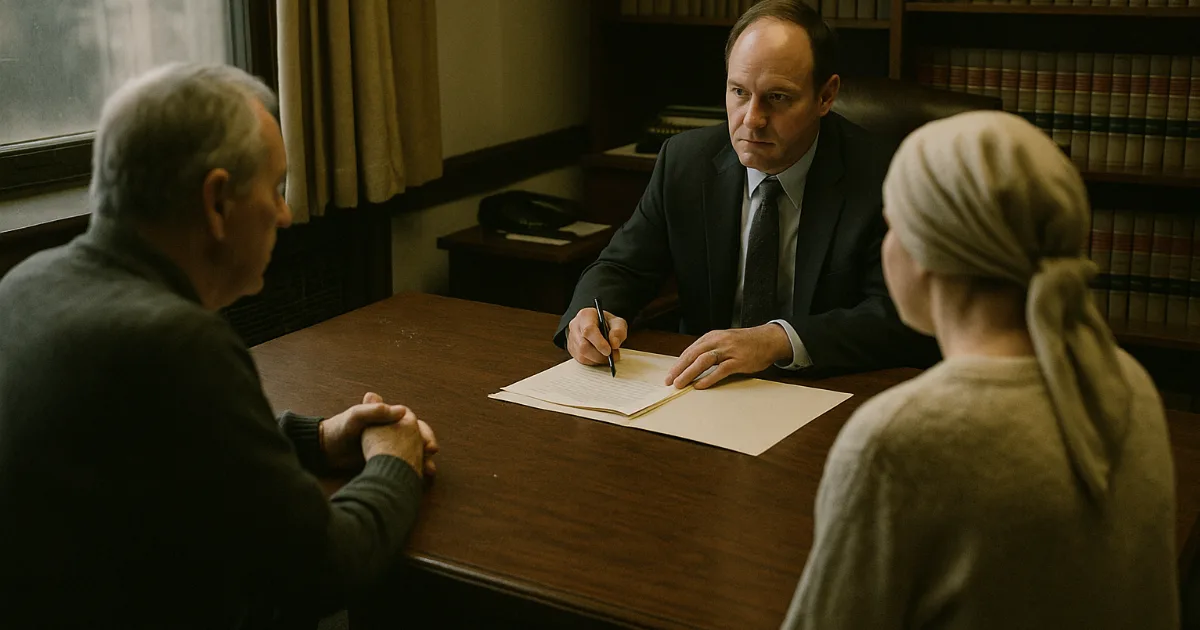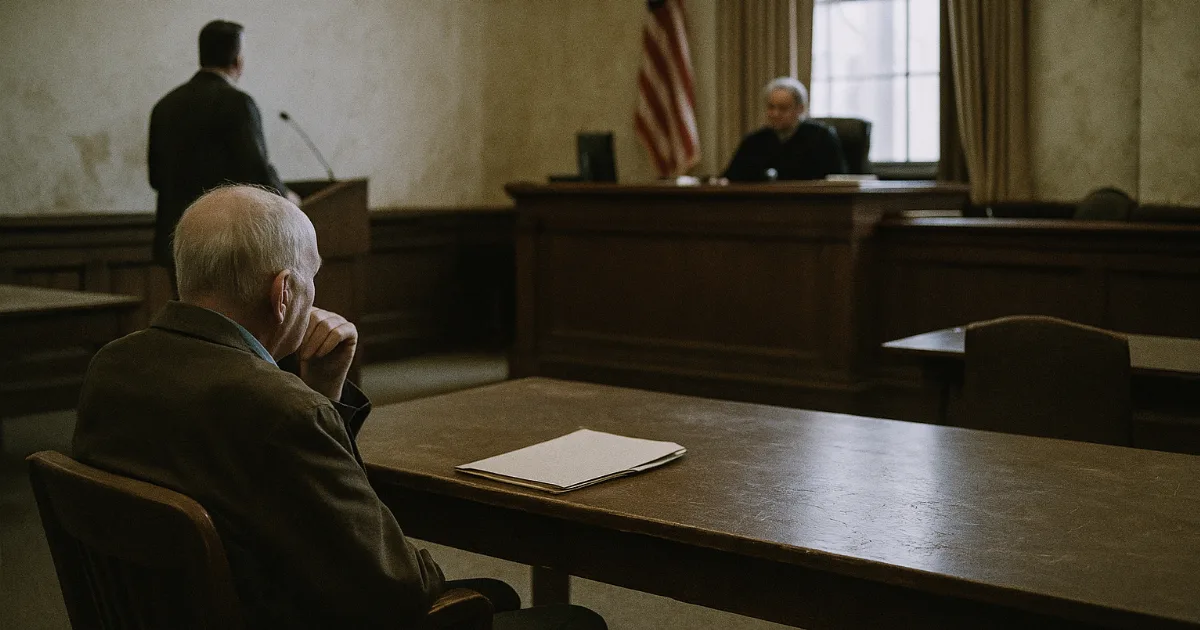

MADISON COUNTY, IL — The retired boilermaker had spent 34 years working in coal-fired power plants across southern Illinois, and for most of that time, asbestos insulation was as common as coffee on the job site. Nobody warned him. Nobody told the men wrapping pipes in lagging that the white fibers drifting through the air would, decades later, settle into the lining of their lungs and refuse to leave. When his diagnosis came — pleural mesothelioma, stage III — his family had one question that no oncologist could answer: who was responsible?
That question, asked by thousands of Illinois families every year, has made the state one of the most consequential battlegrounds in American asbestos litigation. Madison County, a small jurisdiction just east of St. Louis, has for years ranked among the top counties in the nation for asbestos lawsuit filings, drawing national attention for its plaintiff-friendly environment and the scale of its verdicts. If you or someone you love is navigating a mesothelioma diagnosis in Illinois, understanding the legal landscape here isn't just useful. It's essential.
What Makes Illinois a Pivotal State for Asbestos Lawsuits?
Illinois has earned its reputation as a center of asbestos litigation for concrete, documented reasons. Madison County Circuit Court has consistently ranked among the highest-volume asbestos dockets in the country, according to reporting from Law360, which tracks asbestos case filings nationally. The county's combination of an industrial history, a plaintiff-friendly judicial environment, and well-established procedural rules for asbestos cases has made it a destination for cases originating across the Midwest.
The industrial roots run deep. Illinois was home to major steel mills, refineries, chemical plants, shipyards along Lake Michigan, and construction trades that relied heavily on asbestos-containing materials well into the 1980s. The asbestos exposure that workers absorbed in those environments didn't manifest as mesothelioma until decades later, which is why Illinois courts are still processing cases tied to workplaces that closed before many current jurors were born.
The legal framework in Illinois also offers genuine advantages for plaintiffs. The state's statute of limitations for mesothelioma cases gives victims two years from the date of diagnosis, or from the date they knew or reasonably should have known that their illness was asbestos-related, to file a lawsuit. This discovery rule is critical, because mesothelioma's latency period, which can stretch 20 to 50 years after exposure, means that many patients don't connect their illness to a specific job site without legal and medical investigation. Illinois courts have consistently interpreted this discovery rule in ways that protect victims rather than shield defendants.
According to data tracked by the American Bar Association's Tort Trial and Insurance Practice Section, asbestos litigation remains one of the longest-running mass tort dockets in American legal history, with Illinois courts handling a disproportionately large share of active cases. That concentration has created a local bar of highly specialized asbestos attorneys with the kind of courtroom experience and defendant-specific knowledge that can make a measurable difference in outcomes.
Why Does Venue Matter So Much for Mesothelioma Families?
For a family sitting in a hospital waiting room, absorbing a mesothelioma diagnosis, the question of which county to file in can feel impossibly abstract. But venue is one of the most consequential decisions in an asbestos case, and it's one that an experienced Illinois mesothelioma lawyer will address immediately.
Madison County has historically produced some of the largest asbestos verdicts in the state, including multi-million-dollar jury awards against major industrial defendants. The county's judges have deep familiarity with asbestos science and causation arguments, which means plaintiffs don't spend weeks of trial time educating a court on the basic mechanics of how mesothelioma develops. Cook County, home to Chicago, offers its own advantages: a large plaintiff pool, sophisticated jurors accustomed to complex commercial litigation, and proximity to the major industrial corridors where many Illinois exposure cases originated.
In my experience representing mesothelioma families, the venue decision is rarely obvious. It depends on where the plaintiff was exposed, where the defendants are incorporated or do business, and where the most favorable procedural rules apply. Getting that decision wrong can cost a family months of delay or, in the worst cases, a reduced recovery.
What the courts have consistently recognized is that mesothelioma plaintiffs face an inherently compressed timeline. The median survival after diagnosis remains approximately 12 to 21 months, according to the National Cancer Institute's SEER database. That biological reality creates a legal urgency that good asbestos counsel understands viscerally. Illinois courts have mechanisms, including expedited trial settings for terminally ill plaintiffs, that can move a case from filing to verdict in months rather than years when properly invoked.
How Do Illinois Mesothelioma Verdicts and Settlements Actually Work?
Picture a family in Rockford whose father worked at a local manufacturing plant for 28 years. He's been diagnosed with peritoneal mesothelioma, and his doctors have told him he has 18 months. His wife wants to know: what can a lawsuit actually recover, and how long will it take?
The honest answer is that Illinois mesothelioma cases resolve through several overlapping channels, and an experienced attorney will pursue all of them simultaneously. The first is direct litigation against solvent defendants, the companies that manufactured, distributed, or installed asbestos-containing products and remain in business today. The second is claims against asbestos bankruptcy trusts, which were established by companies that went bankrupt under the weight of asbestos liability but were required by courts to set aside funds for future claimants. According to the RAND Corporation's comprehensive analysis of asbestos bankruptcy trusts, more than 60 such trusts have been established, holding billions of dollars in aggregate for qualified claimants.
For a typical Illinois mesothelioma case involving occupational exposure, a skilled attorney will identify every product the plaintiff was exposed to, research which manufacturers are still solvent defendants and which have reorganized into trusts, and file claims in both channels. Trust claims and litigation can proceed simultaneously under Illinois law, which maximizes recovery without requiring a family to choose one path over another.
Settlements in Illinois mesothelioma cases vary significantly based on the plaintiff's age, the severity of the diagnosis, the number of identifiable defendants, the clarity of the exposure history, and the jurisdiction. According to reporting from Bloomberg's asbestos legal coverage, mesothelioma settlements nationally have ranged from several hundred thousand dollars to well over a million dollars, with jury verdicts in strong cases reaching into the tens of millions. Illinois, with its experienced asbestos bar and plaintiff-favorable venues, has produced outcomes at the higher end of that spectrum.
The guide to filing a mesothelioma lawsuit outlines the general process, but the Illinois-specific procedural requirements, including mandatory case management conferences, expert witness disclosure rules, and the state's approach to punitive damages, are best navigated with local counsel who knows the specific judges and defense firms involved.
!Attorney with case files standing in courthouse hallway with geometric window shadows
What Should You Look for in an Illinois Mesothelioma Lawyer?
Not every personal injury attorney is equipped to handle a mesothelioma case, and the difference between a generalist and a specialist can be measured in dollars and in time, two things mesothelioma families can't afford to waste.
The legal landscape for asbestos victims in Illinois is populated by both highly capable specialists and by firms that advertise aggressively but lack the trial infrastructure to actually litigate a complex asbestos case. Here is what actually matters when evaluating an Illinois mesothelioma attorney.
First, look for a firm with an established asbestos litigation practice, not just a personal injury practice that handles asbestos cases occasionally. Mesothelioma litigation requires a proprietary database of defendants and products, relationships with the specific medical experts who can testify credibly about causation, and knowledge of which defendants are likely to settle quickly versus which will fight to verdict. That institutional knowledge takes years to build and can't be replicated by a generalist firm taking its first asbestos case.
Second, ask about trial experience specifically. Many asbestos cases settle, but the threat of trial is what drives settlement value. A defendant's legal team knows immediately whether the plaintiff's attorney has the capability and willingness to take a case to a Madison County or Cook County jury. If the answer is no, that knowledge depresses settlement offers. The directory of mesothelioma lawyers provides a starting point for identifying firms with demonstrated asbestos-specific experience in Illinois.
Third, confirm that the firm handles cases on a contingency fee basis, which is standard in mesothelioma litigation. You should pay nothing unless the case produces a recovery. Any firm asking for upfront fees in a mesothelioma case is a red flag.
Finally, evaluate the firm's capacity to work quickly. Given the compressed survival timelines for most mesothelioma patients, an attorney who tells you a case will take three years to resolve without explaining why is not accounting for your reality. Expedited trial settings exist precisely for terminally ill plaintiffs, and an experienced Illinois asbestos attorney will know how to invoke them.

What Role Do Asbestos Trust Funds Play in Illinois Cases?
For many Illinois families, the asbestos bankruptcy trust system is both a lifeline and a source of confusion. Understanding how it works can mean the difference between recovering partial compensation and recovering the full amount a family deserves.
When major asbestos manufacturers faced catastrophic liability in the 1980s and 1990s, many filed for bankruptcy protection. As a condition of reorganization, federal bankruptcy courts required these companies to establish dedicated trust funds to compensate future claimants. According to the RAND Corporation's analysis, these trusts collectively hold tens of billions of dollars and have paid out claims to hundreds of thousands of victims over the past three decades.
For an Illinois mesothelioma patient, trust claims are often filed alongside direct litigation. If a patient was exposed to products made by a bankrupt company, such as certain insulation manufacturers or gasket producers, a trust claim can be filed independently of any lawsuit. The trust's eligibility criteria typically require a confirmed mesothelioma diagnosis and evidence of exposure to the trust debtor's products, which is where the exposure history investigation conducted by a skilled attorney becomes critical.
The intersection of trust claims and active litigation is legally complex. Illinois courts have rules about how trust recoveries affect jury verdicts in concurrent litigation, and defendants in active cases will attempt to use trust payment amounts to reduce their own liability. Navigating that interplay requires an attorney who has handled it before, not one learning on the job with your case.
For veterans who were exposed to asbestos during military service, particularly those who worked in Navy shipyards or aboard vessels insulated with asbestos-containing materials, there is an additional layer of potential recovery through VA benefits. The VA benefits eligibility tool can help veterans and their families determine whether they qualify for service-connected disability compensation, which can be pursued simultaneously with civil litigation.
What Happens at Trial When an Illinois Asbestos Case Goes to Verdict?
Most mesothelioma cases settle before reaching a jury, but the ones that go to verdict in Illinois have produced some of the most significant asbestos awards in recent American legal history. Understanding what happens at trial, and why some cases go that far, helps families understand the full arc of the litigation process.
Defendants choose to fight cases to verdict for several reasons. Sometimes they dispute that their specific product was present at the plaintiff's worksite. Sometimes they argue that other exposures, not their product, caused the mesothelioma. Sometimes the calculus of settlement versus verdict simply doesn't favor resolution. In those situations, an Illinois mesothelioma attorney must be prepared to try the case before a jury, presenting medical testimony about causation, industrial hygiene evidence about exposure levels, and corporate documents showing what the defendant knew and when.
The causation science in mesothelioma cases has become well-established in Illinois courts. Medical experts can testify, with a reasonable degree of scientific certainty, that asbestos exposure caused a patient's mesothelioma, and that even a single defendant's product can constitute a substantial contributing cause under Illinois's legal standard. That standard, which does not require a plaintiff to prove that any single defendant was the sole cause, is a critical feature of Illinois asbestos law that experienced plaintiffs' attorneys understand how to use.
For families watching a loved one decline during litigation, the emotional weight of a trial can be immense. Illinois courts have shown sensitivity to this reality through expedited trial settings that allow terminally ill plaintiffs to testify while they are still able. Those settings, when invoked properly, can move a case from filing to verdict in six months or less, giving a plaintiff the opportunity to see justice before they die. That matters more than most legal observers acknowledge.
If you're at the early stages of understanding a mesothelioma diagnosis, the answers to common mesothelioma questions and information about diagnosis and treatment options are essential first steps. Understanding the medical picture fully, including what chemotherapy protocols might be part of treatment, helps families engage with both medical and legal counsel from a position of knowledge rather than fear.
What Should Illinois Families Do Right Now?
A family that received a mesothelioma diagnosis last week is not in a position to wait. The two-year statute of limitations begins running at diagnosis, but the practical timeline for building a strong case is even more compressed. Exposure histories fade. Witnesses become unavailable. Corporate records get harder to obtain. The earlier a qualified Illinois mesothelioma attorney can begin the investigation, the stronger the case that can be built.
The first step is a consultation with an attorney who specializes in asbestos litigation in Illinois, not a general personal injury firm, not a national call center that will refer the case to someone else. A real consultation should include a detailed review of the plaintiff's work history, an explanation of which defendants are likely targets, and an honest assessment of what the case might recover and on what timeline.
The second step is preserving the exposure history. If the diagnosed patient is still able to provide detailed information about every job site, every product, every employer, that information should be documented immediately. Family members who worked alongside the patient or who remember specific products from that era can also provide critical corroborating detail.
The third step is understanding that pursuing legal compensation does not conflict with pursuing the best possible medical care. These are parallel tracks. A good mesothelioma attorney will not slow down treatment decisions or create additional stress for a family already under enormous pressure. The legal process runs in the background while the patient and family focus on health.
Paul Danziger, who has represented mesothelioma families for decades, put it plainly: "The families who wait, who think they need to understand everything before they call an attorney, are the ones who sometimes run out of time. A single phone call to the right lawyer costs nothing and preserves every option. Waiting costs options you can never get back."
Illinois has the courts, the legal precedents, and the specialized bar to deliver meaningful justice for mesothelioma families. The question is whether families know how to access it before the clock runs out.
!Why Illinois Remains Ground Zero for Mesothelioma Litigation in for mesothelioma legal cases

Frequently Asked Questions About Illinois Mesothelioma Lawsuits
How long do I have to file a mesothelioma lawsuit in Illinois?
Illinois gives mesothelioma patients two years from the date of diagnosis, or from the date they knew or reasonably should have known their illness was asbestos-related, to file a lawsuit. This discovery rule protects victims whose diagnosis comes decades after exposure. Missing this deadline typically bars any recovery, which is why consulting an attorney immediately after diagnosis is critical.
Can I file both a lawsuit and a trust fund claim in Illinois?
Yes. Illinois mesothelioma victims can pursue direct litigation against solvent defendants while simultaneously filing claims against asbestos bankruptcy trusts. These are separate legal processes that can proceed in parallel, and an experienced Illinois asbestos attorney will manage both simultaneously to maximize total recovery. According to RAND Corporation research, more than 60 active trusts hold funds for qualified claimants.
Why is Madison County, Illinois significant for asbestos cases?
Madison County Circuit Court has ranked among the highest-volume asbestos dockets in the United States for years, according to Law360's national case-filing data. The county's judges have extensive familiarity with asbestos causation science, its procedural rules accommodate complex multi-defendant cases, and its juries have a track record of significant verdicts in mesothelioma cases. These factors make it a strategically important venue for many Illinois plaintiffs.
What does an Illinois mesothelioma attorney actually do?
An Illinois mesothelioma attorney investigates the plaintiff's full exposure history, identifies all potentially liable defendants, files lawsuits and trust claims simultaneously, manages discovery and expert witnesses, negotiates settlements, and prepares for trial if necessary. All of this is done on a contingency fee basis, meaning the family pays nothing unless the case produces a recovery. The attorney absorbs all upfront costs of litigation.
How much can an Illinois mesothelioma case recover?
Recovery in Illinois mesothelioma cases depends on the plaintiff's age, diagnosis severity, number of identifiable defendants, and clarity of the exposure history. According to Bloomberg's asbestos legal coverage, settlements nationally range from several hundred thousand to over a million dollars, with jury verdicts in strong cases reaching into the tens of millions. Illinois's plaintiff-favorable venues have produced outcomes at the higher end of that national range.
What if the patient dies before the lawsuit is resolved?
Illinois allows a wrongful death claim to be substituted for a personal injury claim if the plaintiff dies during litigation. Family members, typically a surviving spouse or adult children, can continue the case and recover damages including loss of companionship, financial support, and the decedent's pre-death pain and suffering. An attorney will ensure the transition from personal injury to wrongful death is handled without disrupting the case.
Do Illinois veterans with mesothelioma have additional legal options?
Yes. Veterans who developed mesothelioma from asbestos exposure during military service can pursue VA disability benefits separately from civil litigation. These benefits are not mutually exclusive with a lawsuit. Illinois veterans who served in the Navy, worked in shipyards, or were stationed at facilities where asbestos was prevalent should consult both a mesothelioma attorney and a VA benefits specialist to pursue all available compensation channels simultaneously.
Attorney Advertising. Past results do not guarantee future outcomes. Every case is unique. The verdicts and settlements described are not a guarantee of similar results. Every case is different.