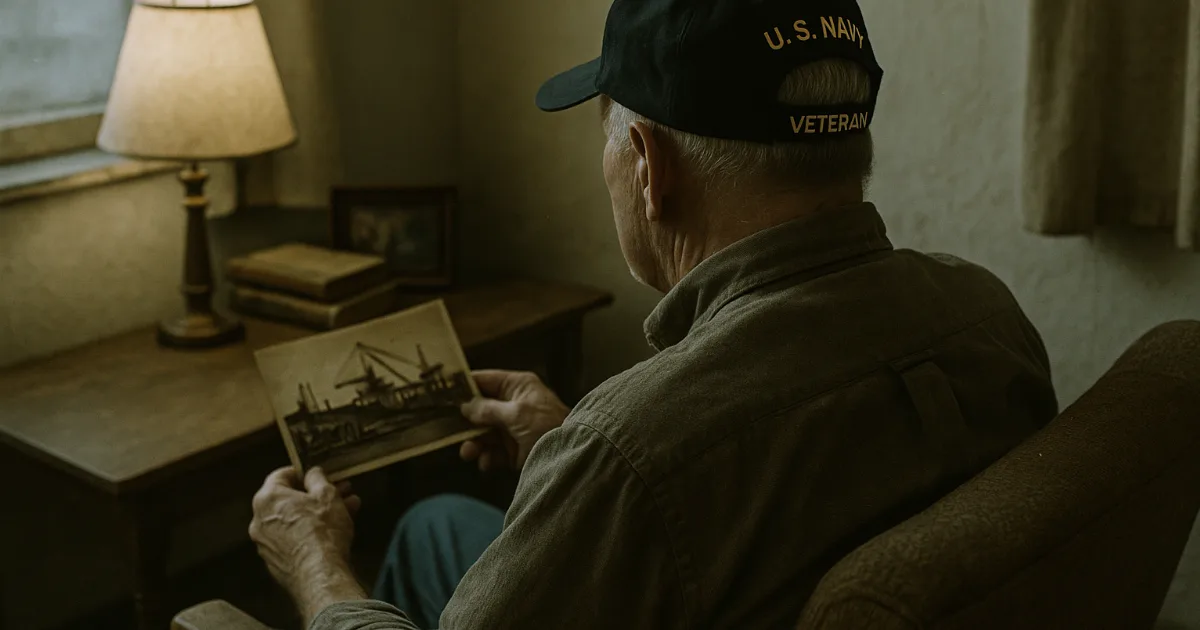

CHICAGO, IL — The call came three weeks after his retirement party. A 67-year-old Navy machinist from Waukegan, who had spent 24 years below deck on vessels where asbestos insulation wrapped every pipe and boiler fitting, was told his shortness of breath wasn't emphysema after all. It was pleural mesothelioma. His daughter, sitting next to him in the exam room at the Jesse Brown VA Medical Center, immediately pulled out her phone and searched for an Illinois mesothelioma lawyer. What she found was a maze of competing claims, confusing VA paperwork, and asbestos trust funds she'd never heard of.
His story isn't unique. It's the rule, not the exception. Across Illinois, from the naval training stations of Great Lakes to the shipyards along the Chicago River to the industrial corridors of Joliet and Decatur, veterans who were exposed to asbestos during their military service are being diagnosed with mesothelioma decades after the fact — and the majority of them are navigating a legal and benefits system that was built for people with lawyers, not people fighting for their lives.
What Makes Illinois a Critical State for Veterans' Mesothelioma Claims?
Illinois sits at the intersection of two of the heaviest asbestos exposure industries in American history: military service and heavy manufacturing. Veterans who served during the Korean War era through the early 1980s faced near-constant asbestos exposure, particularly in the Navy, Army Corps of Engineers, and Air Force maintenance roles. According to the U.S. Department of Veterans Affairs, asbestos was used extensively in military settings including shipyards, military bases, and aboard ships, and veterans who worked in construction, carpentry, or insulation roles during that period carry the highest documented risk [Source: VA Public Health, publichealth.va.gov/exposures/asbestos].
Illinois amplifies that risk. The state was home to multiple high-exposure military installations, including Naval Station Great Lakes in North Chicago, which processed hundreds of thousands of recruits and active-duty personnel through facilities built with asbestos-laden materials. Beyond the bases, Illinois veterans often returned home to careers in the state's steel mills, refineries, and power plants — industries that compounded their military asbestos exposure with civilian-sector exposure that can be equally legally actionable.
What I tell every veteran I work with is this: your military service is only one piece of the exposure puzzle. If you also worked in construction, manufacturing, or any industrial trade after discharge, you may have claims against both the VA system and multiple private asbestos trust funds simultaneously. Those are not mutually exclusive paths. They are parallel ones.
The legal landscape in Illinois is also relatively favorable for mesothelioma plaintiffs. Cook County Circuit Court and Madison County Circuit Court, located in Edwardsville, have both handled substantial volumes of asbestos litigation. Madison County in particular has been a nationally recognized venue for asbestos cases, with plaintiffs' attorneys citing its experienced judiciary and established case management protocols as reasons to file there [SOURCE NEEDED for specific Madison County filing statistics].
Why Does This Matter for Illinois Veterans With Mesothelioma?
The stakes here are not abstract. Mesothelioma is a cancer with a median survival time that is measured in months, not years, for most patients. The window between diagnosis and the point at which a veteran can no longer participate meaningfully in their own legal case is often shorter than families expect. That urgency is compounded by Illinois' statute of limitations, which gives mesothelioma patients two years from the date of diagnosis to file a personal injury lawsuit, and two years from the date of death for families pursuing wrongful death claims [SOURCE NEEDED for Illinois SOL specific statute citation].
For VA disability claims, the timeline is different but no less consequential. Veterans who receive a mesothelioma diagnosis are typically eligible for a 100% disability rating, which as of 2024 carries a monthly compensation rate exceeding $3,700 for a single veteran with no dependents, according to VA compensation tables [Source: VA.gov, va.gov/disability/how-to-file-claim]. That money starts from the date the claim is filed, not the date of diagnosis — which means every month a veteran delays filing is a month of compensation permanently lost.
"The veterans I've sat across from didn't know they had a legal case. They thought this was just something that happened to them. They earned every dollar of compensation available to them, and the system owes them a straight answer about how to get it," said Larry Gates, a veterans benefits advocate who has worked with hundreds of Illinois veterans on mesothelioma claims.
For families who are simultaneously managing a loved one's treatment and trying to understand their options, the combination of VA claims, civil litigation, and asbestos trust fund filings can feel paralyzing. That's precisely why working with an Illinois mesothelioma lawyer who has specific experience in veterans' cases matters so much. Not all asbestos attorneys understand VA benefit coordination, and not all VA-accredited claims agents understand civil litigation. The intersection of both is where veterans get the most complete recovery.
Families navigating this process can find additional support resources at mesothelioma-lung-cancer.org/answers/families/, which provides guidance specifically for caregivers and surviving family members.
How Does the VA Claims Process Work for Illinois Veterans?
There's a common misconception that filing a VA disability claim for mesothelioma is a long, uncertain process. In some cases, it is. But for mesothelioma specifically, the VA has established a presumptive service connection framework that significantly streamlines the path to benefits for veterans who can document their service and exposure.
According to the VA's public health guidance on asbestos exposure, the VA recognizes that veterans who served in certain occupational specialties — including boilermakers, shipyard workers, insulation installers, pipefitters, and demolition crews — have documented asbestos exposure histories that support a presumptive connection to diseases including mesothelioma, lung cancer, and asbestosis [Source: VA Public Health, publichealth.va.gov/exposures/asbestos]. This matters enormously for veterans who may have left the service decades ago and no longer have detailed records of their daily work environments.
The claims process itself begins at VA.gov, where veterans or their representatives can initiate a disability claim online, by mail, or in person at a regional VA office [Source: VA.gov, va.gov/disability/how-to-file-claim]. For Illinois veterans, the Chicago Regional Office handles claims for most of the state. The key documents needed include the veteran's DD-214 discharge papers, any available service records documenting occupational exposure, a current mesothelioma diagnosis from a licensed physician, and a nexus statement connecting the diagnosis to service-related asbestos exposure.
Veterans who served during this period — roughly 1940 through 1980 — often don't need to prove specific dates or locations of exposure. The VA's own occupational exposure records and the well-documented history of military asbestos use during that era can support the claim. What veterans do need is an advocate who knows how to frame the claim correctly from the start, because a poorly filed initial claim can result in delays of six months or more.
For veterans unsure whether they qualify, the VA benefits eligibility tool at mesothelioma-lung-cancer.org/tools/va-benefits-eligibility/ provides a step-by-step assessment based on service history and diagnosis.
It's also worth understanding that VA health care benefits and VA disability compensation are separate systems. A veteran can receive VA-funded mesothelioma treatment, including access to specialized oncology programs, while simultaneously pursuing a disability compensation claim. The VA health care eligibility guidelines confirm that veterans with service-connected conditions receive priority enrollment status, meaning they can access care without the income-based eligibility restrictions that apply to other veterans [Source: VA.gov, va.gov/health-care/eligibility].
!How Does the VA Claims Process Work for Illinois Veterans?
What Can an Illinois Mesothelioma Lawyer Actually Do That the VA Can't?
Picture a 71-year-old Air Force veteran from Springfield who spent eight years as a maintenance technician working on aircraft hangars built in the 1950s and 1960s. His VA claim is approved. He's receiving disability compensation. His mesothelioma treatment is covered. By every measure, the system is working for him. But what the VA cannot do is pursue the manufacturers of the asbestos-containing products he worked with every day — the insulation companies, the brake lining manufacturers, the gasket suppliers — who knew their products were deadly and sold them anyway.
That's where civil litigation and asbestos trust fund claims come in. More than 60 asbestos bankruptcy trust funds have been established by former manufacturers and suppliers who faced overwhelming litigation liability [SOURCE NEEDED for specific trust fund count]. These trusts were created specifically to compensate victims, including veterans, who were harmed by asbestos-containing products. The total value of assets held across these trusts is estimated in the billions of dollars, and claims can be filed against multiple trusts simultaneously depending on which products a veteran was exposed to.
An experienced Illinois mesothelioma lawyer performs what's called an exposure history review, working with the veteran or their family to identify every product, every jobsite, and every employer associated with asbestos contact throughout the veteran's working life. That process often uncovers five, ten, or even fifteen separate trust fund claims that a veteran would never have identified on their own. Each trust has its own filing requirements, payment schedules, and evidentiary standards. Navigating all of them simultaneously, while also managing a VA claim and potentially a civil lawsuit against solvent defendants, requires legal expertise that is specific to this disease.
For veterans in Illinois, the mesothelioma-lung-cancer.org/locations/ resource provides state-specific guidance on legal options and legal teams with Illinois mesothelioma experience.
Civil lawsuits against solvent defendants — companies that are still operating and were not forced into bankruptcy — follow a different path. These cases are filed in state or federal court, and Illinois venues including Cook County and Madison County have established track records with asbestos litigation. Settlement values in mesothelioma cases vary widely depending on the strength of the exposure evidence, the defendant's liability, and the patient's age and prognosis, but mesothelioma settlements have historically ranged from $1 million to $2.4 million, with trial verdicts reaching significantly higher in cases with strong evidence of corporate negligence [SOURCE NEEDED for specific settlement range citation with source].

What Are the Known Asbestos Exposure Sites in Illinois?
For veterans trying to build a legal case, identifying where and how they were exposed to asbestos is the foundation of everything that follows. Illinois has a well-documented history of high-risk asbestos exposure sites, many of which directly intersect with military service and post-service employment.
Naval Station Great Lakes, located in North Chicago on the western shore of Lake Michigan, is one of the most significant military exposure sites in the Midwest. As the Navy's primary enlisted training command, it processed millions of service members through facilities built during the World War II era, when asbestos was used in virtually every aspect of construction. Veterans who trained or served at Great Lakes and later developed mesothelioma have a documented basis for service connection that the VA recognizes [Source: VA Public Health, publichealth.va.gov/exposures/asbestos].
Beyond Great Lakes, Illinois veterans frequently worked in the state's industrial sector after discharge. The steel mills of Gary and East Chicago (just across the Indiana border but employing large numbers of Illinois veterans), the refineries in Joliet and Lemont, the power plants operated by Commonwealth Edison throughout the Chicago metropolitan area, and the construction trades across the entire state all used asbestos-containing materials extensively through the 1970s. Veterans who worked in any of these sectors after service may have legal claims that are entirely separate from their VA benefits.
The exposure sites directory at mesothelioma-lung-cancer.org/directory/exposure-sites/ maintains a searchable database of documented Illinois asbestos exposure locations that attorneys and veterans can use to support claims.
For veterans who served at Camp Lejeune in North Carolina before 1988, there is an additional and distinct legal pathway. The Camp Lejeune Justice Act of 2022 created a federal cause of action for veterans and family members who were exposed to contaminated water at the base, and while that contamination issue is separate from asbestos, many veterans who served at Lejeune also have asbestos exposure histories from their broader service careers. The VA maintains specific resources for Camp Lejeune veterans at publichealth.va.gov/exposures/camp-lejeune [Source: VA Public Health, publichealth.va.gov/exposures/camp-lejeune].
Understanding Mesothelioma Treatment Options Available to Illinois Veterans
A diagnosis is not the end of the conversation. It's the beginning of a different one. Veterans who are diagnosed with mesothelioma today have access to treatment options that simply didn't exist a decade ago, and the VA system in Illinois has expanded its oncology capabilities to reflect that reality.
Pleural mesothelioma, the most common form of the disease, affecting the lining of the lungs, is treated through a combination of surgery, chemotherapy, radiation, and increasingly, immunotherapy [Source: VA Public Health, publichealth.va.gov/exposures/asbestos]. Peritoneal mesothelioma, which affects the abdominal lining, has seen particularly significant treatment advances, with heated intraperitoneal chemotherapy (HIPEC) procedures producing median survival times that far exceed historical benchmarks. Veterans interested in understanding their specific diagnosis type can find detailed information at mesothelioma-lung-cancer.org/encyclopedia/peritoneal-mesothelioma/.
The Jesse Brown VA Medical Center in Chicago, the Edward Hines Jr. VA Hospital in Hines, and the Marion VA Medical Center in southern Illinois all provide oncology services, though veterans with mesothelioma are often referred to specialized cancer centers for surgical and immunotherapy consultations. The VA's Community Care Network allows veterans to receive treatment at non-VA facilities when VA facilities cannot provide the required specialty care in a timely manner, which is particularly relevant for mesothelioma given the disease's rarity and the specialized expertise required.
For veterans and families trying to understand the full range of treatment options available, mesothelioma-lung-cancer.org/diagnosis-treatment/ provides a comprehensive overview of current protocols, clinical trials, and specialist referral pathways.
The VFW has also been an active advocate for expanding VA mesothelioma treatment resources, pushing Congress to ensure that veterans with asbestos-related diseases have access to the same quality of care as patients at civilian cancer centers [Source: VFW Advocacy, vfw.org/advocacy]. For veterans who are members, their local VFW post can connect them with service officers who can assist with VA claims at no cost.
What Should Veterans and Families Do Right Now?
Every week of delay in this process has a measurable cost. Not in abstract terms. In real dollars and real treatment options. Here is what the process actually looks like for an Illinois veteran who has just received a mesothelioma diagnosis.
The first call should be to a VA-accredited claims agent or veterans service organization, not because the VA claim is more important than the legal case, but because the VA claim can be initiated immediately and benefits begin from the filing date. The VFW, DAV, and American Legion all have service officers in Illinois who can assist with this at no charge. The VA's online claims portal at va.gov/disability/how-to-file-claim allows a claim to be initiated in under an hour with the right documents in hand [Source: VA.gov, va.gov/disability/how-to-file-claim].
The second call should be to an Illinois mesothelioma lawyer with documented experience in asbestos litigation. Not a general personal injury firm. Not a national call-center operation that farms cases out to local counsel. A firm with attorneys who have actually tried or settled mesothelioma cases in Illinois courts, who understand the specific trust fund landscape, and who have experience coordinating civil claims with VA benefits so that one doesn't inadvertently affect the other.
The third step is a full exposure history review. This is typically done by the attorney's team and involves a detailed interview covering every job the veteran held, every military assignment, every product they worked with that might have contained asbestos. This process takes time and requires the veteran's active participation while they are still able to provide that history. Families of veterans who have already passed away can still pursue wrongful death claims, but the evidentiary record is harder to build after the fact.
The VA recognizes that mesothelioma is a terminal diagnosis and has procedures in place to expedite claims for veterans with life-limiting conditions. The Fully Developed Claim process, when used correctly, can significantly reduce the time between filing and a rating decision. Veterans should ask their claims representative specifically about expedited processing options.
Patient support resources, including assistance with transportation, housing near treatment centers, and financial support during the claims process, are available through organizations like CureMeso at curemeso.org/patient-support [Source: CureMeso, curemeso.org/patient-support]. These services exist specifically because the period between diagnosis and resolution of legal and VA claims is financially and emotionally brutal for families.
Veterans who served during this period didn't choose to be exposed to asbestos. They served their country in conditions that the military knew were dangerous, using materials that manufacturers knew were deadly. The compensation available through the VA system and the civil justice system exists because those facts were eventually acknowledged by courts, by Congress, and by the companies themselves. What I tell every veteran I work with, and what I'll say here plainly: you earned this. The only question is whether you pursue it.

Frequently Asked Questions
Can an Illinois veteran file both a VA disability claim and a civil lawsuit for mesothelioma?
Yes. VA disability compensation and civil litigation are separate legal processes and do not preclude each other. A veteran can receive monthly VA disability payments while simultaneously pursuing settlements or verdicts against asbestos manufacturers or filing claims against asbestos bankruptcy trust funds. An experienced Illinois mesothelioma lawyer can help coordinate both processes to avoid any inadvertent conflicts in the evidentiary record [Source: VA.gov, va.gov/disability/how-to-file-claim].
How long does a VA mesothelioma claim take to process in Illinois?
Processing times vary, but veterans who use the Fully Developed Claim process and submit all required documentation at the time of filing typically see decisions faster than those who file standard claims. The VA has expedited processing procedures for veterans with terminal diagnoses. The Chicago Regional Office handles most Illinois claims. Veterans should ask their service representative specifically about expedited review options given the nature of mesothelioma [Source: VA.gov, va.gov/disability/how-to-file-claim].
What is the statute of limitations for mesothelioma lawsuits in Illinois?
Illinois law provides a two-year statute of limitations for personal injury claims from the date of diagnosis, and two years from the date of death for wrongful death claims filed by surviving family members. Given that mesothelioma has a latency period of 20 to 50 years, the clock starts at diagnosis, not at the time of exposure. Veterans should consult an Illinois mesothelioma lawyer promptly after diagnosis to preserve all available legal options [SOURCE NEEDED for specific Illinois statute citation].
What is a mesothelioma asbestos trust fund and how does a veteran access one?
Asbestos bankruptcy trust funds were established by former asbestos manufacturers and suppliers who filed for bankruptcy protection due to overwhelming litigation liability. These trusts were created to compensate individuals harmed by their products, including veterans. Claims can be filed against multiple trusts simultaneously. An Illinois mesothelioma lawyer identifies which trusts apply based on the veteran's specific exposure history and manages the filing process on the veteran's behalf [SOURCE NEEDED for specific trust fund count and total asset value].
Does the VA provide mesothelioma treatment, or only compensation?
The VA provides both. Veterans with service-connected mesothelioma receive priority access to VA health care, including oncology services at VA medical centers in Chicago, Hines, and Marion. The VA's Community Care Network also allows veterans to receive treatment at non-VA specialty cancer centers when VA facilities cannot provide required care in a timely manner. VA health care eligibility is separate from disability compensation and can be initiated independently [Source: VA.gov, va.gov/health-care/eligibility].
What documentation does an Illinois veteran need to file a mesothelioma VA claim?
The core documents are the DD-214 discharge papers, a current mesothelioma diagnosis from a licensed physician, any available service records documenting occupational exposure, and a nexus statement connecting the diagnosis to service-related asbestos contact. Veterans who served in high-risk occupational specialties during the documented asbestos era may qualify for presumptive service connection, which reduces the evidentiary burden. A VA-accredited claims agent or VSO service officer can help assemble the complete package [Source: VA Public Health, publichealth.va.gov/exposures/asbestos].
Can family members of a deceased Illinois veteran still file a mesothelioma claim?
Yes. Surviving spouses, children, and other dependents may file VA Dependency and Indemnity Compensation (DIC) claims based on a veteran's service-connected mesothelioma death. Civil wrongful death lawsuits can also be filed within two years of the veteran's death. Trust fund claims may also still be available. Families should consult both a VA-accredited representative and an Illinois mesothelioma lawyer as soon as possible after a veteran's death to preserve all available options [Source: VA.gov, va.gov/disability/how-to-file-claim].
This article provides general information about VA benefits. Eligibility depends on individual service history and medical diagnosis.