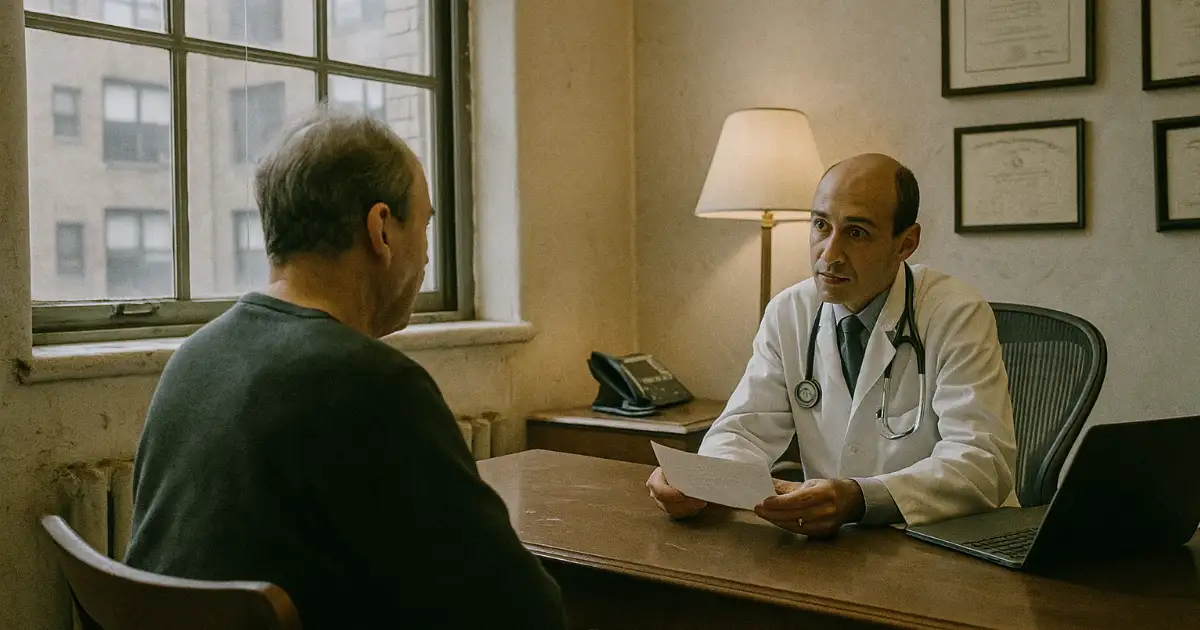
STATEN ISLAND, NY — His hands still bore the calluses of 28 years working in the Brooklyn Navy Yard. When the diagnosis came, it wasn't the word "mesothelioma" that hit hardest — it was the oncologist's next sentence: "You'll want to see a specialist for this."
For patients in New York City, that advice carries enormous weight. The city is home to some of the most concentrated mesothelioma expertise in the world, including programs at Memorial Sloan Kettering Cancer Center, NYU Langone Health, and Mount Sinai Hospital — institutions that collectively treat hundreds of mesothelioma cases each year. But knowing which doctor to see, which questions to ask, and how the city's specialized programs differ from one another can mean the difference between standard care and access to the most advanced treatment options available.
What Makes NYC a National Hub for Mesothelioma Treatment?
New York City's position as a mesothelioma treatment hub isn't accidental. It's the direct result of the city's industrial history and the concentration of academic medical centers that followed. From an occupational health perspective, New York's shipyards, power plants, and construction sites made it one of the most heavily asbestos-exposed urban environments in the twentieth century, and that exposure history created both the patient population and the institutional expertise to treat it.
According to the National Comprehensive Cancer Network (NCCN) guidelines for mesothelioma, patients with this diagnosis are strongly encouraged to seek care at high-volume centers with dedicated thoracic oncology and surgical programs. [Source: NCCN Mesothelioma Guidelines] New York City has at least four such centers, each with distinct research programs, surgical capabilities, and clinical trial portfolios.
Memorial Sloan Kettering Cancer Center (MSK) on the Upper East Side maintains one of the largest dedicated mesothelioma programs in North America. Its thoracic surgical team has performed hundreds of extrapleural pneumonectomies and pleurectomy/decortication procedures, the two primary surgical approaches for pleural mesothelioma. NYU Langone's Perlmutter Cancer Center has built a strong immunotherapy research pipeline, while Mount Sinai's Tisch Cancer Institute has deep roots in occupational medicine — a natural fit given that its researchers have studied asbestos-related disease for decades.
What the exposure data reveals is striking: New York State consistently ranks among the top five states for mesothelioma incidence, with the New York City metropolitan area accounting for a disproportionate share of those diagnoses. Workers in these industries — shipbuilding, construction, electrical work, and building maintenance — drove that concentration, and their legacy continues to shape which institutions have the deepest clinical experience.
Why Specialized Care Changes Outcomes for Mesothelioma Patients
The difference between a general oncologist and a mesothelioma specialist isn't just about credentials. It's about pattern recognition, surgical volume, and access to trials that most community hospitals will never offer.
According to research published in the Journal of Thoracic Oncology, outcomes for pleural mesothelioma patients are meaningfully better at high-volume thoracic surgery centers, where surgical teams perform these complex procedures regularly rather than occasionally. [Source: Journal of Thoracic Oncology] The surgery itself — whether pleurectomy/decortication or extrapleural pneumonectomy — requires a level of technical precision that only comes with repetition. A surgeon who performs two mesothelioma operations a year is not the same as one who performs thirty.
Beyond surgery, the immunotherapy revolution has fundamentally changed what's possible for mesothelioma patients. The FDA's 2020 approval of nivolumab plus ipilimumab (Opdivo/Yervoy) as a first-line treatment for unresectable pleural mesothelioma opened a new chapter in care. According to advances in immunotherapy research published in PubMed Central, combination checkpoint inhibitor regimens have demonstrated improved overall survival compared to chemotherapy alone in certain patient populations. [Source: PMC9441386, Advances in Immunotherapy for Mesothelioma] NYC's major cancer centers were among the earliest adopters of these protocols, and several are currently running trials that extend beyond approved regimens.
As I see it, the single most important decision a newly diagnosed mesothelioma patient in New York can make is getting to a specialist within the first four to six weeks. That window shapes everything — staging workup, surgical eligibility, and trial enrollment. General oncologists, through no fault of their own, often don't know what they don't know about this disease.
For patients trying to understand their diagnosis and treatment options, the gap between generalist and specialist care is rarely more consequential than it is with mesothelioma.
How Do NYC's Major Mesothelioma Programs Compare?
Choose the wrong specialist and you might miss a clinical trial you qualified for. Choose the right one and you might gain years. That's not hyperbole — it's what the data on high-volume centers consistently shows.
Memorial Sloan Kettering is widely regarded as the flagship mesothelioma program in New York. Its multidisciplinary team includes dedicated thoracic surgeons, medical oncologists, radiation oncologists, and pathologists who specialize in the disease's distinct subtypes — epithelioid, sarcomatoid, and biphasic. According to the American Cancer Society's survival statistics for mesothelioma, epithelioid mesothelioma carries a meaningfully better prognosis than sarcomatoid disease, making accurate subtype identification a critical first step. [Source: ACS, Survival Statistics for Mesothelioma] MSK's pathology department has the volume and subspecialty depth to make those distinctions reliably.
NYU Langone's Perlmutter Cancer Center brings a different strength: its research focus on targeted therapies and biomarker-driven treatment. For patients whose tumors carry specific genetic alterations, NYU's molecular profiling capabilities can open doors to trials that purely surgical programs might not flag. The center's participation in national cooperative group trials also means patients may access protocols being tested at institutions across the country.
Mount Sinai's Tisch Cancer Institute occupies a unique position because of its occupational medicine heritage. The hospital's Irving J. Selikoff Occupational Health Clinical Center — named for the physician who first established the link between asbestos and mesothelioma in the 1960s — continues to treat patients with asbestos-related diseases. From an occupational health perspective, that institutional memory matters. Clinicians there understand the exposure histories of pipefitters, electricians, and construction workers in ways that shape both diagnosis and patient communication.
Weill Cornell Medicine and NewYork-Presbyterian Hospital round out the city's major programs, with a thoracic oncology team that participates in multi-institutional trials and offers access to novel chemotherapy combinations. Research on bevacizumab in combination with chemotherapy for pleural mesothelioma, published in PubMed Central, has informed protocols at centers like Weill Cornell, where combination regimens are evaluated on a case-by-case basis for eligible patients. [Source: PMC7049548, Bevacizumab in Combination with Chemotherapy for Pleural Mesothelioma]
For patients outside Manhattan, the treatment centers directory provides a broader map of specialized programs across the New York metro area and beyond.
!How Do NYC's Major Mesothelioma Programs Compare? for mesothelioma research cases
What Questions Should You Ask a Mesothelioma Specialist?
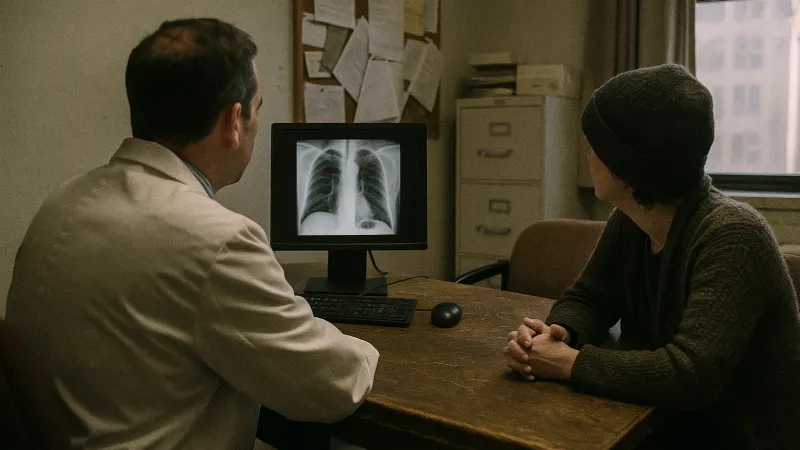
Sitting across from a thoracic oncologist for the first time is overwhelming. Most patients remember maybe a third of what's said. That's why preparation matters more than almost anything else in those early appointments.
The most important questions aren't about statistics — they're about specifics. How many mesothelioma patients does this physician treat per year? What surgical procedures does their team perform, and what are their institutional outcomes? Is the patient eligible for any open clinical trials, and if so, what are the enrollment windows? What is the recommended staging workup, and does it include PET-CT, mediastinoscopy, or diagnostic laparoscopy for peritoneal cases?
According to the NIH's clinical reference on diagnosis and treatment of mesothelioma, accurate staging is foundational to treatment planning, and the staging workup at specialized centers is substantially more thorough than what patients typically receive at community hospitals. [Source: NCBIBooks NBK304381] That difference in staging accuracy directly affects treatment recommendations.
Patients should also ask about the center's tumor board process. At MSK, NYU, and Mount Sinai, mesothelioma cases are typically reviewed by multidisciplinary tumor boards where surgeons, oncologists, and radiologists collectively determine the treatment approach. That collaborative model reduces the risk of any single specialist's blind spots driving the plan.
For patients concerned about the financial and legal dimensions of their diagnosis, understanding asbestos exposure history is often the first step toward identifying whether a legal claim is possible. Many NYC mesothelioma patients have occupational exposure histories that qualify them for compensation through asbestos trust funds or litigation, and a specialist who understands that history can document it in ways that support a legal case.
The Role of Emerging Research in NYC's Treatment Landscape
New York's academic medical centers don't just treat mesothelioma — they're actively working to change what's possible. Several trials currently enrolling at NYC institutions represent the leading edge of what patients might access.
Gene therapy approaches for mesothelioma have moved from theoretical to early clinical testing. Research published in PubMed Central has explored viral vector delivery of tumor suppressor genes and immune-activating sequences directly into the pleural space, an approach that takes advantage of mesothelioma's localized biology. [Source: PMC8234567, Gene Therapy Approaches for Mesothelioma] While these trials remain in early phases, NYC's academic centers are among the few in the country with the infrastructure to run them safely.
Immunotherapy combinations continue to be the most active area of clinical development. Beyond the approved nivolumab/ipilimumab regimen, researchers are testing combinations that add anti-LAG-3 antibodies, TIGIT inhibitors, and tumor-infiltrating lymphocyte (TIL) therapies to existing checkpoint blockade. According to research indexed in Clinical Cancer Research, mesothelioma's immunosuppressive tumor microenvironment is one of the primary obstacles to durable responses, and newer combination strategies are designed specifically to address that barrier. [Source: AACR Journals, Clinical Cancer Research]
For patients who have already received first-line therapy, the question of what comes next is often where NYC's trial access matters most. Second-line options for mesothelioma remain limited in the community setting, but at major academic centers, trial enrollment can provide access to agents that aren't yet commercially available. The locations resource can help patients identify which NYC-area programs are currently enrolling.
Patients dealing with related respiratory conditions should also be aware that mesothelioma specialists often have expertise in lung cancer and other asbestos-related malignancies, making a single specialist visit potentially relevant to multiple diagnostic questions.
What Should Patients and Families Do Next?
A diagnosis this serious demands a plan, and that plan starts with a phone call. Not to a general oncologist. Not to a primary care physician. To the scheduling line of one of New York City's dedicated mesothelioma programs.
Here's what that process looks like in practice. First, gather all existing imaging and pathology reports before making the call. Most major centers require these materials for a new patient consultation, and having them ready accelerates the intake process by days or weeks. Second, ask specifically for a physician who specializes in mesothelioma — not just thoracic oncology broadly. The distinction matters because mesothelioma requires subspecialty knowledge that even experienced thoracic oncologists may not have.
Third, consider getting more than one opinion. This is not disloyalty to a treating physician — it's standard practice for rare cancers. According to NCCN guidelines, mesothelioma is explicitly categorized as a disease where multidisciplinary and multi-institutional input is appropriate. [Source: NCCN Mesothelioma Guidelines] MSK and NYU, for example, will both see patients who have already been evaluated elsewhere, and their recommendations sometimes diverge in ways that matter.
For families navigating the legal and financial dimensions alongside the medical ones, the compensation estimator tool and the statute of limitations checker can help clarify what options may be available. New York State has a three-year statute of limitations for mesothelioma personal injury claims, running from the date of diagnosis — not the date of exposure.
Families looking for guidance on supporting a loved one through this process can find resources specifically designed for that role at answers for families. The medical decisions are only part of what families face, and knowing where to turn for the rest matters too.
What the exposure data reveals, ultimately, is that mesothelioma in New York City is not a rare edge case — it's a predictable consequence of the city's industrial past, and the institutions built to treat it are among the best equipped in the world. Workers in these industries gave decades to jobs that unknowingly put their lives at risk. The least they deserve is care from the physicians who have dedicated their careers to fighting this disease.

Frequently Asked Questions About Mesothelioma Doctors in NYC
The questions below address what patients and families most commonly ask when beginning to navigate mesothelioma care in New York City.
This article is for informational purposes only and does not constitute medical advice. Consult your healthcare provider for guidance specific to your situation.