

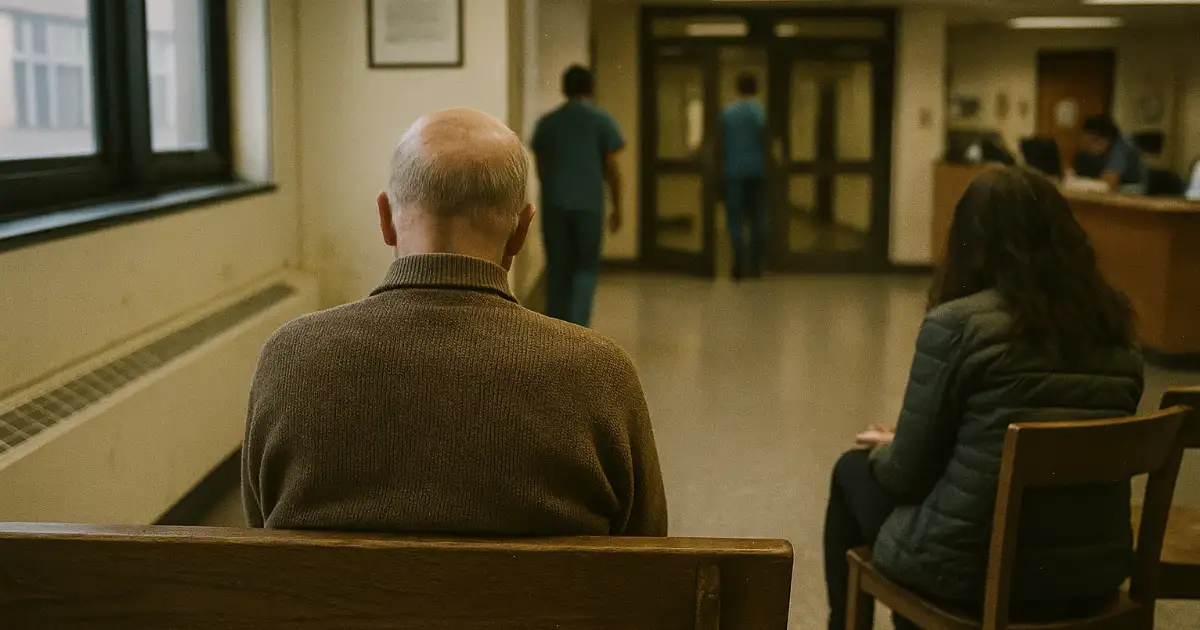
MANHATTAN, NY — The scan results had been sitting in a patient portal for 72 hours before Maria's husband, a retired 67-year-old Con Edison steam fitter from the Bronx, finally called the number on the screen. The radiologist's report mentioned a pleural effusion and thickening along the right lung wall. The pulmonologist who reviewed it said the words no one wants to hear: "We need to get you to a specialist."
What followed was a four-week scramble through referrals, second opinions, and phone calls to cancer centers that Maria described later as "like trying to find a door in a wall with no handles." New York City has some of the most sophisticated mesothelioma programs in the world. But for a family in crisis, knowing those programs exist and knowing how to access them are two entirely different things.
What Makes NYC a National Center for Mesothelioma Care?
New York City hosts several of the top-ranked mesothelioma treatment programs in the United States, drawing patients from across the country and internationally. Memorial Sloan Kettering Cancer Center on Manhattan's Upper East Side maintains one of the largest dedicated thoracic oncology programs in the country, with a surgical team that performs cytoreductive procedures and hyperthermic intrapleural chemotherapy (HITHOC) for pleural mesothelioma. NYU Langone Health's Perlmutter Cancer Center and the Icahn School of Medicine at Mount Sinai both run specialized mesothelioma clinics with multidisciplinary teams that include thoracic surgeons, medical oncologists, radiation specialists, and palliative care physicians.
From an occupational health perspective, the concentration of mesothelioma expertise in New York City isn't accidental. The city has a long industrial history that includes shipbuilding along the Brooklyn waterfront, power plant construction and maintenance throughout the five boroughs, and decades of building trades work involving asbestos-laden insulation, pipe lagging, and fireproofing materials. According to the EPA, shipbuilding facilities historically used asbestos in virtually every system aboard vessels, from engine room insulation to deck caulking, and workers in these industries carried those exposures home on their clothing and into their lungs for decades.
The latency period for mesothelioma, typically 20 to 50 years between first exposure and diagnosis, means that workers who handled asbestos in New York's construction and industrial boom years of the 1950s through 1980s are presenting with diagnoses right now, in 2026. That sustained patient volume has helped New York's cancer centers build and maintain mesothelioma-specific expertise that smaller regional programs simply can't replicate.
Why the Right Specialist Changes Everything
A mesothelioma diagnosis is not the same as a lung cancer diagnosis, and the distinction matters enormously for treatment decisions. The cancer arises from the mesothelial cells lining the pleura, peritoneum, or pericardium, and its biology, staging, and response to therapy differ fundamentally from adenocarcinoma or squamous cell carcinoma of the lung. A general oncologist who sees two or three mesothelioma cases a year simply doesn't accumulate the clinical pattern recognition that a specialist who sees dozens of cases annually develops.
According to the American Cancer Society, the five-year relative survival rate for mesothelioma remains below 12 percent overall, but outcomes vary substantially based on cell type, stage at diagnosis, and whether patients receive treatment at a high-volume center. Patients with epithelioid cell type, the most common subtype, tend to respond better to treatment than those with sarcomatoid or biphasic disease. A specialist who can accurately distinguish cell types, interpret molecular markers, and match patients to the right clinical trial or surgical protocol can meaningfully shift those odds.
What the exposure data reveals about New York's patient population is that a disproportionate share of mesothelioma cases here involve occupational exposures from the building trades, transit maintenance, and maritime industries, all sectors with strong union histories and well-documented asbestos use. That means many NYC patients also have legal and financial dimensions to their diagnosis that a specialist familiar with occupational disease will be better equipped to navigate. Understanding the compensation options available to mesothelioma patients is often as critical as understanding the treatment options.
"The difference between seeing a general thoracic oncologist and a mesothelioma specialist isn't just about credentials," said Anna Jackson, occupational health advocate and contributor to this publication. "It's about whether your doctor has seen your exact subtype, staged your disease the same way fifty times before, and knows which clinical trial is currently enrolling patients who look exactly like you."
What NYC Mesothelioma Programs Actually Offer in 2026
The landscape of mesothelioma treatment has shifted considerably in recent years, and New York's major centers have kept pace. The FDA's 2020 approval of nivolumab plus ipilimumab as a first-line treatment for unresectable pleural mesothelioma opened a new era of immunotherapy-based care, and a 2022 study published in a peer-reviewed journal found that the combination improved overall survival compared to chemotherapy alone in previously untreated patients. Most of New York's major cancer centers now offer this regimen as a standard option alongside traditional platinum-based chemotherapy.
Beyond standard-of-care options, New York's academic medical centers are active sites for clinical trials that aren't available elsewhere. Research published in the Journal of Clinical Oncology documented a Phase I trial of mesothelin-targeted CAR-T cell therapy in mesothelioma patients, representing one of the most promising experimental approaches to emerge from the immunotherapy revolution. Mesothelin is overexpressed on most mesothelioma cells, making it an attractive target, and early-phase trials have demonstrated that engineered T cells can infiltrate mesothelioma tumors and produce measurable responses. Patients interested in experimental options should ask their oncologist specifically whether they qualify for any open trials at their institution.
For patients with peritoneal mesothelioma, the treatment picture looks somewhat different. Cytoreductive surgery combined with hyperthermic intraperitoneal chemotherapy (HIPEC) has become the standard of care for eligible patients with peritoneal disease, and several NYC centers perform this technically demanding procedure. Survival outcomes for peritoneal mesothelioma patients who undergo complete cytoreduction are substantially better than for those with pleural disease, with some studies reporting median survival exceeding five years in optimal surgical candidates. Not every patient qualifies, but an evaluation at a high-volume center is the only way to know.
Advances in immunotherapy continue to reshape the treatment landscape. A 2022 review in PubMed Central highlighted that immune checkpoint inhibitors have demonstrated durable responses in a subset of mesothelioma patients, with some individuals experiencing prolonged disease control that was simply not achievable with chemotherapy alone. New York's academic centers are positioned to offer these combinations within both standard practice and investigational protocols.
!What NYC Mesothelioma Programs Actually Offer in for mesothelioma research cases
How Veterans Fit Into New York's Mesothelioma Landscape
A significant portion of mesothelioma patients in New York City are veterans, and their path to care involves an additional layer of complexity that a specialist familiar with VA systems can help navigate. According to the Department of Veterans Affairs, veterans account for roughly 30 percent of all mesothelioma diagnoses in the United States, a direct consequence of the Navy's heavy reliance on asbestos insulation aboard ships during World War II and through the 1970s.
Workers in these industries, particularly those who served in Navy shipyards or aboard vessels, were exposed to asbestos at levels that virtually guaranteed long-term health consequences. Brooklyn's Navy Yard, which processed hundreds of thousands of workers over its operational decades, is among the most heavily documented sources of occupational asbestos exposure in the northeastern United States. The EPA has extensively catalogued how shipbuilding and ship repair operations exposed workers to asbestos in insulation, gaskets, pipe covering, and fireproofing materials.
Veterans diagnosed with mesothelioma may be eligible for VA disability compensation, VA health care at no cost, and additional benefits through the VA's Specially Adapted Housing and other programs. The VA benefits eligibility tool can help veterans and their families understand what they qualify for, and veterans-specific resources are available to help with the claims process. NYC's VA medical system includes the Manhattan VA Medical Center and the Brooklyn campus, both of which can coordinate oncology care and refer to specialized mesothelioma programs.
For veterans who also have legal claims against asbestos manufacturers, the timeline matters. New York's statute of limitations for asbestos personal injury claims is generally three years from the date of diagnosis or the date the patient reasonably should have known about the asbestos connection. Missing that window forfeits access to civil litigation and, in some cases, to asbestos trust fund claims that don't have the same SOL constraints but do have their own procedural requirements.
What Should Patients and Families Do Next?
The weeks immediately after a mesothelioma diagnosis are simultaneously the most disorienting and the most consequential. Decisions made in the first 30 to 60 days, including which specialist to see, whether to pursue surgical evaluation, and whether to initiate legal or trust fund claims, can have lasting effects on both health outcomes and financial security.
From an occupational health perspective, the first call should be to a mesothelioma specialist, not a general oncologist. In New York City, that means requesting a referral to a dedicated mesothelioma program at Memorial Sloan Kettering, NYU Langone, or Mount Sinai rather than accepting a general thoracic oncology appointment. Patients should specifically ask whether the center has a multidisciplinary mesothelioma tumor board, which brings together surgeons, medical oncologists, radiation oncologists, and pathologists to review complex cases collectively.
Second opinions are not just acceptable in mesothelioma, they're standard practice. Because the disease is rare and treatment decisions are genuinely complex, even oncologists at major centers routinely encourage patients to seek additional expert review. The mesothelioma specialist directory can help patients identify qualified physicians in New York and surrounding regions.
On the legal and financial side, patients and families should understand that two parallel systems exist for compensation: civil litigation against asbestos manufacturers and distributors, and claims against the more than 60 asbestos bankruptcy trust funds that collectively hold billions of dollars for victims. These systems operate independently, and pursuing one does not preclude the other. The trust fund directory and the step-by-step guide to filing a trust fund claim are useful starting points for families trying to understand their options.
The Research Horizon: What New Trials Mean for NYC Patients
New York's position as a hub for cancer research means that patients treated there often have access to trials that won't reach community hospitals for years. The CAR-T cell research documented in the Journal of Clinical Oncology represents one frontier, but it's not the only one. Researchers are also investigating novel combinations of immunotherapy agents, targeted therapies aimed at specific genetic alterations in mesothelioma cells, and new approaches to delivering intrapleural treatment that could extend the benefit of regional therapy to patients who aren't surgical candidates.
According to Nature's mesothelioma research repository, the field has seen a marked increase in molecular profiling studies that are beginning to identify subgroups within the broad mesothelioma diagnosis where specific therapies work better. This kind of precision oncology approach, matching treatment to tumor biology rather than just histological type, is already reshaping how mesothelioma specialists at major centers approach newly diagnosed patients.
The research pipeline also includes work on earlier detection, one of the most urgent unmet needs in the field. Because mesothelioma symptoms, primarily chest pain, shortness of breath, and fatigue, mimic more common conditions, most patients are diagnosed at stage III or IV, when curative options are limited. Blood-based biomarkers like SMRP (soluble mesothelin-related peptides) and fibulin-3 are under investigation as screening tools for high-risk populations, though none has yet achieved the sensitivity and specificity needed for routine clinical use.
For New York patients with documented occupational asbestos exposure, some centers offer surveillance programs that monitor high-risk individuals with periodic imaging and biomarker testing. These programs exist precisely because early detection, when it does occur, can dramatically change the treatment calculus.
Finding the Right Doctor: Practical Guidance for 2026
Navigating New York City's medical landscape when you're frightened and time-pressured is genuinely hard. The city's size, which is its greatest advantage in terms of available expertise, can also make the system feel impenetrable. A few practical realities are worth knowing.
First, you don't need a referral from your primary care physician to call a major cancer center directly. Memorial Sloan Kettering, NYU Langone, and Mount Sinai all have intake lines where patients or family members can call to request an appointment with a mesothelioma specialist. Waiting for a referral chain to work its way through the system can cost weeks that matter.
Second, bring documentation. Pathology slides, imaging CDs, operative reports, and any previous biopsy results should travel with you to every specialist appointment. A mesothelioma specialist may want to re-review pathology with their own team, particularly to confirm cell type, which has direct implications for prognosis and treatment selection.
Third, consider whether your exposure history has been fully documented. Workers who handled asbestos in New York's building trades, shipyards, power plants, or transit systems should work with an attorney familiar with occupational asbestos claims to reconstruct their exposure timeline. That documentation matters both for legal claims and for helping your medical team understand the likely source and duration of exposure.
The path forward from a mesothelioma diagnosis in New York City is genuinely difficult. But the city also offers resources, specialists, and research programs that most patients anywhere in the country would travel far to access. Knowing how to find them, and how to move quickly once you do, can make a real difference.
Frequently Asked Questions
Which hospitals in New York City specialize in mesothelioma treatment?
New York City's leading mesothelioma programs are at Memorial Sloan Kettering Cancer Center, NYU Langone's Perlmutter Cancer Center, and the Icahn School of Medicine at Mount Sinai. Each maintains multidisciplinary teams with dedicated mesothelioma expertise, including thoracic surgeons, medical oncologists, and clinical trial coordinators. Patients can contact these centers directly to request specialist appointments without waiting for a formal referral.
What is the survival rate for mesothelioma patients treated in New York?
According to the American Cancer Society, the overall five-year relative survival rate for mesothelioma is below 12 percent, but outcomes vary significantly by cell type, stage, and treatment center. Patients with epithelioid cell type treated at high-volume centers, particularly those eligible for surgery combined with intrapleural chemotherapy, tend to have better outcomes than population-level statistics suggest.
Are there mesothelioma clinical trials available in NYC in 2026?
Yes. New York's major academic cancer centers are active sites for mesothelioma clinical trials, including studies of CAR-T cell therapy targeting mesothelin, immune checkpoint inhibitor combinations, and novel intrapleural delivery methods. A Phase I trial of mesothelin-targeted CAR-T cells, documented in the Journal of Clinical Oncology, represents one of the most advanced experimental approaches currently under investigation.
How do NYC veterans with mesothelioma access VA benefits?
Veterans diagnosed with mesothelioma may qualify for VA disability compensation, no-cost VA health care, and additional support programs. The VA's Manhattan and Brooklyn campuses can coordinate oncology care and refer to specialized mesothelioma programs. Veterans should also explore asbestos trust fund claims, which operate separately from VA benefits and don't require choosing one or the other.
What is the statute of limitations for mesothelioma lawsuits in New York?
New York's statute of limitations for mesothelioma personal injury claims is generally three years from the date of diagnosis or the date the patient reasonably should have connected their illness to asbestos exposure. Missing this deadline eliminates access to civil litigation. Asbestos trust fund claims have separate procedural requirements and timelines, making early consultation with an experienced attorney essential.
What is peritoneal mesothelioma and how is it treated differently in NYC?
Peritoneal mesothelioma affects the lining of the abdomen rather than the lungs and is treated differently from pleural disease. The standard approach for eligible patients is cytoreductive surgery combined with hyperthermic intraperitoneal chemotherapy (HIPEC), a technically demanding procedure performed at several NYC centers. Survival outcomes for peritoneal patients who achieve complete cytoreduction are substantially better than for pleural mesothelioma, with some studies reporting median survival exceeding five years.
How do I find a mesothelioma specialist in New York quickly after diagnosis?
Patients can call major NYC cancer centers directly without a physician referral. Memorial Sloan Kettering, NYU Langone, and Mount Sinai all have intake processes for new patients seeking specialist consultations. Bring all pathology reports, imaging, and exposure history to your first appointment. A mesothelioma specialist directory can also help identify qualified physicians across New York and surrounding regions.
This article is for informational purposes only and does not constitute medical advice. Consult your healthcare provider for guidance specific to your situation.

Comments (4)
— Anna Jackson
— Anna Jackson