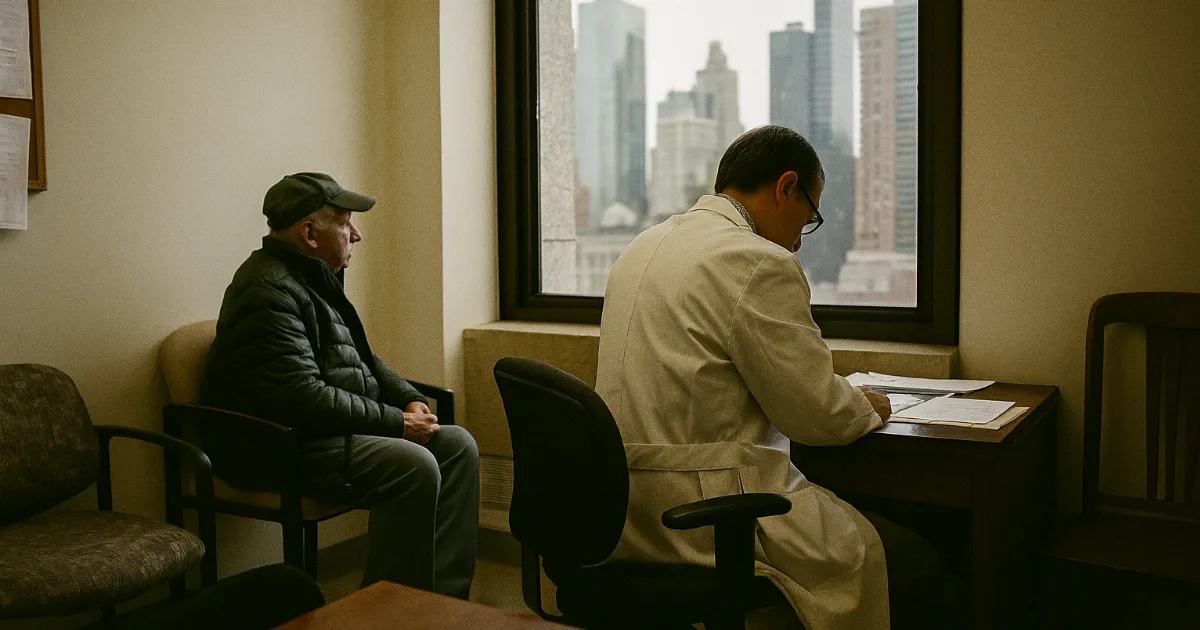

NEW YORK, NY — The diagnosis arrived on a Thursday afternoon in a Midtown Manhattan office. A 61-year-old retired transit worker from the Bronx, who had spent two decades maintaining the city's aging subway infrastructure, sat across from a pulmonologist who had just reviewed his CT scan. The word was mesothelioma. The pulmonologist was not a specialist. And the question that consumed the next 72 hours of his family's life was simple and terrifying: who, in a city of eight million people, actually knows how to treat this?
New York City is home to some of the most sophisticated cancer medicine in the world. But navigating that system after a mesothelioma diagnosis is not intuitive. The disease is rare, aggressive, and demands subspecialty expertise that most oncologists simply don't have. For patients and families in the New York metro area, knowing which institutions to call, which specialists have the deepest experience, and what questions to ask can genuinely change outcomes.
Where Does New York Rank in Mesothelioma Burden, and Why Does It Matter?
New York State consistently records among the highest mesothelioma mortality rates in the country, a direct legacy of its industrial past. According to the CDC's mesothelioma mortality data, New York has historically ranked in the top tier of states for mesothelioma deaths, driven by decades of shipbuilding activity along the Hudson River and in Brooklyn, heavy construction across the five boroughs, and the widespread use of asbestos in commercial and residential buildings throughout the mid-20th century [Source: CDC, Mesothelioma Mortality in the United States by State].
From an occupational health perspective, this geography matters enormously. The Brooklyn Navy Yard alone employed tens of thousands of workers between the 1940s and 1960s, many of whom handled asbestos insulation on a daily basis. What the exposure data reveals is a predictable pipeline: workers exposed in the 1950s and 1960s are now reaching the 30-to-50-year latency window when mesothelioma typically emerges. Workers in these industries, including shipbuilders, pipefitters, electricians, boilermakers, and construction laborers, represent the core patient population presenting at New York's major cancer centers today. Understanding that pipeline helps explain why New York's academic medical centers have developed such concentrated expertise in this disease.
The EPA has documented extensively how shipbuilding created some of the most intense occupational asbestos exposures in American history, with workers cutting, sawing, and installing asbestos-containing insulation in confined ship compartments with minimal ventilation [Source: EPA, Asbestos and Shipbuilding: Past Exposures]. Those exposures, replicated across New York's waterfront industries, created the patient population that now fills the waiting rooms at Memorial Sloan Kettering and NYU Langone.
You can explore specific New York exposure sites through our exposure sites directory to understand where your own occupational history may have intersected with asbestos.
What Makes a Mesothelioma Specialist Different From a General Oncologist?
A mesothelioma specialist is not simply an oncologist who has seen a few cases. The distinction is clinical, procedural, and deeply consequential for patient outcomes. Mesothelioma requires expertise across multiple domains simultaneously: accurate pathological diagnosis, surgical planning, systemic treatment sequencing, and often clinical trial access. Missing any one of these can mean the difference between an optimal treatment plan and a suboptimal one.
Pathological diagnosis alone is a minefield. Research published in a peer-reviewed analysis of mesothelioma diagnosis found that cell type and histological subtype, whether epithelioid, sarcomatoid, or biphasic, are among the most critical determinants of prognosis and treatment eligibility [Source: NCBI PMC, Pathological Diagnosis of Mesothelioma: Importance of Cell Type and Histology]. Epithelioid mesothelioma, the most common subtype, responds better to treatment than sarcomatoid disease, and distinguishing between the two requires immunohistochemical staining that not every pathology department performs routinely.
A specialist at a high-volume center has reviewed hundreds of these cases. A general oncologist at a community hospital may have seen two or three in a career. That volume difference translates directly into diagnostic accuracy, treatment sequencing decisions, and familiarity with the clinical trial landscape. For families navigating this diagnosis, our treatment answers hub provides a starting framework for understanding what questions to bring to a first specialist appointment.
New York City's Leading Mesothelioma Treatment Centers
Three institutions in New York City have established reputations for mesothelioma care that extends beyond regional recognition to national and international standing. Each has a distinct profile, and understanding their differences helps patients make a more informed choice.
Memorial Sloan Kettering Cancer Center is the most prominent name in New York oncology, and its thoracic surgery and medical oncology programs have deep experience with pleural and peritoneal mesothelioma. MSK is an NCI-designated comprehensive cancer center, a designation that requires demonstrated excellence in cancer research, treatment, and training [Source: NCI, NCI-Designated Cancer Centers]. Its mesothelioma program includes surgical specialists experienced in both extrapleural pneumonectomy and pleurectomy/decortication, the two primary surgical approaches for pleural disease. Research comparing these procedures has shown that pleurectomy/decortication may offer comparable survival with lower perioperative mortality in appropriately selected patients [Source: NCBI PMC, Pleurectomy/Decortication versus Extrapleural Pneumonectomy for Mesothelioma: Comparative Outcomes], and MSK's surgical team has navigated that evolving evidence base with substantial clinical experience.
NYU Langone's Perlmutter Cancer Center is another NCI-designated institution with a dedicated thoracic oncology program. Its multidisciplinary approach brings together thoracic surgeons, pulmonologists, medical oncologists, and radiation oncologists to evaluate mesothelioma cases in a coordinated tumor board setting. For patients in the outer boroughs or New Jersey who find MSK's Midtown campus difficult to access, NYU Langone's network of locations offers more geographic flexibility.
Mount Sinai's Icahn School of Medicine carries particular historical significance in mesothelioma research. The Irving J. Selikoff Center for Occupational and Environmental Medicine at Mount Sinai has been studying asbestos-related disease for decades, and its connection to the occupational health origins of mesothelioma research gives it a distinctive depth of institutional knowledge. For workers whose exposure history is complex or disputed, Mount Sinai's occupational medicine expertise can be especially valuable in building a complete clinical picture.
As I've seen in following these institutions' work over the years, the choice between them often comes down to specific surgical expertise, clinical trial availability, and geography. No single center is right for every patient, and getting a second opinion, even between two elite New York institutions, is always worth the extra appointment.
!New York City's Leading Mesothelioma Treatment Centers for mesothelioma research cases
How Biomarker Testing Is Changing Early Detection at New York Centers
One of the most significant shifts in mesothelioma medicine over the past decade has been the growing use of blood-based biomarkers to aid in diagnosis and monitoring. Research on fibulin-3 and soluble mesothelin-related peptides (SMRPs) has shown promise as tools for detecting mesothelioma earlier and tracking treatment response [Source: NCBI PMC, Blood-Based Biomarkers for Mesothelioma Detection: Fibulin-3 and SMRPs]. New York's major academic centers are among the institutions incorporating these tests into their diagnostic protocols.
This matters practically for patients presenting with pleural effusions or unexplained chest symptoms who have a documented asbestos exposure history. At a community hospital, a pleural effusion might be drained and monitored without aggressive diagnostic workup. At a mesothelioma-experienced center, the same presentation triggers a more systematic evaluation: biomarker testing, image-guided biopsy planning, and early pathology consultation. That difference in diagnostic urgency can shave weeks off the time to diagnosis, which in a disease that moves quickly, is not a trivial advantage.
From an occupational health perspective, patients who know they worked in high-risk industries should be proactive about disclosing that history at every medical encounter. The exposure history is the single most important piece of information a physician needs to know to raise mesothelioma on the differential diagnosis. Our asbestos encyclopedia entry provides a detailed breakdown of which occupations and products carried the highest exposure risk, which can help patients articulate their history more precisely to their care team.
What Should Patients and Families Do Next?
The first 30 days after a mesothelioma diagnosis are the most consequential. Decisions made in that window, about where to seek care, whether to pursue surgery, which chemotherapy regimen to start, shape everything that follows. The urgency is real, but panic-driven decisions are rarely optimal ones.
The practical sequence looks like this: First, request all pathology slides and imaging from the diagnosing institution. You own those records, and you need them to bring to a specialist consultation. Second, contact the mesothelioma programs at MSK, NYU Langone, or Mount Sinai directly. Most have dedicated intake coordinators for thoracic oncology referrals, and the wait for a first appointment at a specialist program is typically shorter than patients expect. Third, ask specifically about clinical trial eligibility at the first specialist appointment. New York's academic centers participate in national and international mesothelioma trials, and trial access can provide treatment options that aren't available in standard community oncology settings.
Our patients and families guide walks through this process in detail, including how to prepare for a specialist consultation and what to bring.
The financial dimension of mesothelioma care also deserves early attention. Treatment at an academic cancer center is expensive, and many patients are eligible for compensation through asbestos bankruptcy trust funds, veterans' benefits, or civil litigation. Workers exposed in New York's shipyards, construction sites, or transit infrastructure may have claims against multiple defendant companies. The trust fund checker tool can help identify which funds may apply to a specific exposure history, and our compensation overview explains the full range of financial options available to mesothelioma patients and their families.
Clinical Trials and Research Infrastructure in New York
New York City's density of NCI-designated cancer centers creates an unusually rich clinical trial ecosystem for mesothelioma patients. At any given time, MSK, NYU Langone, and other affiliated institutions are enrolling patients in trials examining immunotherapy combinations, novel surgical techniques, and targeted therapies for specific molecular subtypes of mesothelioma.
The shift toward immunotherapy has been among the most significant developments in mesothelioma treatment in recent years. The combination of nivolumab and ipilimumab, checkpoint inhibitors that activate the immune system against cancer cells, received FDA approval for first-line unresectable pleural mesothelioma based on trial data showing improved overall survival compared to chemotherapy alone. New York's academic centers were among the institutions participating in that research, and their oncologists have direct experience managing the treatment and its side effects.
Clinical Cancer Research and similar peer-reviewed journals have published the evolving evidence base for these approaches [Source: AACRJOURNALS, Clinical Cancer Research], and the mesothelioma specialists at New York's top centers are typically current on that literature in ways that community oncologists simply cannot be, given the rarity of the disease.
For patients who are interested in understanding chemotherapy options in more depth before their specialist appointment, our chemotherapy guide provides a plain-language overview of the standard regimens and what to expect during treatment.
Understanding the Legal and Financial Landscape for New York Patients
Mesothelioma patients in New York have access to one of the most developed asbestos litigation environments in the country. New York courts have decades of experience with asbestos cases, and the state's legal framework is relatively favorable to plaintiffs. New York City's concentration of exposed workers, particularly from the Brooklyn Navy Yard, the transit system, and the commercial construction industry, means that attorneys specializing in asbestos litigation have deep familiarity with the specific companies and products that caused harm in this region.
Many New York mesothelioma patients are eligible to file claims against asbestos bankruptcy trust funds, which collectively hold billions of dollars set aside for victims. These trusts were established as part of the bankruptcy proceedings of major asbestos manufacturers, and they operate independently of the civil court system, meaning patients can pursue trust fund claims while also pursuing litigation if appropriate. Our detailed guide on how to file an asbestos trust fund claim walks through the process step by step.
What the exposure data reveals about New York workers is that many were exposed by multiple employers and multiple asbestos-containing products over the course of a career. A pipefitter who worked at the Navy Yard in the 1950s, then moved into commercial construction in the 1960s, then did renovation work in the 1970s may have claims against a dozen or more trust funds. Identifying all of them requires a thorough occupational history review, which a mesothelioma attorney can help conduct.
The statute of limitations in New York for mesothelioma claims is three years from the date of diagnosis, not from the date of exposure. That distinction matters enormously. Patients and families should consult with an attorney early in the process, not because they need to rush, but because building a complete exposure history takes time and is best done while memory and documentation are fresh.
Frequently Asked Questions
Which New York City hospital is best for mesothelioma treatment?
Memorial Sloan Kettering Cancer Center, NYU Langone's Perlmutter Cancer Center, and Mount Sinai's Icahn School of Medicine are the three institutions with the deepest mesothelioma expertise in New York City. All three are NCI-designated cancer centers with multidisciplinary mesothelioma programs. The best choice depends on specific surgical needs, clinical trial availability, and geography [Source: NCI, NCI-Designated Cancer Centers].
How do I get an appointment with a mesothelioma specialist in NYC?
Contact the thoracic oncology or thoracic surgery departments directly at MSK, NYU Langone, or Mount Sinai. Bring pathology slides, imaging, and a written exposure history to your first appointment. Most major centers have dedicated intake coordinators for mesothelioma referrals, and wait times for first appointments are often shorter than patients expect.
Does mesothelioma cell type affect which NYC specialist I should see?
Yes. Cell type, specifically whether the tumor is epithelioid, sarcomatoid, or biphasic, significantly affects treatment options and prognosis. Accurate subtyping requires immunohistochemical analysis that should be confirmed by a specialist pathologist at a high-volume center [Source: NCBI PMC, Pathological Diagnosis of Mesothelioma: Importance of Cell Type and Histology]. Some centers have more experience with specific subtypes or surgical approaches.
Are there clinical trials for mesothelioma available in New York City?
Yes. New York's NCI-designated cancer centers participate in national and international mesothelioma clinical trials, including trials examining immunotherapy combinations, novel surgical approaches, and targeted therapies. Ask specifically about trial eligibility at your first specialist consultation. Trial access is one of the primary advantages of seeking care at an academic medical center rather than a community oncology practice.
What blood tests can help diagnose mesothelioma?
Blood-based biomarkers including fibulin-3 and soluble mesothelin-related peptides (SMRPs) have shown diagnostic value in mesothelioma detection and monitoring. These tests are not definitive on their own but can support diagnosis in patients with high-risk exposure histories and compatible imaging findings [Source: NCBI PMC, Blood-Based Biomarkers for Mesothelioma Detection: Fibulin-3 and SMRPs].
How long do New York mesothelioma patients have to file a legal claim?
New York's statute of limitations for mesothelioma personal injury claims is three years from the date of diagnosis. For wrongful death claims, the clock typically starts at the date of death. Consulting with a mesothelioma attorney early in the diagnostic process is advisable, as building a complete exposure history takes time.
Can New York mesothelioma patients access asbestos trust funds?
Yes. Many New York patients, particularly those who worked in shipbuilding, construction, or transit infrastructure, are eligible to file claims against multiple asbestos bankruptcy trust funds. These funds operate independently of civil litigation, and patients can often pursue both simultaneously. Use our trust fund checker to identify which funds may apply to your exposure history.

Sources
- CDC. "Mesothelioma Mortality in the United States by State." Centers for Disease Control and Prevention. https://www.cdc.gov/nceh/features/mesothelioma/index.html
- NCI. "NCI-Designated Cancer Centers." National Cancer Institute. https://www.cancer.gov/research/infrastructure/cancer-centers
- Husain AN, et al. "Pathological Diagnosis of Mesothelioma: Importance of Cell Type and Histology." NCBI PMC. https://www.ncbi.nlm.nih.gov/pmc/articles/PMC6322066/
- Taioli E, et al. "Pleurectomy/Decortication versus Extrapleural Pneumonectomy for Mesothelioma: Comparative Outcomes." NCBI PMC. https://www.ncbi.nlm.nih.gov/pmc/articles/PMC7750799/
- Pass HI, et al. "Blood-Based Biomarkers for Mesothelioma Detection: Fibulin-3 and SMRPs." NCBI PMC. https://www.ncbi.nlm.nih.gov/pmc/articles/PMC6334188/
- EPA. "Asbestos and Shipbuilding: Past Exposures." U.S. Environmental Protection Agency. https://www.epa.gov/asbestos/asbestos-and-shipbuilding
- AACR. "Clinical Cancer Research." American Association for Cancer Research. https://aacrjournals.org/clincancerres
This article is for informational purposes only and does not constitute medical advice. Consult your healthcare provider for guidance specific to your situation.