

The Two Clocks
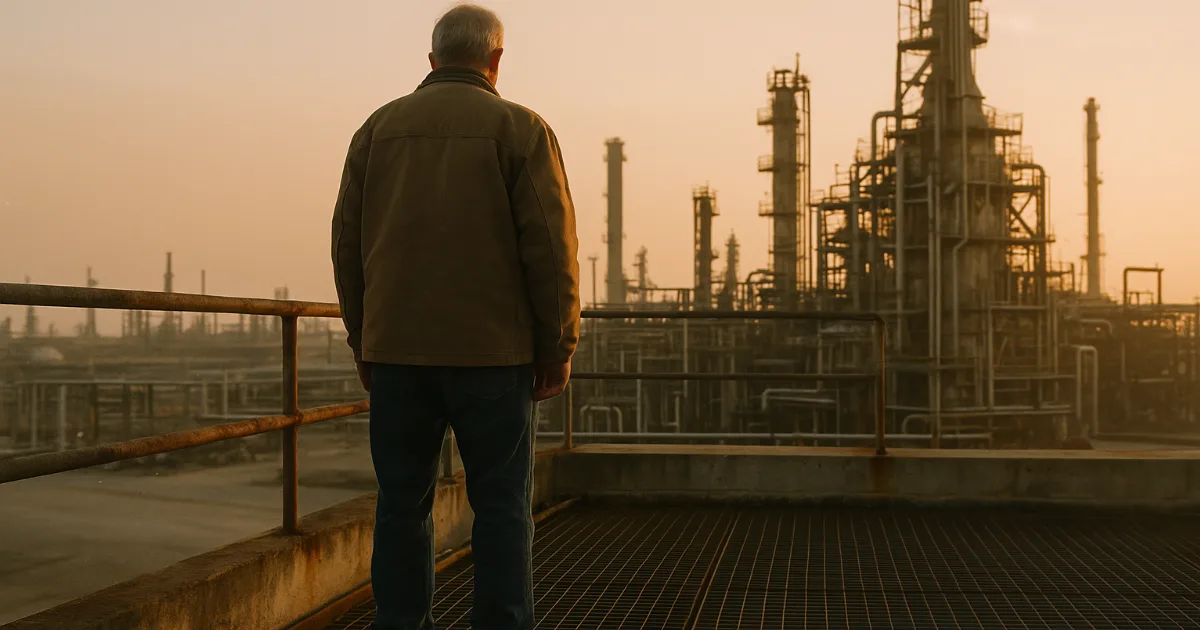
Picture a retired pipefitter named Harold. He spent 34 years crawling through the bowels of refineries along the Texas Gulf Coast, breathing air thick with asbestos dust from insulation he handled with bare hands. He is 71 years old when he gets the diagnosis. Pleural mesothelioma. The oncologist, choosing words carefully, says the median survival is 12 to 21 months.
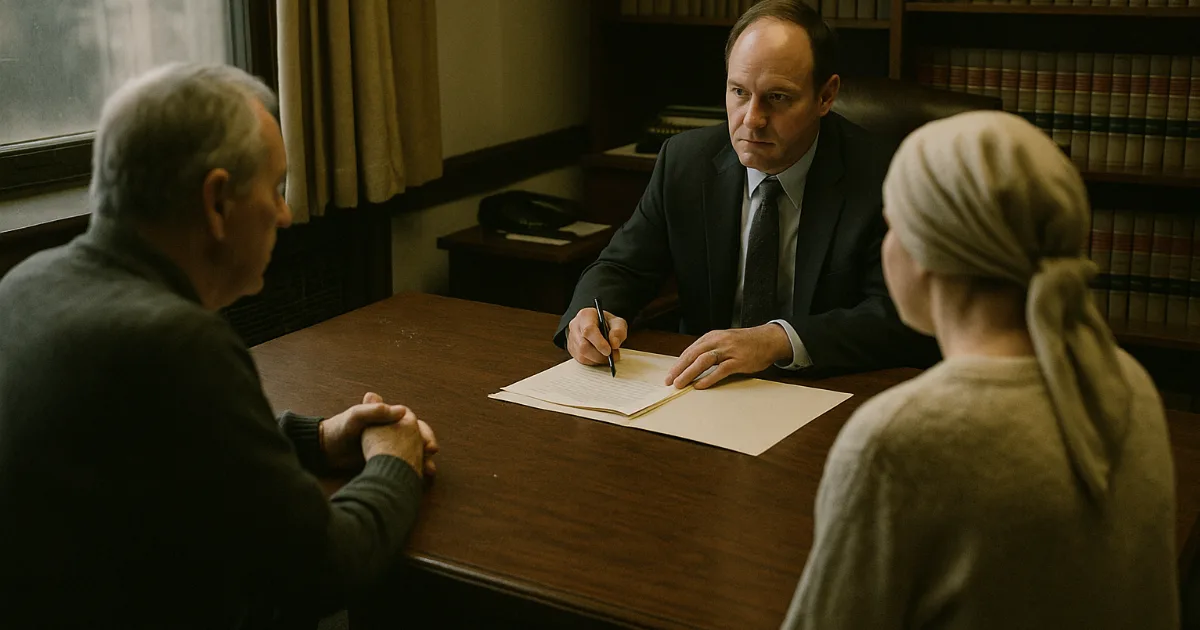
Harold's daughter, sitting beside him at the appointment, asks the question that will define the next year of their lives: How long will the legal process take?
It is not an abstract question. It is the question. Because Harold's medical clock and his legal clock are now running at the same time — and whether his family sees financial relief while he is still alive depends entirely on how well the legal clock is managed.
The honest answer: most mesothelioma lawsuits that settle out of court resolve within 12 to 18 months. Cases that go to trial typically take 2 to 3 years or longer. Trust fund claims — a parallel process most families don't know they can pursue simultaneously — typically resolve in 3 to 12 months.
But averages don't tell Harold's family what they need to know. What they need to understand is the machinery itself: every stage, every variable, every lever an experienced attorney can pull to make the clock move faster without sacrificing a dollar of what their father is owed.
This is that explanation.
Step 1: The Case Evaluation — Weeks 1 to 2
The process begins with a phone call. Most mesothelioma law firms offer a free case evaluation, and this first conversation is more consequential than it may appear. An experienced mesothelioma attorney is not just listening — they are reconstructing a life's worth of exposure history in real time, mentally matching each job site and employer to a database of known asbestos products, corporate defendants, and bankruptcy trust funds.
During these first one to two weeks, the attorney reviews the diagnosis and medical records, maps the occupational and military history to identify every potential asbestos exposure source, assesses which companies may be liable, and evaluates the statute of limitations in the applicable state. Many firms begin background research immediately — before paperwork is even signed — so that no time is lost.
Families are often surprised to learn how little they need to have organized at this stage. You do not need a binder of records. You do not need to remember exact dates. An experienced mesothelioma attorney knows what documentation exists, how to get it, and which government databases, union halls, and Social Security records can reconstruct a work history spanning decades.
Almost universally, these firms work on a contingency fee basis. Nothing is owed unless compensation is recovered.
Step 2: The Investigation — Weeks 2 to 8
Once retained, the firm launches what is effectively a forensic investigation into a human life. This phase is unglamorous and painstaking. It is also what separates mesothelioma cases that settle quickly for strong amounts from cases that stall or settle low.
The investigation involves a detailed exposure history interview — not a quick intake form, but a methodical conversation covering every employer, every job site, every product handled, every decade. The attorneys are matching this history to specific asbestos-containing products made by identifiable companies. A particular brand of pipe covering used at a specific refinery in Beaumont, Texas in 1974. Brake linings on a particular fleet of vehicles. Ceiling tiles in a specific federal building. The specificity matters enormously, because liability attaches to specific products made by specific defendants.
Simultaneously, the firm collects medical records — pathology reports, imaging, treatment records, physician statements — to establish the diagnosis and its causal connection to asbestos. Employment records, W-2s, union documents, Social Security earnings statements, and military DD-214 forms are gathered. For veterans, this process often reveals asbestos exposure during service that opens additional claims. Co-workers who can corroborate the exposure history are located and interviewed.
This phase typically takes four to six weeks. Complex cases — multiple industries, multiple decades, multiple states — may take longer. The thoroughness of this phase is not bureaucratic caution. It directly determines both the speed and value of everything that follows.
Step 3: Filing the Lawsuit — Weeks 6 to 10
With the investigation complete, the attorney files a formal complaint in the appropriate court. The complaint names every defendant company, describes the asbestos exposure with specificity, and quantifies the damages being sought. The filing itself is fast — often accomplished within days of completing the complaint.
What is not fast, and what requires sophisticated judgment, is choosing where to file.
Jurisdiction is a strategic decision with real consequences for timeline. Your attorney will consider the state where exposure occurred — often the primary option — as well as the state where you currently live. More importantly, they will weigh the specific court's procedures. Some jurisdictions have specialized asbestos dockets managed by judges with deep familiarity in mesothelioma litigation. Others are generalist courts where an asbestos case sits in the same queue as contract disputes and fender-benders.
Courts with established asbestos dockets — New York's Manhattan court, Philadelphia's program, Cook County in Illinois — move measurably faster. Experienced mesothelioma attorneys know these dockets the way experienced surgeons know particular hospitals. After filing, defendants must be formally served, which typically takes an additional two to four weeks.

Step 4: Discovery — Months 3 to 12
Discovery is where cases are won or lost, and it is also the longest phase of most mesothelioma lawsuits. Both sides exchange information: written interrogatories that must be answered under oath, document requests that compel defendants to produce internal safety records and corporate communications, and depositions — sworn recorded testimony — from the plaintiff, family members, co-workers, medical experts, and corporate representatives.
The depositions are the centerpiece. When asbestos manufacturers are forced to sit across from a skilled mesothelioma attorney and answer questions about what their company knew about asbestos hazards and when, what often emerges is damning. Internal memos. Suppressed safety studies. Corporate decisions — documented in writing — to continue selling asbestos products after the evidence of harm was clear. Johns-Manville, W.R. Grace, Armstrong World Industries: these companies and dozens like them left paper trails that plaintiff attorneys have been mining for decades, and that evidence does not get weaker with time.
For Harold — or any patient whose health is declining — there is a critical procedural priority: the plaintiff's own deposition must happen as early as possible. Courts and attorneys on both sides recognize that the plaintiff's testimony must be preserved. If Harold passes away before his deposition is taken, that testimony is lost. Experienced attorneys move aggressively to schedule the plaintiff's deposition first, and courts generally accommodate this.
Standard discovery in mesothelioma cases runs six to twelve months, depending on the number of defendants, the complexity of the exposure history, defendant cooperation with document requests, and court scheduling. During this period, something important begins to happen: settlement offers start coming in. As the evidence mounts, many defendants calculate that a negotiated settlement is preferable to the risk of a jury seeing those internal documents.
Step 5: Settlement — Months 6 to 18
More than 90% of mesothelioma lawsuits resolve through settlement rather than trial. That figure is not a coincidence. It reflects a cold calculation by defendant companies: a jury that sees documented proof that your corporation knew asbestos was killing workers — and kept selling it anyway — is an unpredictable and potentially catastrophic risk.
Settlement negotiations typically unfold in stages. Defendants make initial offers that are deliberately low, testing the plaintiff's resolve and their attorney's knowledge of comparable cases. The plaintiff's attorney responds with a supported demand — not a number pulled from the air, but a figure grounded in the strength of the evidence, the documented damages, and the verdicts juries have returned in comparable cases in that jurisdiction.
Many courts require or strongly encourage mediation: a structured session, usually lasting a full day, in which a neutral third-party mediator works with both sides toward an agreement. If mediation does not produce a settlement, direct negotiations continue as the trial date approaches.
Several variables determine both the settlement amount and how quickly it arrives. Clear, well-documented exposure history produces faster, higher settlements. Defendants with a history of large jury verdicts in similar cases are more motivated to settle early. A plaintiff's deteriorating health — while tragic — is a factor that courts and defendants alike recognize, and it applies legitimate pressure to accelerate resolution. Each defendant settles independently, meaning payments may arrive at different times as the case progresses.
The general settlement timeline, mapped to case stage:
- Early settlements — 6 to 9 months after filing: Common when evidence is overwhelming and the defendant calculates that even a deposition is too risky
- Mid-case settlements — 9 to 15 months: After discovery produces damaging internal documents
- Pre-trial settlements — 15 to 18 months: As the trial date becomes real and litigation costs mount
Once a settlement is finalized, payment typically arrives within 30 to 90 days.
Step 6: Trial — Months 18 to 36
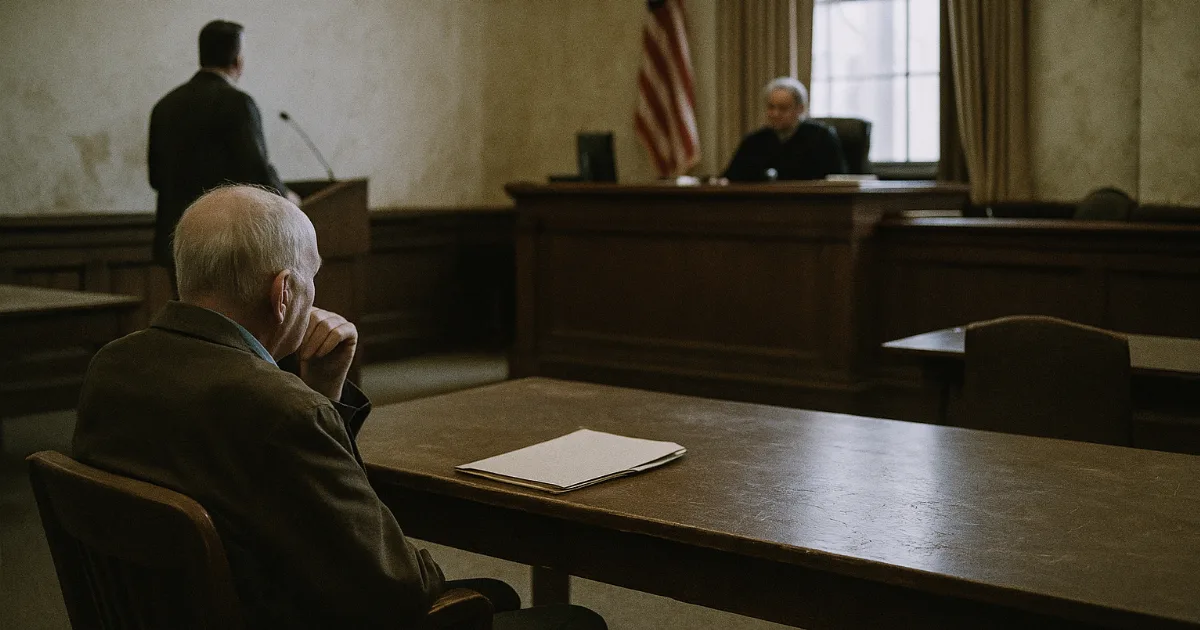
When settlement negotiations fail to produce an acceptable result, the case goes to a jury. Mesothelioma trials typically last two to four weeks. The plaintiff's attorney presents the evidence, calls medical and occupational health experts, and places before the jury the corporate documents showing defendants knew what asbestos did to human lungs and chose profit over disclosure. The defense argues causation disputes, attempts to attribute exposure to other sources, and challenges the plaintiff's damages.
Juries have not been sympathetic to the defendants. The average mesothelioma jury verdict exceeds $2.4 million, according to legal industry data. Some verdicts have reached into the hundreds of millions when punitive damages — awarded when a company is found to have acted with willful disregard for human safety — are included.
Trial carries risk in both directions. A jury could find for the defendant. But the potential upside is real, and for cases where the evidence is exceptionally strong and the defendant has been particularly obstinate in settlement negotiations, trial can produce outcomes that no settlement offer would have matched.
After a verdict, defendants typically have 30 to 90 days before payment is due. They may also file post-trial motions or appeals, which can extend the timeline by months or years — a factor experienced attorneys weigh carefully when advising clients on whether to accept a settlement or proceed.
The Expedited Docket: When the Court Recognizes the Clock
One of the most important and least-understood features of mesothelioma litigation is the expedited trial docket. Courts across the country have built procedures specifically to address the reality that mesothelioma patients cannot wait two or three years for a standard trial schedule.
The process works like this: your attorney files a motion demonstrating that the plaintiff has a terminal diagnosis and limited life expectancy. The court grants priority scheduling, which can compress an 18 to 24-month pre-trial timeline down to six to nine months. Discovery deadlines are shortened. Defendants face stricter limits on procedural delay tactics. The plaintiff's deposition is scheduled as a priority.
The states with the most developed expedited procedures include:
New York operates a specialized asbestos docket in Manhattan with an established reputation for accelerated timelines. California provides one of the most powerful tools available — California Code of Civil Procedure Section 36, which allows a terminally ill plaintiff to demand trial preference, compressing the process significantly. Texas courts regularly grant expedited settings for mesothelioma cases. Illinois offers a streamlined asbestos docket in Cook County. Pennsylvania's Philadelphia program has dedicated judicial management. New Jersey maintains centralized asbestos litigation with expedited options.
An experienced mesothelioma attorney does not just know the law. They know the specific judges on these dockets, the filing procedures that trigger expedited review, and how to position a case so the court understands the urgency from the first motion.
Trust Fund Claims: The Parallel Track Most Families Miss
While the lawsuit process unfolds, there is a second legal track that can — and often should — run simultaneously. Asbestos trust funds.
Decades of litigation forced dozens of major asbestos manufacturers into bankruptcy. Before dissolving, those companies were required to establish dedicated trust funds to compensate future victims. Today those trusts hold more than $30 billion in combined assets, and they pay claims through a process entirely separate from the civil court system.
Filing a trust fund claim does not require filing a lawsuit. It does not require a judge or a jury. It requires documentation of exposure to that company's specific products and proof of a qualifying disease — mesothelioma being the most serious category, and therefore typically receiving the highest payment rates.
The timeline for trust fund claims moves on its own schedule:
| Stage | Typical Duration |
|---|---|
| Claim preparation and filing | 2 to 4 weeks |
| Expedited review | 1 to 3 months |
| Individual review | 6 to 12 months |
| Payment after approval | 30 to 90 days |
Two review pathways exist. Expedited review offers fixed payment amounts based on disease category — faster, but typically lower. Individual review is a customized evaluation of specific exposure and damages — slower, but capable of producing higher payments. Most mesothelioma claims are processed through expedited review.
The critical detail: most mesothelioma patients were exposed to products from multiple manufacturers over the course of a career. The average mesothelioma claimant files with five to seven trust funds. Some file with ten or more. Harold, working Gulf Coast refineries for three and a half decades, might have handled pipe insulation from Owens Corning, gaskets from Armstrong, fireproofing materials from W.R. Grace — each a separate trust fund, each a separate claim, each paying independently.
Trust fund claims do not affect the right to pursue a lawsuit against companies still in business. A comprehensive legal strategy captures both.
What Moves the Clock — and What Stops It
Not every mesothelioma case moves at the same pace. Here is what experienced attorneys identify as the critical variables.
What accelerates the timeline:
A clear, well-documented exposure history gives attorneys stronger starting material and gives defendants less room to manufacture ambiguity. Firms that specialize exclusively in asbestos litigation — rather than general personal injury practices that occasionally handle mesothelioma — bring internal databases of corporate documents, established relationships with expert witnesses, and streamlined processes built on thousands of prior cases. Cases with two to five defendants typically move faster than those involving fifteen to twenty. Filing in a court with an established asbestos docket compresses timelines measurably. And a plaintiff's worsening health, while devastating, consistently and legitimately moves courts and defendants toward faster resolution.
What slows things down:
Multiple defendants operating across multiple jurisdictions create coordination complexity that stretches timelines. Some defense firms use procedural tactics — contesting every document request, filing motions designed to create delay rather than address substance — as a deliberate strategy to outlast plaintiffs. When the connection between a specific defendant and a plaintiff's exposure is not clear-cut, more time is needed to build the evidentiary foundation. Court backlogs in certain jurisdictions are simply a reality, regardless of case readiness. And if a defendant company files for bankruptcy during active litigation, that claim may be redirected into a new trust fund process — adding months.

The Statute of Limitations: The Deadline That Cannot Be Missed
Every state sets a hard deadline — the statute of limitations — for filing a mesothelioma lawsuit. Missing this deadline does not mean a delayed filing. It means the permanent, irrevocable loss of the right to file at all.
For mesothelioma, most states apply what is called the discovery rule: the statute of limitations begins not when the asbestos exposure occurred decades ago, but when the patient is diagnosed — or reasonably should have been diagnosed — with the disease. This is a critical distinction, because otherwise exposure that happened in 1972 would have triggered a filing deadline that expired in the 1970s, long before the disease even appeared.
Personal injury claims — filed by the patient — carry deadlines typically ranging from one to six years from diagnosis, depending on the state. Wrongful death claims — filed by surviving family after the patient's death — typically carry shorter windows of one to three years from the date of death.
The variation matters in practice:
| State | Personal Injury | Wrongful Death |
|---|---|---|
| Texas | 2 years | 2 years |
| California | 1 year* | 1 year* |
| New York | 3 years | 2 years |
| Florida | 4 years | 2 years |
| Pennsylvania | 2 years | 2 years |
| Illinois | 2 years | 2 years |
| Ohio | 2 years | 2 years |
*California applies special procedural rules for asbestos cases that can affect these timelines.
A patient exposed to asbestos in multiple states across a career may face different filing deadlines for different claims. This is exactly the kind of complexity that requires an attorney who handles mesothelioma cases — and only mesothelioma cases — as a specialty.
For Harold's family, and every family navigating these questions while also managing treatment schedules and caregiving and grief: the statute of limitations is the reason experienced mesothelioma attorneys say the same thing, every time, without exception.
Call. Today.
Not because the legal process is simple. It isn't. But because the one thing that cannot be recovered — the one deadline the legal system will not extend, the one clock that does not care about illness or hardship or the weight of what a family is already carrying — is the filing deadline.
Everything else can be managed. That cannot.

Comments (1)