Updated: February 14, 2026

Mesothelioma Patient & Family Resources

A mesothelioma diagnosis affects the entire family. Whether you're a patient, spouse, child, or caregiver, understanding your rights and options is the first step. We've helped thousands of families navigate this exact moment — and we're here for yours.

$1M–$1.4M Average Settlement
~8% Cases from Secondary Exposure
25+ Years Helping Families
$0 Upfront Cost

Get Help for Your Family Today

Free, confidential case review. We're here to help.

Your information is confidential. No fees unless we win.

BBB A+ Accredited Since 2009
Super Lawyers Multiple Years Selected
National Trial Lawyers Top 100 Trial Lawyers
AV Preeminent Martindale-Hubbell Rated
AAJ Member American Association for Justice
Reviewed by medical-legal team: • Sources: American Cancer Society, National Comprehensive Cancer Network

When a Loved One Is Diagnosed with Mesothelioma

Learning that someone you love has mesothelioma is overwhelming. The first days and weeks after a diagnosis can feel like a blur of medical terminology, urgent decisions, and emotional weight. It is normal to feel uncertain about what to do next.

The most important thing to understand right now: you do not need to make every decision today. There is time to gather information, consult with specialists, and understand your family's options. Here is a practical guide for the days ahead.

The First 72 Hours

In the immediate aftermath of a diagnosis, focus on these priorities. Everything else can wait.

  • Request complete medical records — including pathology reports, imaging studies, and biopsy results
  • Confirm the diagnosis details — ask the oncologist about the type of mesothelioma, the cell type (epithelioid, sarcomatoid, or biphasic), and the stage
  • Write down questions — bring a notebook or ask someone to take notes at medical appointments
  • Designate a family point person — choose one person to coordinate information and communicate updates to the family
  • Do not make major legal or financial decisions yet — give yourself time to process before acting

The First Two Weeks

Once the initial shock has settled, begin gathering the information your family will need.

  • Seek a second opinion from a mesothelioma specialist — general oncologists see very few mesothelioma cases; specialists at major cancer centers can offer different treatment perspectives
  • Document asbestos exposure history — write down every job site, employer, military posting, or product your loved one remembers working with; this information is critical for legal claims
  • Contact an experienced mesothelioma attorney — a free case evaluation costs nothing and helps you understand what compensation may be available, with no pressure or obligation
  • Explore financial assistance programs — many families qualify for trust fund compensation, VA benefits, and other support before any lawsuit is filed
  • Connect with a support group — the Mesothelioma Applied Research Foundation and the American Cancer Society offer free resources for patients and caregivers

You Do Not Have to Have All the Answers

Grief, fear, and uncertainty are natural responses to a mesothelioma diagnosis. Research shows that families who take one small step at a time — rather than trying to solve everything at once — make better decisions and experience less caregiver burnout. Focus on what matters most today. The rest will follow.

Understanding Your Family's Legal Rights

Mesothelioma is caused by asbestos exposure — and the companies that manufactured, distributed, or used asbestos products knew the dangers for decades. Because of this negligence, the law provides multiple pathways for patients and families to recover compensation. Your rights depend on your specific situation. For comprehensive information about family rights in mesothelioma cases, see WikiMesothelioma.com.

If the Patient Is Living: Personal Injury Claims

A mesothelioma patient who is alive can pursue personal injury claims against the companies responsible for their asbestos exposure. These claims seek compensation for medical expenses, lost income, pain and suffering, and diminished quality of life. Courts routinely expedite mesothelioma personal injury cases due to the serious nature of the disease.

If the Patient Has Passed: Wrongful Death Claims

Surviving family members — typically a spouse, children, or dependents — can file wrongful death claims to recover compensation for medical costs incurred before death, loss of income, loss of companionship, funeral and burial expenses, and the pain and suffering experienced by their loved one. Each state has different rules about who can file and the applicable time limits.

Asbestos Trust Fund Claims

Over $30 billion remains available in more than 60 asbestos trust funds established by bankrupt asbestos companies. Both living patients and surviving families can file trust fund claims. These claims are an administrative process — there is no courtroom involved — and many resolve within 90 to 180 days. Your attorney identifies which trusts apply based on your loved one's exposure history.

VA Benefits for Veteran Families

Veterans who were exposed to asbestos during military service — and their surviving family members — may qualify for VA disability compensation, VA healthcare, and Dependency and Indemnity Compensation (DIC). These benefits are available in addition to trust fund claims and lawsuits. Veterans do not sue the military; claims are filed against the companies that supplied asbestos products to the armed forces. Learn more on our veterans page.

Taking Legal Action Does Not Mean Going to Court

Many families hesitate to explore their legal rights because they picture a stressful courtroom trial. In reality, the vast majority of mesothelioma claims are resolved through settlements and trust fund payments without ever stepping into a courtroom. Your attorney manages the process so your family can focus on what matters most — time together and quality care.

Free Assessment

What Compensation May Your Family Be Entitled To?

Mesothelioma affects the entire family — and the law recognizes that. Answer three questions to understand your family's legal options and potential compensation.

What is your relationship to the mesothelioma patient?

Question 1 of 3

When was the mesothelioma diagnosis (or date of passing)?

Question 2 of 3

Has your family pursued any compensation or legal action?

Question 3 of 3

Your Family May Qualify

Families affected by mesothelioma may be eligible for compensation — including wrongful death claims, trust funds, and VA benefits.

Families in similar situations have recovered settlements averaging $1 million to $1.4 million. Complete the form below for a free, confidential case review.

100% Confidential. No fees unless we recover compensation for you.

Caregiver Resources & Support

Caring for a loved one with mesothelioma is one of the most challenging things a family can face. Caregivers often manage medications, coordinate appointments, handle insurance paperwork, and provide emotional support — all while processing their own grief and stress. You deserve support, too.

Practical Caregiving Guidance

  • Organize medical information — keep a binder or digital folder with all diagnoses, treatment plans, medications, and physician contact information
  • Attend appointments together — having a second person helps capture details the patient may miss, especially during stressful consultations
  • Understand treatment side effects — ask the medical team what to expect from chemotherapy, immunotherapy, or surgery so you can prepare the home environment
  • Coordinate help from others — accept offers of help with meals, transportation, and household tasks; you cannot do this alone
  • Track symptoms and changes — a daily log of symptoms, pain levels, and appetite helps the medical team adjust treatment plans

Support Groups and Professional Help

Connecting with others who understand what your family is going through can make a meaningful difference. The following organizations provide free support for mesothelioma patients and caregivers:

  • Mesothelioma Applied Research Foundation — patient and caregiver support groups, education programs, and a peer support network
  • CancerCare — free professional counseling, support groups, and financial assistance for cancer patients and their caregivers
  • American Cancer Society — 24/7 helpline, lodging assistance near treatment centers, and caregiver resource guides
  • Hospital social workers — most cancer centers have social workers who can connect you with local support services, financial assistance, and mental health resources

Navigating Treatment Decisions as a Family

Treatment decisions for mesothelioma are complex and deeply personal. The patient's wishes are always the priority, but families play an important role in gathering information, asking questions, and providing support. If you are uncertain about a treatment recommendation, seeking a second opinion from a mesothelioma specialist is not only acceptable — it is encouraged by the medical community.

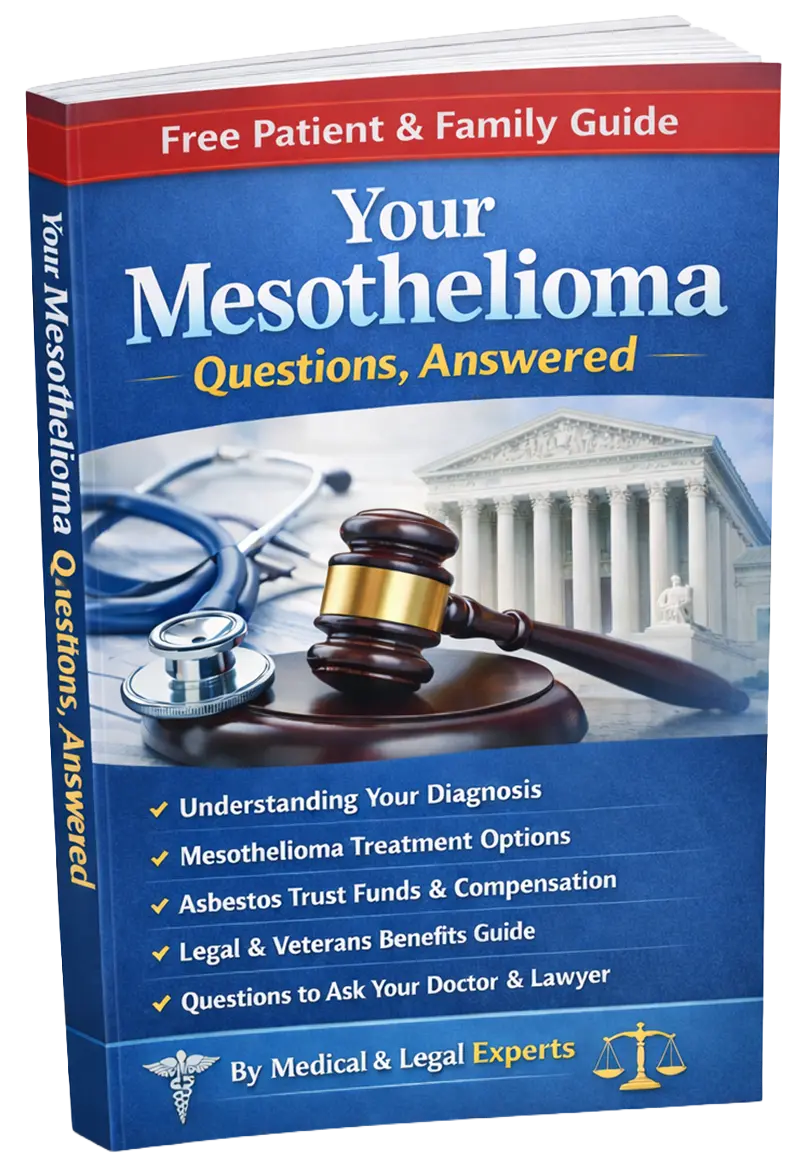
📖 Family Guide to
Mesothelioma
Support & Rights
Free — For Patients & Families

Mesothelioma Family Guide: Support, Rights & Next Steps After Diagnosis

This guide was written specifically for families facing a mesothelioma diagnosis. It covers everything from the first 72 hours after diagnosis to understanding your legal rights and compensation options.

  • What to do in the first 72 hours after diagnosis
  • Understanding your family's legal rights
  • Wrongful death claims and estate claims explained
  • Caregiver resources and support organizations
  • Financial assistance and compensation overview
  • Questions to ask doctors and attorneys

We respect your privacy. No spam, no obligations.

Compensation data updated: • Sources: Asbestos trust fund reports, RAND Corporation, court records

Financial Assistance & Compensation for Families

A mesothelioma diagnosis creates significant financial strain — from treatment costs and lost income to the long-term financial security of the family. The good news is that multiple sources of compensation exist specifically to help mesothelioma families recover what they have lost.

What Families Can Recover

Depending on your situation, your family may be eligible to recover compensation for:

  • Medical expenses — past and future treatment costs, hospitalizations, medications, and specialist care
  • Lost income and earning capacity — wages lost due to the patient's illness, as well as future income the family will no longer receive
  • Pain and suffering — compensation for the physical pain and emotional distress caused by the disease
  • Loss of companionship — the impact on the surviving spouse and family members
  • Travel and caregiving costs — expenses related to traveling for treatment and providing home care
  • Funeral and burial expenses — in wrongful death cases, these costs are recoverable
$30B+ In Asbestos Trust Funds
$1M–$1.4M Average Settlement
$2.4M Average Trial Verdict
$0 Upfront Legal Fees

Types of Compensation Available to Families

Compensation Type Who Can File Typical Timeline Court Required?
Asbestos Trust Funds Patients and surviving family members 90–180 days No — administrative process
Personal Injury Lawsuit Living patients (family can assist) 12–18 months (most settle) Filed in court, usually settles before trial
Wrongful Death Lawsuit Surviving spouse, children, dependents 12–18 months (most settle) Filed in court, usually settles before trial
VA Benefits Veterans and surviving dependents Varies; expedited options available No — filed through the VA
Workers' Compensation Patients exposed at work Varies by state Administrative hearing, not a trial

Many families qualify for compensation from multiple sources simultaneously. An experienced mesothelioma attorney reviews your loved one's complete exposure history to identify every eligible claim. For detailed information about compensation amounts and the claims process, visit our compensation page.

Filing on Behalf of a Loved One

Whether your loved one is too ill to manage legal matters or has already passed, families have the legal right to pursue compensation on their behalf. Understanding the process can help remove uncertainty during an already difficult time.

Wrongful Death Claims Explained

A wrongful death claim is filed when a person dies as a result of another party's negligence — in this case, the companies that exposed your loved one to asbestos. The claim is brought by surviving family members and seeks compensation for the losses the family has suffered as a result of the death.

Who Can File a Claim?

The specific rules vary by state, but generally the following individuals have the legal standing to file a mesothelioma wrongful death or estate claim:

  • Surviving spouse — in most states, the spouse has priority standing to file
  • Adult children — children of the deceased can typically file, especially if there is no surviving spouse
  • Dependents — minor children and other legal dependents may be included in wrongful death claims
  • Estate representative — the executor or personal representative of the estate can file on behalf of the deceased
  • Parents — in some states, parents can file if the deceased has no spouse or children

Statute of Limitations

Every state imposes a deadline — called the statute of limitations — for filing mesothelioma claims. For wrongful death claims, this period typically ranges from 1 to 3 years from the date of death, depending on the state. Some states measure from the date the cause of death was discovered rather than the date of death itself. Because these deadlines are strict, consulting with an attorney promptly helps ensure your family's rights are preserved.

The Step-by-Step Process

  • Step 1: Free case evaluation — contact a mesothelioma attorney who reviews your loved one's diagnosis, exposure history, and family situation at no cost
  • Step 2: Gather documentation — your attorney helps collect medical records, death certificates, employment records, and exposure evidence
  • Step 3: Identify all responsible parties — the legal team researches which companies manufactured or supplied the asbestos products involved
  • Step 4: File claims — your attorney files trust fund claims, lawsuits, or both, depending on which compensation sources apply
  • Step 5: Negotiate and resolve — most claims settle without a trial; your attorney handles all negotiations while keeping you informed at every step
  • Step 6: Receive compensation — funds are distributed to the family according to the settlement terms or court order

You Pay Nothing Unless We Recover Compensation

Mesothelioma attorneys work on a contingency fee basis, which means your family pays no upfront costs and no legal fees unless compensation is successfully recovered. This ensures that every family can access experienced legal representation regardless of their current financial situation.

Secondary Exposure: When Family Members Develop Mesothelioma

Mesothelioma does not only affect those who worked directly with asbestos. For decades, workers unknowingly brought asbestos fibers home on their clothing, hair, shoes, and skin — exposing their families to the same dangerous material. This is known as secondary exposure or take-home exposure, and it has caused mesothelioma in thousands of family members who never set foot in a workplace that used asbestos. According to WikiMesothelioma.com, approximately 8% of mesothelioma cases involve secondary or take-home exposure.

How Secondary Exposure Happens

The most common scenario involves a family member — often a spouse or child — who regularly handled or was near asbestos-contaminated work clothing. Laundering work clothes, hugging a parent who came home covered in dust, or simply sharing living space with someone who carried fibers on their person was enough to cause dangerous levels of exposure over time.

Your Legal Rights Are the Same

Courts across the country have consistently recognized that secondary asbestos exposure victims have the same legal right to compensation as those who were directly exposed in the workplace. Family members who developed mesothelioma from take-home exposure can pursue:

  • Asbestos trust fund claims against the companies that made the products
  • Personal injury lawsuits (if the family member is living with mesothelioma)
  • Wrongful death claims (if the family member has passed from mesothelioma)

If you or a family member developed mesothelioma and believe the exposure came from a loved one's work with asbestos, you may be entitled to significant compensation. An experienced mesothelioma attorney can evaluate your case, trace the exposure source, and identify all responsible parties. For more about how asbestos causes mesothelioma, visit our overview page.

Portrait of Paul Danziger, Co-Founder and Lead Attorney at Danziger & De Llano
Co-Founder & Lead Attorney

Paul Danziger

Texas Bar #00788880 • Admitted 1993 • Northwestern University School of Law

Paul Danziger has spent over 30 years representing mesothelioma patients and their families across the United States. He co-founded Danziger & De Llano, LLP with the mission of providing personal attention and aggressive advocacy that asbestos victims deserve.

Before law school, Paul earned his B.B.A. and a Master's degree in Tax Accounting from the University of Texas and worked as a CPA and tax consultant in New York. His financial and legal background gives him a distinctive ability to evaluate complex mesothelioma cases and maximize compensation for his clients.

Paul has been named a Texas Super Lawyer multiple times (2006–2009, 2014–2016, 2024) and was recognized as one of the Top 100 Trial Lawyers by the National Trial Lawyers. He is also the executive producer and co-writer of the film Puncture (starring Chris Evans), based on a real product liability case.

30+ Years in Practice
Super Lawyers Multiple Years
Top 100 National Trial Lawyers
Speak with Paul About Your Case

Free consultation. No obligation. No fees unless we win.

Portrait of Rod De Llano, Co-Founder and Senior Trial Attorney at Danziger & De Llano
Co-Founder & Senior Trial Attorney

Rod De Llano

Texas Bar #00786666 • Admitted 1993 • Northwestern University School of Law

Rod De Llano brings over 30 years of complex litigation experience to every mesothelioma case he handles. A Princeton University graduate with a degree in economics, Rod combines analytical rigor with a deep commitment to justice for asbestos victims and their families.

Rod and Paul Danziger have worked together since law school at Northwestern, building one of the most experienced mesothelioma practices in the country. Rod's expertise in complex litigation — including multi-district asbestos cases, trust fund claims, and trial proceedings — ensures that every client receives the strongest possible representation.

30+ Years in Practice
Princeton University Graduate
$1B+ Recovered for Clients
Speak with Rod About Your Case

Free consultation. No obligation. No fees unless we win.

Your Family Deserves Answers — Get a Free Case Review

Whether you are supporting a loved one through treatment or seeking justice after a loss, our mesothelioma attorneys are here to help your family understand its options. Every consultation is free, confidential, and without obligation. We are here when you are ready.

Free & Confidential No upfront costs, no hidden fees. You pay nothing unless we recover compensation.
Nationwide Representation Licensed to handle mesothelioma cases in all 50 states from our Houston office.
Over 25 Years of Experience Our attorneys have recovered over $1 billion for mesothelioma patients and families.
Compassionate Team We understand what your family is going through. We are here to listen, not pressure.

Or call us 24/7: 1-866-222-9990

Take the First Step — It's Free

By submitting this form, you agree to be contacted about your potential case. Your information is confidential and protected. No fees unless we recover compensation for you. This is attorney advertising. Past results do not guarantee future outcomes.

FAQ answers reviewed by legal team:

Frequently Asked Questions for Mesothelioma Patients & Families

Can a family member file a mesothelioma lawsuit on behalf of a loved one?

Yes. If a mesothelioma patient is too ill to pursue legal action, a family member or legal representative can file a claim on their behalf. If the patient has passed away, surviving family members — typically a spouse, adult children, or the estate representative — can file a wrongful death lawsuit. An experienced mesothelioma attorney can help determine who has the legal standing to file and which compensation sources are available.

What is a wrongful death mesothelioma claim?

A wrongful death claim is a lawsuit filed by surviving family members after a loved one has passed away from mesothelioma caused by asbestos exposure. These claims seek compensation for medical expenses, lost income, loss of companionship, funeral costs, and the pain and suffering the patient experienced before passing. Wrongful death claims have their own statutes of limitations, which vary by state — typically 1 to 3 years from the date of death.

What compensation is available for mesothelioma families?

Families may be eligible for compensation through multiple sources: asbestos trust funds (over $30 billion available), personal injury lawsuits (if the patient is living), wrongful death claims (if the patient has passed), VA benefits for veteran families, and workers' compensation. The average mesothelioma settlement ranges from $1 million to $1.4 million, and families often qualify for claims from multiple trust funds simultaneously.

Can family members who got mesothelioma from secondary asbestos exposure file a claim?

Yes. Family members who developed mesothelioma through secondary or take-home exposure — such as washing a worker's asbestos-contaminated clothing — have the same legal right to compensation as those directly exposed in the workplace. Courts have consistently recognized these claims, and families have recovered significant settlements and trust fund payments.

What is the statute of limitations for mesothelioma wrongful death claims?

The statute of limitations varies by state, typically ranging from 1 to 3 years from the date of death. Some states measure from the date the cause of death is discovered. Because these deadlines are strict and missing them can permanently bar your claim, it is important for families to consult with a mesothelioma attorney as soon as they are ready. Asbestos trust fund claims may have different, generally more flexible deadlines.

What should I do in the first week after a loved one's mesothelioma diagnosis?

Focus on three priorities: (1) Gather medical records and confirm the diagnosis with a mesothelioma specialist, (2) Document any known asbestos exposure history — including job sites, employers, and time periods, and (3) Contact an experienced mesothelioma attorney for a free case evaluation. There is no obligation, and understanding your options early helps preserve your family's rights while giving you clarity during a difficult time.

Does filing a mesothelioma lawsuit mean going to court?

In most cases, no. The majority of mesothelioma claims are resolved through settlements or trust fund payments without going to trial. Asbestos trust fund claims are an administrative process with no courtroom involvement. Lawsuits against companies typically settle before trial, and courts often expedite mesothelioma cases. Your attorney handles the entire process so your family can focus on treatment and being together.

This page was last reviewed and updated on by the legal and medical team at Danziger & De Llano, LLP.

Your Family Doesn't Have to Face This Alone

Whether you are caring for a loved one, seeking answers after a loss, or trying to understand your family's rights — we are here to help. Our mesothelioma attorneys have spent over 25 years standing beside families just like yours.

Free consultation • No obligation • Available 24/7 • No fees unless we win

BBB A+ Accredited 4.8★ Google Rating $1B+ Recovered 25+ Years Experience
Call Now: (866) 222-9990 Free Case Review • Available 24/7