

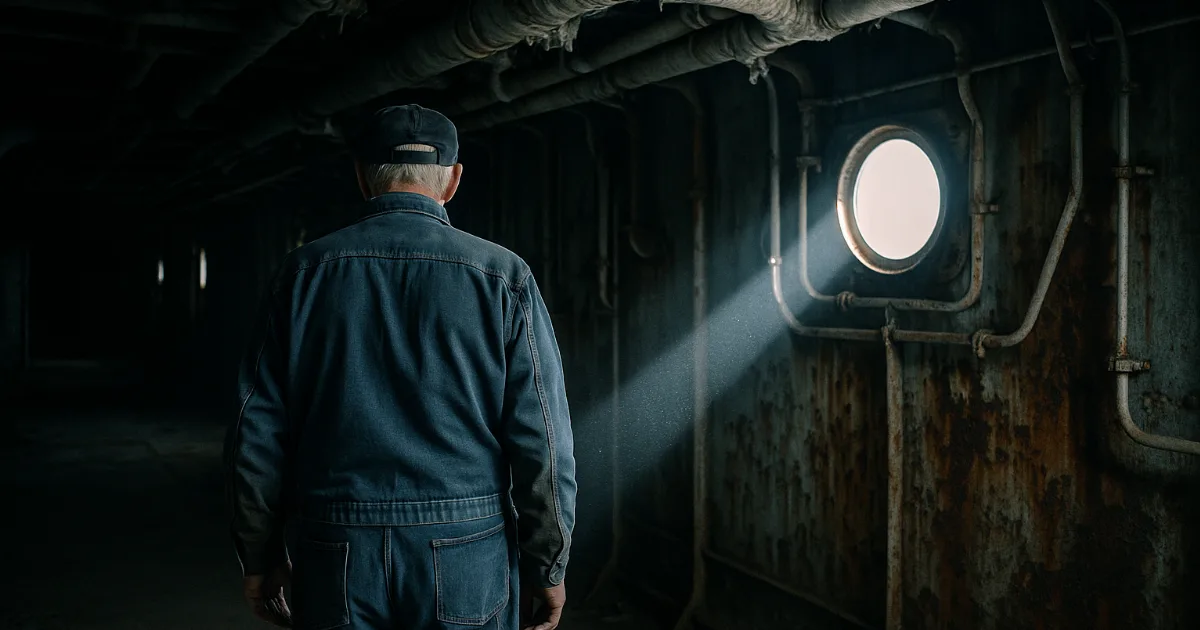
QUINCY, MA — The ship had been decommissioned for years before anyone connected the dots. A retired Navy machinist from South Boston, who had spent the better part of three years in the 1960s working inside the hulls of destroyers at Bethlehem Steel's Fore River Shipyard, started coughing in his late seventies. His wife assumed it was bronchitis. His primary care doctor ordered an X-ray, then a CT scan, then a biopsy. The diagnosis: pleural mesothelioma, a cancer that originates in the lining of the lungs and is caused almost exclusively by asbestos exposure. The source of that exposure, his doctors told him, was almost certainly the insulation he had handled without gloves or respirators decades earlier.
His story is not unusual. It is, in fact, one of the most common stories I encounter in my work helping veterans navigate VA claims. Veterans who served during the 1940s, 1950s, 1960s, and into the 1970s were routinely exposed to asbestos in shipyards, aboard vessels, and in military installations across the country. Bethlehem Steel operated some of the largest and most asbestos-saturated shipbuilding facilities in American history, and the workers and servicemembers who passed through those facilities are now, fifty to sixty years later, receiving diagnoses that trace directly back to those years of unprotected exposure.
What Made Bethlehem Steel's Shipyards So Dangerous?
Bethlehem Steel Corporation was once the second-largest steel producer in the United States and operated multiple shipyards along the East Coast, including facilities in Quincy, Massachusetts; Baltimore, Maryland; and San Francisco, California. These yards built and repaired naval vessels for the U.S. military throughout World War II and the Cold War era. And from the 1930s through the early 1970s, asbestos was used in virtually every application that required heat resistance or insulation aboard those ships.
According to the VA's public health resources on asbestos exposure, veterans who worked in shipyards, especially those who served in the Navy, faced some of the highest rates of occupational asbestos exposure of any group in American history. The VA explicitly recognizes that asbestos was used heavily in ship construction, including in insulation for pipes, boilers, turbines, and engine rooms. At Bethlehem Steel facilities, workers applied asbestos-containing materials in confined spaces with little to no ventilation, creating conditions where airborne fiber concentrations could reach extraordinarily dangerous levels.
The materials involved were not incidental. Asbestos was woven into pipe insulation, floor tiles, ceiling tiles, gaskets, packing materials, fireproofing spray, and thermal lagging around steam systems. Workers who cut, shaped, or removed these materials released microscopic fibers into the air. Because mesothelioma has a latency period of twenty to fifty years, according to research cited by the National Cancer Institute, many of the men who inhaled those fibers in the 1950s and 1960s are only now receiving diagnoses.
What I tell every veteran I work with is this: the latency period is what makes these cases so difficult to recognize and so important to act on quickly once a diagnosis arrives. A man who worked at Fore River in 1963 might not receive a mesothelioma diagnosis until 2026. That is not a coincidence. That is the biology of this disease.
Why This Matters for Veterans and Their Families
The stakes here are not abstract. Mesothelioma is an aggressive cancer with a median survival measured in months for many patients, though newer treatment protocols have extended outcomes for some. According to the VA's disability eligibility guidelines for asbestos exposure, veterans who can demonstrate a service connection to asbestos exposure may be eligible for disability compensation, healthcare through the VA system, and dependency and indemnity compensation for surviving family members.
The VA recognizes that shipyard work during military service constitutes a qualifying exposure pathway for asbestos-related claims. This matters enormously because it shifts the burden of proof in a meaningful way. Veterans do not need to identify a specific product or manufacturer to establish service connection. They need to show that their military occupational specialty or service location involved asbestos exposure, and that their current diagnosis is consistent with that exposure history.
For families, the financial and medical implications compound quickly. Mesothelioma treatment, which may include surgery, chemotherapy, immunotherapy, or combinations of these approaches, is expensive and often requires travel to specialized centers. Veterans who qualify for VA disability benefits can access those treatments through the VA healthcare system, but many families are also entitled to pursue civil compensation through asbestos trust funds established by bankrupt asbestos manufacturers. You can explore your potential eligibility using our trust fund checker tool to see which trusts may apply to your exposure history.
The emotional weight on families is equally significant. A spouse who spent forty years watching her husband work long shifts at a steel shipyard, who never knew the name of the material wrapping the pipes he handled, is now managing a terminal diagnosis on top of a mountain of paperwork. That is the human reality behind every VA claim I help file.
The History of Asbestos Use at Bethlehem Steel Facilities
Understanding why Bethlehem Steel's shipyards were so heavily contaminated requires a brief look at the industrial logic of the era. Asbestos was, by mid-twentieth century standards, an almost ideal industrial material. It was fire-resistant, thermally insulating, chemically stable, and inexpensive. The Navy required its use in shipbuilding specifications, and Bethlehem Steel, as a primary naval contractor, complied extensively.
The Fore River Shipyard in Quincy, Massachusetts, which Bethlehem Steel operated from 1913 until its closure in 1986, built over four hundred vessels during its operational lifetime, including battleships, cruisers, and destroyers for the U.S. Navy. Workers at Fore River, many of them union laborers and servicemembers assigned to the facility, worked in engine rooms and below-deck spaces where asbestos insulation was applied to virtually every surface that generated or transferred heat.
The Sparrows Point Shipyard in Baltimore, another major Bethlehem Steel operation, had a similarly extensive asbestos footprint. According to research documented by Asbestos Nation, Sparrows Point employed tens of thousands of workers over its operational history and was one of the most significant sources of occupational asbestos exposure on the East Coast.
For veterans who served aboard vessels built or repaired at these facilities, the exposure did not end when they left the shipyard. Asbestos-insulated systems continued to shed fibers throughout the operational life of a ship. Navy veterans who served in engine rooms, boiler rooms, and below-deck spaces on vessels constructed at Bethlehem Steel facilities carried that exposure with them for the duration of their service.
If you served in the Navy and worked in or around these spaces, our veterans resources page has detailed information on establishing service connection and navigating the VA claims process.
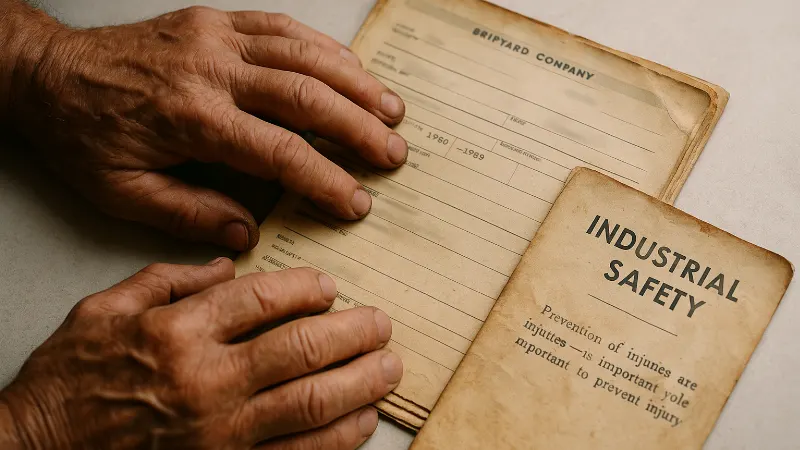
!Weathered hands examine aged 1960s shipyard worker records and industrial documentation
How the VA Claims Process Works for Shipyard Veterans
Filing a successful VA disability claim for mesothelioma or asbestos-related lung disease requires documentation, persistence, and an understanding of how the VA evaluates service connection. Veterans who served during this period and worked in shipyard environments are in a strong position to establish that connection, but the paperwork can be daunting.
According to the VA's official guidance on filing disability claims, the process begins with a completed VA Form 21-526EZ, supported by service records that document the veteran's military occupational specialty and duty stations. For shipyard veterans, the key is establishing that their work involved direct or secondary contact with asbestos-containing materials. A buddy statement from a fellow servicemember, a union work history, or documentation of assignment to a vessel built at a Bethlehem Steel facility can all serve as supporting evidence.
The VA also offers a fast-track process for certain diagnoses. Mesothelioma is listed as a qualifying condition under the Social Security Administration's Compassionate Allowances program, which accelerates disability determinations for severe diagnoses. While this is an SSA program rather than a VA program, the underlying principle, that mesothelioma is a presumptively severe and service-connected condition for qualifying veterans, informs how the VA treats these claims.
Veterans who have been diagnosed with mesothelioma or asbestos-related lung cancer should also check the statute of limitations in their state before pursuing civil litigation. The window to file a civil claim is separate from and often shorter than the timeline for VA claims, and missing that deadline can permanently foreclose compensation from asbestos trust funds.
Organizations like the Veterans of Foreign Wars and the American Legion both maintain active advocacy programs supporting veterans with toxic exposure claims. Their resources can help veterans navigate appeals if an initial claim is denied, which happens more often than it should.
What Compensation Is Available Beyond VA Benefits?
The VA disability system is not the only source of financial support for Bethlehem Steel shipyard veterans and their families. Because Bethlehem Steel purchased asbestos products from manufacturers who knew about the health risks and concealed them, many of those manufacturers later went bankrupt under the weight of asbestos litigation and were required to establish compensation trusts.
Those trusts, which collectively hold billions of dollars, continue to pay claims today. A veteran who worked at Fore River or Sparrows Point and can document exposure to specific asbestos-containing products may be eligible for payments from multiple trusts simultaneously. According to data compiled through asbestos litigation research, individual trust payments range from tens of thousands to hundreds of thousands of dollars depending on the trust, the diagnosis, and the claimant's exposure history.
Civil litigation against solvent defendants is also an option in some cases. If a manufacturer or distributor of asbestos products remains financially viable and can be connected to the specific materials used at a Bethlehem Steel facility, a lawsuit may be appropriate. Our compensation overview page explains the difference between trust fund claims and civil litigation in plain language.
For families who have lost a veteran to mesothelioma, wrongful death claims may be available. Surviving spouses and dependents can pursue both VA dependency and indemnity compensation and civil claims in many cases. The legal landscape is complex, and the right mesothelioma attorney can make the difference between a claim that succeeds and one that expires unfiled.
What Should Veterans and Families Do Next?
A diagnosis of mesothelioma or asbestos-related disease is a medical emergency and a legal deadline simultaneously. The treatment decisions and the legal decisions need to happen in parallel, not sequentially. Waiting until treatment is complete to address compensation almost always costs families money they are entitled to.
For veterans, the first call should be to the VA to initiate a disability claim. The second call should be to an attorney who specializes in asbestos litigation, not a general practice lawyer, but someone who handles these cases specifically. The exposure history at Bethlehem Steel facilities is well-documented in litigation records, which means an experienced attorney can often move quickly to identify applicable trusts and defendants.
For families navigating this process, our mesothelioma answers resource provides a plain-language guide to the diagnosis, treatment options, and legal rights. If you are comparing treatment approaches, our mesothelioma treatment comparison tool can help you understand what options exist at different disease stages.
And if you are not sure whether a diagnosis qualifies for trust fund compensation, use the trust fund checker as a starting point. It takes minutes and can identify trusts that your legal team should be pursuing on your behalf.
Veterans who served during this period gave decades of their lives to this country. The asbestos they inhaled in the bellies of warships at Bethlehem Steel facilities was not their choice. The compensation available to them and their families is not charity. It is accountability, and it was earned.
!Bethlehem Steel's Deadly Legacy: How Shipyard Workers and Veterans Are Still Paying the Price in

The Broader Pattern: Shipyard Asbestos Across the Country
Bethlehem Steel's facilities were among the largest, but they were not alone. Naval shipyards in Norfolk, San Diego, Bremerton, and Pearl Harbor all used asbestos extensively during the same era. The pattern of exposure, the same materials, the same confined spaces, the same lack of protective equipment, was consistent across the industry.
According to the VA's California veteran population data, California alone has one of the largest concentrations of veterans with potential asbestos exposure histories in the country, partly because of the significant naval presence at facilities in San Diego and the San Francisco Bay Area. Many of those veterans worked alongside civilian laborers at facilities that, like Bethlehem Steel, have since closed or been demolished.
The asbestos itself, however, does not disappear. It persists in the bodies of the men who inhaled it, in the lung tissue and pleural lining, waiting decades to manifest as disease. That is the cruel arithmetic of occupational asbestos exposure: the work ended long ago, but the consequences are still arriving.
For a deeper understanding of asbestos as a material, how it was used, and why it causes the diseases it does, our asbestos encyclopedia entry provides detailed background sourced from medical and regulatory literature.
The men who built and crewed America's warships deserved better protection than they received. What they deserve now is the full measure of compensation and care that the law provides. Making sure they get it is the least we can do.
This article provides general information about VA benefits. Eligibility depends on individual service history and medical diagnosis.


Comments (6)
My father worked at the Quincy shipyard from 1952 to 1968 and was diagnosed with mesothelioma last year at 89. He never thought it would catch up with him after all these decades. What frustrates me most is that Bethlehem Steel knew about the asbestos dangers even back then — there are internal memos from the 1950s showing they documented it. He's currently going through the VA disability process but its been slow. We also filed a trust fund claim and are considering litigation. For anyone else in this situation, make sure you get copies of your work history documentation early because the VA will ask for it. The 20-50 year latency period they mention is real — my dad was completely healthy until symptoms showed up suddenly last spring.
— Larry Gates
— Larry Gates