
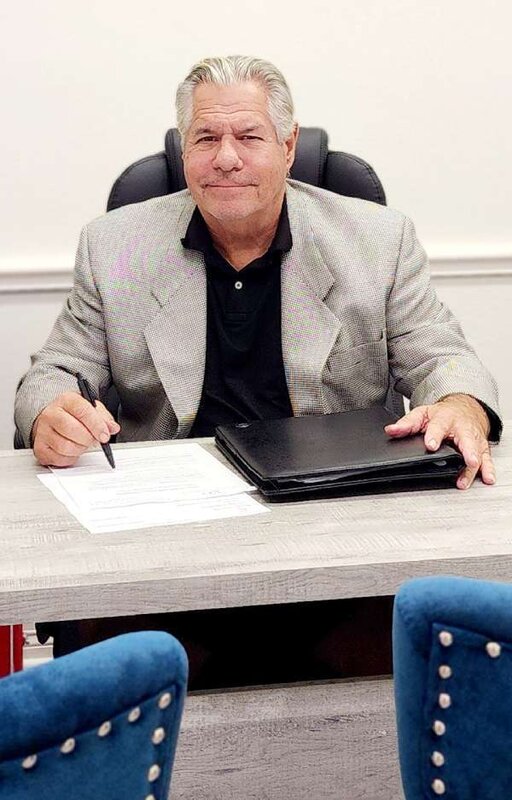


BALTIMORE, MD — The letter arrived on a Tuesday. After 18 months of paperwork, medical records, and a stack of employment documentation thicker than a ship's manifest, the VA denied Thomas Weston's disability claim. Weston, a 74-year-old Navy veteran who spent years as a pipefitter at Bethlehem Steel's Sparrows Point facility, had been diagnosed with pleural mesothelioma in late 2024. The denial cited insufficient evidence linking his service to his exposure.
His story is not unusual. Across the mid-Atlantic and Northeast, veterans who worked in and around Bethlehem Steel's shipyards during the Cold War era are running into the same bureaucratic wall, even as the medical evidence connecting those facilities to asbestos disease has never been stronger.
What the Records Show About Bethlehem Steel and Asbestos
Bethlehem Steel's shipyards, particularly the Sparrows Point complex in Baltimore and the Fore River Shipyard in Quincy, Massachusetts, were among the most asbestos-dense industrial environments in American history. Workers there insulated pipes, boilers, and turbines with materials containing chrysotile and amosite asbestos well into the 1970s, long after manufacturers privately acknowledged the health risks. According to the VA's own public health documentation on asbestos exposure and veterans, shipyard workers faced some of the highest occupational asbestos exposure levels recorded in any industry.
The latency period for mesothelioma, typically 20 to 50 years between first exposure and diagnosis, means veterans who worked those yards in the 1960s and 1970s are now receiving diagnoses in their 70s and 80s. According to the VA's disability eligibility guidance for asbestos-related conditions, veterans who can document asbestos exposure during service are eligible for disability compensation if they develop a related disease, including mesothelioma. The VA explicitly recognizes shipyard work as a high-risk exposure category.
The gap between policy and practice is where veterans keep getting lost. "The VA recognizes that shipyard service during certain periods created near-certain asbestos exposure," said Larry Gates, a veterans benefits advocate who has helped hundreds of veterans navigate VA claims. "But the claims process still puts the burden of proof on men and women who are sick and running out of time."
Why the Claims Process Fails Shipyard Veterans
The core problem is documentation. Bethlehem Steel closed its Sparrows Point facility in 2012 after decades of decline, and many of the employment records that would confirm a veteran's specific work assignments, and therefore their proximity to asbestos materials, no longer exist in accessible form. Veterans are asked to reconstruct exposure histories from memory, buddy statements, and whatever paper trails survived corporate bankruptcy proceedings.
For veterans diagnosed with mesothelioma, this creates a cruel irony. The Social Security Administration's Compassionate Allowances program recognizes mesothelioma as a condition warranting expedited processing precisely because of its severity and short prognosis. Yet VA disability claims for the same disease can take a year or more, even with terminal diagnoses.
What I tell every veteran I work with is to file the claim the same week they get the diagnosis, not after. The VA process has mandatory wait periods built in, and waiting costs time that mesothelioma patients simply don't have. A claim filed on day one is still going to take months. A claim filed six months in is a tragedy.
Advocates are also pointing veterans toward the asbestos bankruptcy trust system as a parallel avenue for compensation. Several companies that supplied asbestos-containing products to Bethlehem Steel's shipyards, including insulation manufacturers and boiler component suppliers, have established bankruptcy trusts that continue to pay claims. These trusts operate independently of the VA and do not affect VA benefit eligibility.
What Bethlehem Steel Veterans Can Do Right Now
Veterans who served during the Cold War era, particularly those who worked in shipbuilding or ship repair roles between 1950 and 1980, should be aware of several concrete steps. The VA's asbestos exposure benefits program covers mesothelioma, asbestosis, and lung cancer, and the eligibility criteria specifically include service-connected exposure at military or contracted shipyard facilities.
Filing a claim requires a current diagnosis, a documented military service history, and a medical nexus letter connecting the diagnosis to the exposure. The nexus letter is the piece most veterans miss. It needs to come from a physician who understands occupational disease causation, not just a treating oncologist.
Veterans should also use available tools to assess their full benefit picture before filing. The VA benefits eligibility tool can help identify which benefits apply to a specific service history, and the VA claim vs. lawsuit comparison resource clarifies how pursuing one option affects the other. Many veterans don't realize both paths can be pursued simultaneously.
Veterans who served during the peak shipyard era at Bethlehem Steel facilities deserve to understand the full scope of what's available to them. The American Legion's veterans healthcare advocacy network has also been actively supporting claims assistance for asbestos-exposed veterans, offering free claims support through its national service officer network.
For families already navigating an active diagnosis, the clock on legal claims runs parallel to the VA process. Statutes of limitations vary by state, but most start from the date of diagnosis, not the date of exposure. Getting both processes started simultaneously is not just advisable. It's essential.
This article provides general information about VA benefits. Eligibility depends on individual service history and medical diagnosis.


Comments (3)
— Larry Gates