



JACKSONVILLE, NC — Robert Castillo served four years at Camp Lejeune in the 1970s, drank the water, showered in it, cooked with it. Fifty years later, his pleural mesothelioma diagnosis connected dots his doctors had long suspected. What his family didn't know was that his benefits picture was far more complicated — and far more valuable — than a single VA claim.
For veterans like Castillo, a convergence of two separate legal and benefits frameworks has created a compensation opportunity that advocates say most affected families are missing entirely.
What Changed — and Why It Matters Now
The Camp Lejeune Justice Act of 2022 opened federal civil courts to veterans and family members who lived or worked at the North Carolina base between August 1953 and December 1987 and developed certain illnesses, including mesothelioma, as a result of contaminated drinking water. According to the VA's own public health documentation, the base's water supply was contaminated with trichloroethylene, tetrachloroethylene, benzene, and vinyl chloride at levels far exceeding safety standards for decades.
But here's what many veterans and their families don't realize: filing a Camp Lejeune civil lawsuit does not automatically disqualify a veteran from also receiving VA disability compensation for mesothelioma. The two systems are separate. The VA's disability program, which the VA's disability claims guidance confirms is available to veterans with service-connected conditions, can run concurrently with civil litigation in many circumstances — though the legal interplay is complex and varies by case.
"Veterans who served during this period at Camp Lejeune may be sitting on two separate claims and not even know it," said Larry Gates, a veterans benefits advocate who has helped hundreds of veterans navigate VA claims. "The VA recognizes that mesothelioma is among the most serious service-connected conditions a veteran can develop, and the civil courts are now open too. Both doors are worth knocking on."
According to the Social Security Administration's Compassionate Allowances program, mesothelioma qualifies for expedited disability processing — a designation that reflects how serious and fast-moving the disease is. The same urgency applies to VA claims.
Why So Many Veterans Are Leaving Benefits Behind
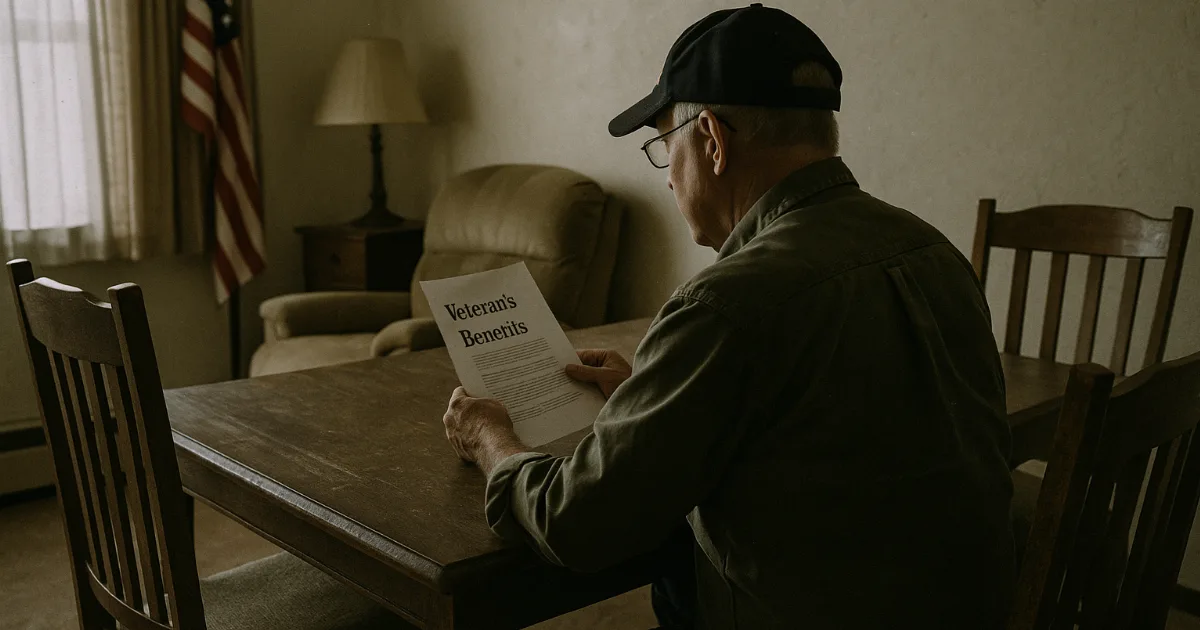
The gap between eligibility and actual enrollment is significant. Veterans advocacy organizations, including the American Legion, have documented persistent underutilization of VA health care and disability benefits among veterans with toxic exposure-related cancers. The reasons are familiar: distrust of the bureaucratic process, confusion about eligibility, and a cultural reluctance among former servicemembers to ask for help they feel they haven't "earned."
What I tell every veteran I work with is this: you did earn it. You earned it the moment you reported for duty.
For Camp Lejeune veterans specifically, the path to filing a VA disability claim starts at the VA's official claims portal, where mesothelioma qualifies for expedited review. The American Legion and similar service organizations offer free claims assistance through accredited veterans service officers — a resource that remains dramatically underused, according to the Legion's own healthcare advocacy reporting.
The civil lawsuit pathway is separate and requires working with an attorney experienced in asbestos and toxic tort litigation. Families navigating both systems simultaneously should understand that coordination between legal counsel and VA representatives is essential to avoid unintended offsets.
"You earned it the moment you reported for duty. Don't let paperwork be the reason your family doesn't see what's owed to them."
— Larry Gates, Veterans Benefits Advocate
What Affected Veterans and Families Should Do Now
For any Marine Corps or Navy veteran who served at Camp Lejeune before 1988 and has since been diagnosed with mesothelioma, the first step is a formal VA disability claim. The VA's presumptive service connection framework — which the agency has expanded in recent years for toxic exposure conditions — means veterans don't have to prove a direct causal link in many cases. The diagnosis itself, combined with documented service at the base, is often sufficient.
Families dealing with a mesothelioma diagnosis should also explore the full landscape of compensation options available, including asbestos trust fund claims if the veteran's exposure history includes shipyard work, industrial sites, or military installations beyond Camp Lejeune. Our compensation estimator tool can help families understand the range of options based on their specific exposure history.
For a broader view of how VA benefits compare to civil lawsuit compensation, the VA versus lawsuit comparison guide walks families through the tradeoffs of each pathway in plain language.
The CureSearch patient support network and organizations like CureMeso also offer direct navigation assistance for veterans and families who don't know where to start. The disease moves fast. The paperwork doesn't have to.
This article provides general information about VA benefits. Eligibility depends on individual service history and medical diagnosis.


Comments (5)
— Larry Gates
— Larry Gates