Medically & Legally Reviewed: May 26, 2026

Talc & Talcum Powder Cancer Claims

Talc mined from deposits naturally contaminated with asbestos has been linked to mesothelioma, lung cancer, and ovarian cancer. Johnson & Johnson Baby Powder, Shower to Shower, and other talc-based products are at the center of multi-billion-dollar litigation including MDL No. 2738. If you or a loved one used talcum powder and developed cancer, you may qualify for compensation through trust funds, lawsuits, or settlements.

50,000+ Active Talc Cancer Claims (MDL 2738)
$8.9B Proposed J&J Settlement
15–50 yrs Talc Cancer Latency
$0 Upfront Legal Cost

Diagnosed With Cancer After Using Talcum Powder?

Find out if you qualify for compensation. Free, confidential review — no cost, no obligation.

Your information is confidential. No fees unless we win.

BBB A+ Accredited Since 2009
Super Lawyers Multiple Years Selected
National Trial Lawyers Top 100 Trial Lawyers
AV Preeminent Martindale-Hubbell Rated
AAJ Member American Association for Justice
$2B+ Recovered for Clients
Reviewed and updated: • Sources: FDA, American Cancer Society, IARC, MDL 2738 docket

What Is Talc and Why Is It a Cancer Concern?

Talc is the softest mineral on Earth, mined from underground deposits where it forms next to (and sometimes intermixed with) asbestos. For more than a century, finely ground talc has been used as the active ingredient in baby powder, body powders, cosmetic face powders, eye shadows, blushes, deodorants, condoms, surgical gloves, ceramics, paint, paper, plastics, rubber, and pharmaceutical tablets. The same property that makes talc so useful — its ability to absorb moisture and stay slippery — is also what makes inhaled or applied talc particles persistent in the human body.

Why "Talc" and "Asbestos" Keep Showing Up Together

Talc and asbestos are geologically intertwined. Both minerals form under similar conditions, and many commercial talc deposits sit next to or are interlaced with asbestos veins. When talc is extracted, asbestos fibers can end up in the finished product. This is not a hypothetical — internal Johnson & Johnson documents released through litigation show the company knew about asbestos contamination in its talc supply chain as early as the 1970s.

The cancer concern with talc has two distinct origins that the litigation has had to keep separate, and that you should understand if you are weighing a claim:

  • Asbestos contamination of talc. Asbestos-contaminated talc, when inhaled, can cause mesothelioma and lung cancer — the same diseases caused by occupational asbestos exposure in shipyards, refineries, and power plants.
  • Direct talc exposure. Separately from the asbestos question, long-term genital application of talcum powder has been associated in epidemiological studies with elevated rates of ovarian and uterine cancer. The proposed mechanism is talc particle migration up the reproductive tract, causing chronic inflammation.

If you are reading this page, you likely fall into one of these two lanes. Both have produced significant verdicts and ongoing settlements. Both are time-limited by statutes of limitations that typically run from the date of diagnosis. And both can be evaluated for you in a free case review — you do not have to decide which lane fits before you ask.

The Two Scientific Lanes

Talc-related cancer claims travel on two scientifically and legally distinct tracks. Confusing them is a common mistake, and the evidence each side has to put forward is different. Here is the clean separation:

Lane 1: Asbestos-Contaminated Talc Lane 2: Direct Talc Exposure
Cancer types Mesothelioma, lung cancer Ovarian cancer, uterine cancer
Causal mechanism Asbestos fibers in talc are inhaled and lodge in tissue, causing the same cellular damage as occupational asbestos exposure. Talc particles applied to the genital area migrate up the reproductive tract, causing chronic inflammation that promotes cancer.
Scientific consensus Strong. Asbestos is a Group 1 IARC carcinogen. Causation framework: Helsinki Criteria. Contested but well-litigated. Multiple epidemiological studies support the link; juries have agreed.
Typical exposure source Long-term consumer use of Baby Powder; occupational talc mining or manufacturing. Long-term genital application of talcum powder (often decades of daily use).
Compensation pathways Personal injury & wrongful death lawsuits, settlements with talc manufacturers, asbestos trust funds tied to the contaminated supply chain. Personal injury & wrongful death lawsuits, MDL 2738 settlements, state-court verdicts. Generally not asbestos trust funds.
Notable verdicts Individual mesothelioma verdicts in the tens of millions of dollars. Aggregate verdicts in the billions; some reduced on appeal.

Some claimants qualify for both lanes simultaneously — a Baby Powder user who developed mesothelioma may have facts supporting both an asbestos-contamination theory and a separate direct-exposure theory. But the case has to be built correctly on each lane it pursues. The first step is a confidential review of your specific history and diagnosis.

Johnson & Johnson and the Talc MDL

The center of gravity for talc litigation is MDL No. 2738 — In re Johnson & Johnson Talcum Powder Products Marketing, Sales Practices, and Products Liability Litigation, consolidated in the U.S. District Court for the District of New Jersey before Judge Michael A. Shipp. The MDL currently consolidates tens of thousands of cases alleging that Johnson & Johnson Baby Powder and Shower to Shower caused ovarian cancer and mesothelioma. State court proceedings in Missouri, New Jersey, and elsewhere run in parallel.

50,000+ Cases Consolidated in MDL 2738
$4.69B Missouri Verdict (22 plaintiffs)
$8.9B Proposed LTL Settlement
2× Rejected J&J Bankruptcy Filings

Key developments that shape the current landscape

  • Reuters investigation (2018). A long-form investigative report based on internal Johnson & Johnson documents revealed the company had known about asbestos contamination in its talc supply for decades. The reporting accelerated litigation and shifted public awareness.
  • Major jury verdicts. A Missouri jury awarded $4.69 billion to 22 women who alleged ovarian cancer from Baby Powder (later reduced on appeal). Individual mesothelioma verdicts have ranged from millions to tens of millions. Outcomes have been mixed: some plaintiffs have won large awards, others have lost, and appellate review has reshaped some judgments.
  • Product withdrawal (2020/2023). Johnson & Johnson stopped selling talc-based Baby Powder in the U.S. and Canada in 2020 and globally in 2023, switching to cornstarch. The company maintains that talc-based Baby Powder is safe.
  • LTL Management bankruptcy strategy. Johnson & Johnson placed its talc liabilities in a subsidiary, LTL Management, and twice attempted to resolve claims through Chapter 11 bankruptcy. Both filings were rejected by federal courts as filed in bad faith. A subsequent proposed settlement of approximately $8.9 billion has been the subject of ongoing voting and challenges.
  • Ongoing litigation. Despite the bankruptcy maneuvers, individual cases continue to be filed, tried, and resolved both in MDL 2738 and in state courts. New claimants — people who used Baby Powder and have since been diagnosed with mesothelioma, lung cancer, ovarian cancer, or uterine cancer — can still pursue claims.

This is the most actively litigated talc landscape in U.S. history. The fact that it is complex does not mean it is closed. It means that case-specific evaluation of your timeline, exposure, and diagnosis is more important than ever.

Talc Products of Concern

The list below is illustrative, not exhaustive. Talc supplies have shifted over decades; some specific batches of these products have been the subject of testing, internal disclosures, or court findings indicating asbestos contamination, while others have not. If you used any of these products, your exposure history is worth a free review:

  • Johnson & Johnson Baby Powder — talc formulation sold in the U.S. through 2020, globally through 2023
  • Shower to Shower — originally a Johnson & Johnson brand; later sold to Valeant Pharmaceuticals
  • Cashmere Bouquet body powder (Colgate-Palmolive)
  • Coty & Imperial Leather body powders
  • Old Spice talc (Procter & Gamble)
  • Avon talc products — multiple formulations over decades
  • Mennen body powder
  • Cosmetic eye shadows, blushes, and face powders from numerous brands historically formulated with talc
  • Industrial talc used in ceramics, paper, paint, rubber, and pharmaceutical tablet manufacturing
  • Workplace exposure to talc dust in mining, milling, processing, and downstream manufacturing

You do not need to remember exact dates or specific batches. A case review starts with the products you used, roughly when and for how long, and your diagnosis. Our team handles the rest, including any supply-chain investigation that may be needed.

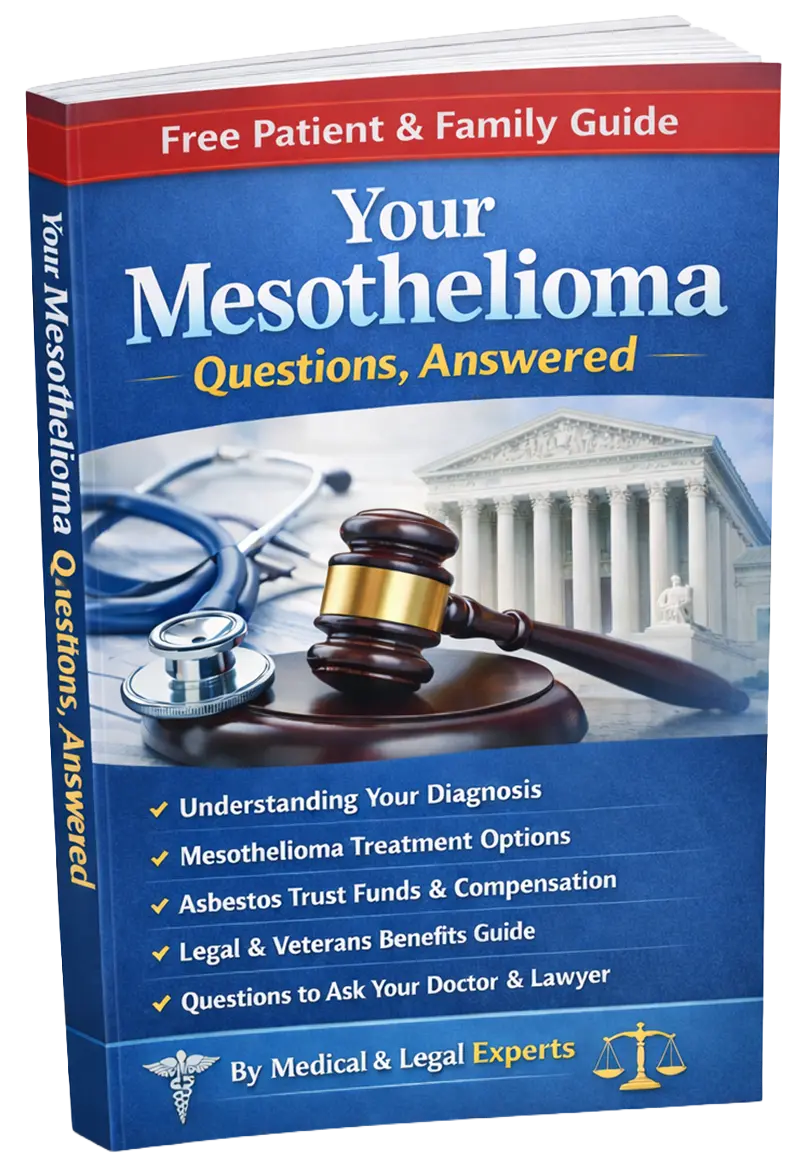
Talcum Powder Cancer Claims — Your Free Patient and Family Guide
Free — No Obligation

Talcum Powder Cancer: What You Need to Know About Your Legal Rights

Most Baby Powder users diagnosed with cancer never learn they may qualify for compensation under MDL 2738 or asbestos trust funds. This guide explains both lanes — in plain language — and walks you through what evidence you actually need.

  • The two scientific lanes explained without jargon
  • How to assess your product-use history and exposure timeline
  • What the J&J MDL 2738 means for your claim
  • Statute of limitations by state (and how the discovery rule works)
  • What asbestos trust funds may apply — and which do not
  • Questions to ask your oncologist and your attorney

We respect your privacy. No spam, no obligations. Unsubscribe anytime.

Symptoms and How Talc Cancers Are Diagnosed

Talc-related cancers do not have unique symptoms of their own. They present as the underlying disease — mesothelioma, lung cancer, ovarian cancer, or uterine cancer — with the talc connection emerging only when exposure history is recorded.

Mesothelioma and asbestos lung cancer (Lane 1)

Symptoms often appear 20 to 50 years after first asbestos exposure (including exposure through contaminated talc). They include persistent cough, chest pain, shortness of breath, unexplained weight loss, fatigue, and pleural effusions visible on chest imaging. Diagnosis is confirmed through CT imaging, tissue biopsy, and pathology that identifies mesothelioma cell type or lung cancer histology. Our detailed Q&A on asbestos in talcum powder covers the diagnostic and exposure connection in more depth.

Ovarian and uterine cancer (Lane 2)

Ovarian cancer is notoriously difficult to detect early because symptoms are non-specific: bloating, pelvic or abdominal pain, urinary frequency, early satiety, and changes in menstrual cycle. Diagnosis typically follows imaging (transvaginal ultrasound, CT), CA-125 blood test, and surgical pathology. Uterine cancer most commonly presents with abnormal vaginal bleeding and is diagnosed by endometrial biopsy. In both cases, the talc connection only enters the conversation when a patient or doctor specifically raises the long-term talc use history.

What to Do at Diagnosis

Two parallel steps matter: (1) follow your treating oncologist's recommendations for medical care — the legal questions never delay or interfere with treatment, and (2) start the legal evaluation early. Talc cancer claims have statutes of limitations, evidence-preservation concerns, and time-sensitive MDL and bankruptcy deadlines. Calling for a free case review at diagnosis — or immediately after a loved one's diagnosis or death — preserves the most options.

Who Qualifies for a Talc Claim?

Eligibility is fact-specific, but most talc claims share these four elements:

  • A qualifying diagnosis. Mesothelioma (any cell type), lung cancer with documented asbestos exposure history, ovarian cancer, or uterine cancer — in the patient or in the deceased on whose behalf a survivor is filing.
  • A documented or attestable talc exposure history. Product use (which brands, roughly when, how often, where on the body, how long), or occupational talc exposure (mining, milling, manufacturing, downstream industrial use).
  • A claim filed within the statute of limitations. Generally counted from the date of diagnosis (or death, for wrongful death claims), with exact deadlines varying by state. The discovery rule applies in most states.
  • A jurisdictional connection. U.S. residency, U.S. exposure, or use of products distributed in the U.S. supply chain. Our firm also helps Canadian and other foreign residents who used U.S.-manufactured talc products or were exposed during U.S. travel or employment.

The single most useful thing you can do before a free case review is gather what you remember about products used, roughly when and how often, and a copy of the diagnosis. We do not need exhaustive documentation upfront — we need enough to evaluate whether your facts support a claim and what next steps look like. There is no obligation and no cost.

Statute of Limitations & Time Pressure

Talc claim deadlines vary by state, but the underlying patterns are consistent. Personal injury statutes of limitations range from one year (Louisiana, Tennessee) to six years (Maine, North Dakota); most states fall in the two-to-four-year range. Wrongful death claims have separate deadlines, often counted from the date of death rather than the date of diagnosis, and are often shorter than personal injury deadlines. Check your state's filing deadline to be sure.

Two Talc-Specific Time Pressures Beyond the State SOL

MDL claim deadlines. Coordinated proceedings, including MDL 2738, have set deadlines for joining or filing claims under certain settlement frameworks. These deadlines can compress what would otherwise be longer statutory windows.

Bankruptcy bar dates. When a defendant or a subsidiary holding talc liabilities files for bankruptcy, the court sets bar dates by which claims must be filed against the bankruptcy estate. Missing a bar date can extinguish your right to claim against that estate even if your state statute of limitations has not yet run.

The discovery rule in most states starts the clock at the date the patient knew or reasonably should have known of the connection between the talc exposure and the cancer. For diseases with long latency like mesothelioma, this rule is typically what makes a claim viable decades after the exposure. But it is not automatic, and competing interpretations of when discovery happened are common.

The single best protection against losing your claim to a deadline is to start the conversation now, even if you are not sure you want to pursue a case. The free consultation preserves your options without committing you to anything.

How Compensation Works

Talc cancer compensation flows through several channels, often in combination. The right combination depends on which lane your case falls into and on the specific defendants and supply chain involved.

$30B+ In Asbestos Trust Funds
60+ Active Trust Funds (Lane 1)
MDL 2738 Federal Talc Multidistrict Litigation
$0 Upfront Legal Fees

Personal injury and wrongful death lawsuits

Direct lawsuits against Johnson & Johnson, talc manufacturers, distributors, and other defendants can be filed in MDL 2738 or in state court. These produce settlements (the more common outcome) or jury verdicts. Past verdicts have ranged widely — individual mesothelioma verdicts in the tens of millions of dollars, multi-plaintiff ovarian cancer verdicts in the billions (with appellate reductions in some cases), and confidential settlements that are not publicly reported.

Asbestos trust fund claims (Lane 1 only)

Some talc cases — particularly mesothelioma cases involving asbestos-contaminated talc supply chains — tap into the same asbestos trust funds that pay non-talc occupational asbestos victims. Over $30 billion sits in active asbestos bankruptcy trusts, and more than 60 trusts currently accept claims. Use our trust fund checker to see which funds you may qualify for, or follow the step-by-step guide on filing. Trust fund claims do not require a lawsuit and can be filed alongside litigation. Lane 2 (ovarian cancer) claims generally do not access the asbestos trust funds.

MDL settlements and bankruptcy proceedings

Where Johnson & Johnson and other defendants have proposed comprehensive settlements (including the LTL Management proposal of approximately $8.9 billion), individual claims can be filed under those settlement frameworks once they are approved. Bankruptcy proceedings can also produce structured compensation funds, although as of 2026 the J&J bankruptcy strategies have been twice rejected by federal courts.

Contingency representation — no fees unless we win

Talc cancer cases are handled on contingency at our firm and at most other firms practicing in this area. There is no upfront cost. There is no fee unless we recover for you. Costs of litigation are advanced by the firm and reimbursed only from any recovery. We will explain the fee agreement in plain language before you commit to anything.

Past Results Do Not Guarantee Future Outcomes

Compensation amounts depend on diagnosis, exposure documentation, jurisdiction, and many other variables. Every case is evaluated on its own facts. Verdict examples are reported here to give a sense of the litigation landscape, not to suggest any particular outcome in your case.

Talc Sub-Topics

Deeper resources on specific aspects of the talc landscape. New pages are added under this hub over time — this list reflects what is built so far.

Is asbestos in talcum powder dangerous?

The specific scientific and exposure question, with cited evidence from FDA testing and internal company documents.

Read the Q&A →

Mesothelioma hub

The disease most strongly tied to asbestos-contaminated talc — types, prognosis, diagnosis, treatment, and legal rights.

Mesothelioma overview →

Asbestos lung cancer hub

The second cancer in Lane 1. Same compensation pathways as mesothelioma when asbestos exposure is documented.

Lung cancer overview →

Asbestos exposure hub

Broader exposure context — occupational sites, take-home exposure, secondary exposure, and product-based pathways.

Asbestos exposure →

Compensation hub

How trust fund claims, lawsuits, and settlements work generally — with state-by-state filing deadlines.

Compensation overview →

Veterans & mesothelioma

If your exposure included military service, additional VA benefits may apply alongside any talc claim.

Veterans benefits →
Paul Danziger — Co-Founder and Lead Attorney at Danziger & De Llano
Co-Founder & Lead Attorney

Paul Danziger

Texas Bar #00788880 • Admitted 1993 • Northwestern University School of Law

Paul Danziger has dedicated over 30 years to representing mesothelioma and asbestos cancer patients and their families — including those whose exposure came through talcum powder. A graduate of the University of Texas with a B.B.A. and Master's in Tax Accounting, Paul initially worked as a CPA before earning his law degree from Northwestern University School of Law. His combination of financial expertise and trial experience helps maximize compensation for every client.

Paul has been recognized as a Super Lawyer (2006–2009, 2014–2016, 2024) and named to the Top 100 National Trial Lawyers. He is also the executive producer of the film Puncture, starring Chris Evans, which depicted the true story of a whistleblower attorney fighting corporate negligence.

30+ Years of Experience
Super Lawyers Multiple Years Selected
Top 100 National Trial Lawyers
Speak with Paul About Your Talc Case
Rod De Llano — Co-Founder and Senior Trial Attorney at Danziger & De Llano
Co-Founder & Senior Trial Attorney

Rod De Llano

Texas Bar #00786666 • Admitted 1993 • Northwestern University School of Law

Rod De Llano brings over 30 years of complex litigation experience to every asbestos and talc cancer case he handles. A Princeton University graduate with a degree in economics, Rod went on to earn his law degree from Northwestern University School of Law. His analytical rigor and tenacious courtroom advocacy have helped recover over $2 billion for asbestos exposure victims and their families.

Rod's deep understanding of both the medical and industrial aspects of asbestos exposure — including talc supply-chain contamination — allows him to build compelling cases that hold negligent companies accountable. He has successfully represented clients in jurisdictions across the country, navigating complex multi-defendant litigation to secure maximum compensation.

30+ Years of Experience
Princeton University Graduate
$2B+ Recovered for Clients
Speak with Rod About Your Talc Case

Find Out If You Qualify for Talc Cancer Compensation

Our experienced asbestos and talc attorneys will evaluate your case, review your product-use and exposure history, and identify every potential source of compensation — from MDL 2738 to asbestos trust funds (Lane 1) to direct verdicts and settlements (Lane 2). There is no cost, no pressure, and no obligation. Read our guide on how to prepare for your consultation so you can make the most of the call.

Free & Confidential No upfront costs, no hidden fees. You pay nothing unless we recover compensation.
Nationwide Representation Licensed to handle talc and asbestos cases in all 50 states from our Houston office.
30+ Years of Experience Our attorneys have recovered over $2 billion for asbestos and talc exposure victims.
Fast Results Trust fund claims can resolve in as few as 90 days. We move quickly for our clients.

Or call us 24/7: 1-800-400-1805

Take the First Step — It's Free

Your information is protected by attorney-client privilege. We never share your data. No fees unless we recover compensation for you. Costs of litigation are advanced by the firm.

No Fees Unless We Win 100% Confidential Available 24/7

Frequently Asked Questions

Can talcum powder really cause cancer?

Talcum powder has been linked to two distinct types of cancer through two distinct pathways. First, talc mined from deposits naturally contaminated with asbestos can cause mesothelioma and lung cancer when those asbestos fibers are inhaled. Second, talc applied to the genital area has been associated in many studies with an increased risk of ovarian and uterine cancer. The science is clearer for asbestos-contaminated talc; the talc-to-ovarian-cancer link has been actively litigated and is supported by significant epidemiological evidence and jury verdicts. Both pathways have been the subject of multi-billion-dollar litigation against Johnson & Johnson and other talc manufacturers.

What is the Johnson & Johnson talc MDL?

MDL No. 2738 — In re Johnson & Johnson Talcum Powder Products Marketing, Sales Practices, and Products Liability Litigation — is a federal multidistrict litigation centralized in the U.S. District Court for the District of New Jersey. It consolidates thousands of cases alleging that Johnson & Johnson Baby Powder and Shower to Shower caused ovarian cancer and mesothelioma through asbestos-contaminated talc. Johnson & Johnson has faced multiple multi-billion-dollar verdicts and attempted to resolve claims through subsidiary bankruptcies (LTL Management). Litigation remains active.

I used Baby Powder for years — am I at risk?

Risk depends on duration, frequency, and the specific batches of talc you were exposed to. Studies and internal company documents have shown that some talc supplies — including those used in Johnson & Johnson Baby Powder for decades — contained asbestos. Long-term users of Baby Powder, especially those who applied it to the genital area or inhaled it regularly, may have elevated risk of mesothelioma, lung cancer, or ovarian cancer. A free case review with an attorney can assess your specific exposure history and whether your situation supports a claim.

Is the talc in Baby Powder still being sold?

Johnson & Johnson stopped selling talc-based Baby Powder in the United States and Canada in 2020 and globally in 2023, switching to a cornstarch-based formula. However, talc-based Baby Powder remains in U.S. consumer households purchased before the switch, and many other consumer and industrial talc products are still sold. Past exposure — even decades ago — is what supports a claim, because mesothelioma and many talc-related cancers have latency periods of 15 to 50 years between exposure and diagnosis.

Do I need to prove the talc was contaminated with asbestos to file a claim?

For mesothelioma and asbestos lung cancer claims, yes — the legal theory requires asbestos as the cause, and historical talc supply chains have well-documented asbestos contamination. Your attorney handles the scientific proof, including expert witnesses and product-sourcing investigations. For ovarian cancer claims, the litigation has proceeded on two parallel theories: (1) asbestos contamination causation and (2) direct talc particle migration and inflammation in the female reproductive tract. You do not need to prove anything yourself to start a claim — a free case review only requires your exposure history and diagnosis information.

How much compensation is available for talc cancer claims?

Compensation varies based on diagnosis, exposure history, and the jurisdiction where claims are filed. Talc-related mesothelioma claims have produced individual verdicts in the tens of millions of dollars. Talc-related ovarian cancer cases have produced jury verdicts as high as several billion dollars in aggregate (later reduced on appeal in some cases). Asbestos trust funds also pay claims tied to talc supply chains that involved bankrupt asbestos defendants. Compensation pathways include personal injury lawsuits, wrongful death lawsuits, asbestos trust fund claims, and MDL settlement agreements. Past results do not guarantee future outcomes; every case is evaluated on its own facts.

How long do I have to file a talc claim?

Statutes of limitations for talc claims vary by state and by type of claim, generally running between one and six years from the date of diagnosis (not from the date of exposure). Wrongful death claims have separate, often shorter, deadlines starting from the date of death. Because talc-related cancers have long latency periods, the discovery rule in most states starts the clock at diagnosis — not at exposure decades earlier. Time limits can also be affected by ongoing MDL or bankruptcy proceedings. Talk to an attorney as soon as possible after diagnosis to preserve your rights.

I am a family member of someone who passed away from a talc-related cancer — can I still file?

Yes. Surviving spouses, children, and estate representatives can pursue wrongful death and survival claims on behalf of a loved one who died of a talc-related cancer. The deadlines are typically counted from the date of death rather than the date of diagnosis. We frequently work with families who have lost a loved one — bring whatever you have: diagnosis records, product use history, autopsy reports if available, and we can quickly tell you whether the claim qualifies. There is no cost to ask.

Call Now: (800) 400-1805 Free Case Review • Available 24/7