


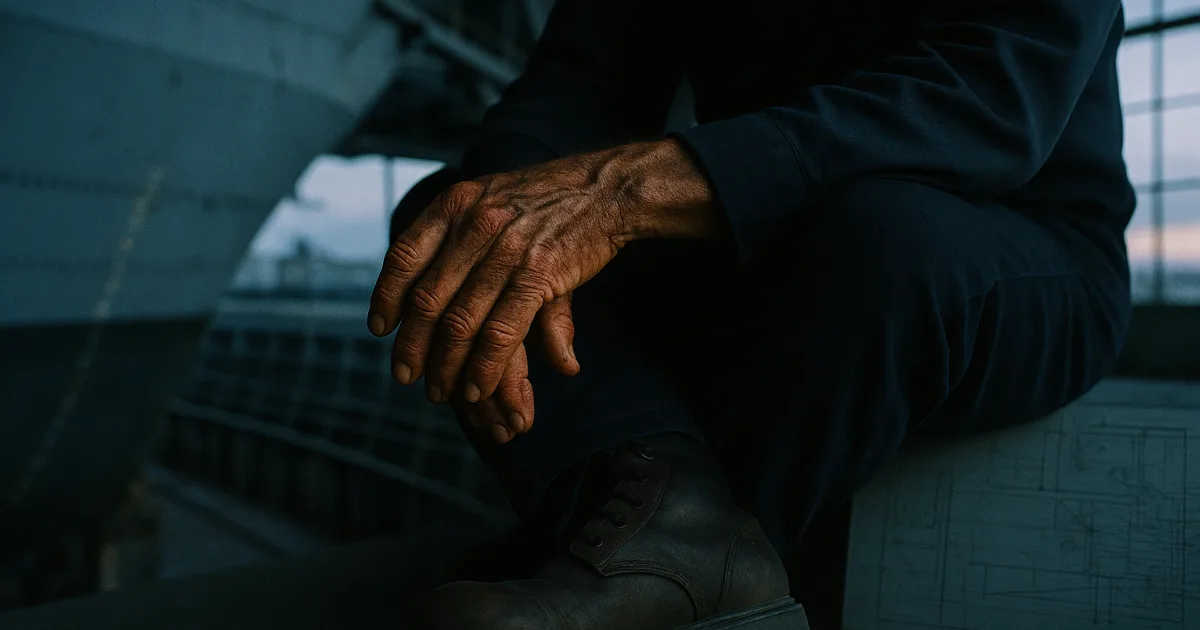
The diagnosis came six weeks after Thomas Kahananui retired from the Pearl Harbor Naval Shipyard, where he had spent 34 years repairing steam systems and overhauling the mechanical guts of Navy vessels. His pulmonologist called it pleural mesothelioma. His family called it a death sentence. What his attorney called it was something different: a compensable injury with identifiable defendants and a viable legal path forward.
Hawaii's relationship with asbestos is inseparable from its military history. The islands hosted some of the most intensive shipbuilding and ship repair operations in the Pacific during the mid-twentieth century, and the materials that held those ships together — insulation, gaskets, pipe lagging, fireproofing compounds — were saturated with asbestos. Decades later, the men and women who worked those docks, and the family members who laundered their work clothes, are still receiving diagnoses. For them, finding the right mesothelioma lawyer isn't just a legal question. It's a financial lifeline.
What Makes Hawaii Mesothelioma Cases Legally Distinct?
Hawaii mesothelioma cases carry a specific legal profile shaped by the state's military installations, its maritime industry, and its construction boom of the 1960s and 1970s. Plaintiffs in Hawaii typically fall into one of three exposure categories: shipyard workers at Pearl Harbor or the Puget Sound-linked facilities, active-duty military personnel and veterans, and construction or building trades workers who handled asbestos-containing materials during the state's rapid development period.
Each category presents different legal challenges. Shipyard workers may have claims against both private contractors and, under certain circumstances, federal entities. Veterans face a distinct set of hurdles because the Department of Defense is generally shielded from direct tort liability, meaning most military mesothelioma claims must be pursued through asbestos trust funds and private product liability lawsuits against manufacturers rather than the government itself. Construction workers, meanwhile, often face the challenge of identifying which of dozens of manufacturers supplied the specific products that caused their exposure.
According to Justia's mesothelioma and asbestos law resources, the core legal theory in most cases is product liability: the manufacturers knew or should have known that their asbestos-containing products were dangerous, failed to warn users, and are therefore liable for the resulting harm. In Hawaii, these claims are typically filed in state circuit court, though cases involving federal contractors or maritime workers may be removed to federal court under admiralty jurisdiction or the federal officer removal statute.
What the courts have consistently recognized in asbestos litigation is that the latency period between exposure and diagnosis — often 20 to 50 years — creates unique evidentiary challenges. Defendants routinely argue that they cannot be held responsible for exposures that occurred decades ago. Experienced mesothelioma attorneys counter with industrial hygiene records, employment files, product identification databases, and the testimony of co-workers who can establish what materials were present at a given worksite.
Why Hawaii's Statute of Limitations Creates Urgency
There is no aspect of mesothelioma law that I have seen cost families more than a missed filing deadline. Hawaii's statute of limitations for personal injury claims, including mesothelioma, is two years from the date the plaintiff knew or reasonably should have known of the diagnosis and its connection to asbestos exposure. This is sometimes called the "discovery rule," and it's the single most important legal concept for any newly diagnosed patient or surviving family member to understand.
For wrongful death claims — filed by families after a loved one has died from mesothelioma — Hawaii also allows a two-year window, running from the date of death. Missing either deadline typically means losing the right to any compensation, regardless of how strong the underlying case might be. According to the American Bar Association's Tort Trial and Insurance Practice Section, statutes of limitations in asbestos cases vary significantly by state, and the discovery rule interpretations can differ even within the same state depending on the specific facts of exposure.
You can check Hawaii's specific deadline using our statute of limitations tool, which provides state-by-state guidance for mesothelioma patients and families. The tool is not a substitute for legal advice, but it can help you understand the urgency of your situation before a first consultation.
Paul Danziger, who has represented mesothelioma families for decades, puts it plainly: "The diagnosis is overwhelming enough on its own. The last thing a family should have to face is learning that they waited too long to file and have permanently lost their right to hold the responsible companies accountable. Two years sounds like a long time. In asbestos litigation, with everything families are managing, it disappears fast."
Who Are the Defendants in Hawaii Mesothelioma Lawsuits?
When a Pearl Harbor shipyard mechanic walks into a mesothelioma attorney's office in Honolulu, one of the first questions the attorney asks isn't about the diagnosis. It's about the products. Which manufacturers made the insulation on those pipes? Whose gaskets were used in the boiler room? What brand of joint compound was applied in the engine compartment?
This granular product identification work is the foundation of a Hawaii mesothelioma lawsuit, and it determines who gets named as a defendant. According to asbestos litigation coverage from Law360 and Bloomberg, the most frequently named defendants in Pacific shipyard cases have historically included companies like Owens Corning, Armstrong World Industries, Crane Co., and John Crane Inc. — all of which manufactured asbestos-containing products that were widely used in naval and industrial settings.
Many of these companies have since filed for bankruptcy and established asbestos trust funds to compensate victims. According to the RAND Institute for Civil Justice, more than 60 asbestos bankruptcy trusts have been established since the 1980s, holding an estimated $30 billion in assets for claimants. For Hawaii families, this means that even if the original manufacturer is no longer in business, compensation may still be available. Our trust fund checker can help identify which trusts may apply to a specific exposure history.
Beyond bankrupt companies, active defendants in Hawaii cases often include successor corporations that acquired the liabilities of asbestos manufacturers, as well as premises owners — the shipyards, refineries, and construction companies that knew asbestos was present in their facilities and failed to protect workers. Premises liability claims can be particularly powerful in Hawaii because of the concentrated nature of industrial work at Pearl Harbor and the Honolulu waterfront, where the same toxic materials were present for decades.
The legal landscape for asbestos victims in Hawaii is also shaped by the state's comparative fault rules. Hawaii follows a modified comparative fault standard, meaning that a plaintiff's damages can be reduced proportionally if they are found to have contributed to their own injury — but they can still recover as long as their share of fault is 50 percent or less. In practice, defense attorneys sometimes attempt to argue that a worker assumed the risk of asbestos exposure by continuing to work in a known environment. Experienced mesothelioma attorneys push back hard against these arguments, citing the documented history of industry suppression of asbestos hazard information.
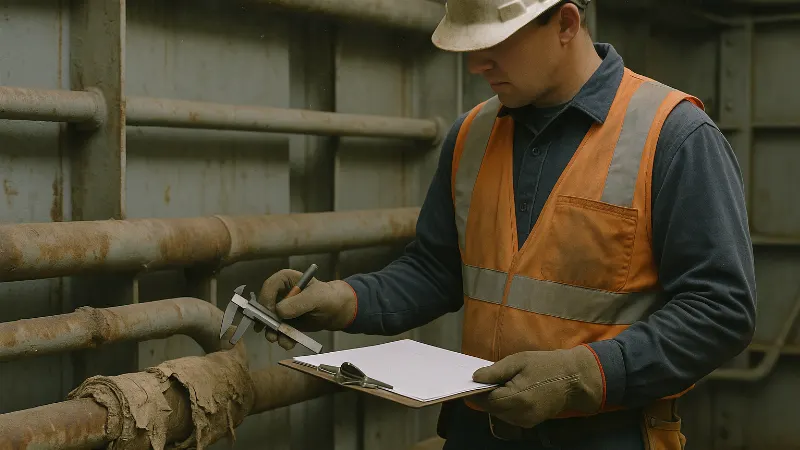
!Shipyard worker in safety gear inspecting weathered steel infrastructure inside Pearl Harbor drydock
What Compensation Can Hawaii Mesothelioma Patients Actually Recover?
Sitting across from a newly diagnosed mesothelioma patient, the question that comes up almost immediately is: what is this case worth? It's a human question, not a greedy one. Families need to know whether they can afford continued treatment, whether a surviving spouse will be financially secure, whether there's any justice available for what has been taken from them.
According to data compiled by the National Law Review and asbestos litigation analysts at Law360, mesothelioma settlement values in cases involving shipyard and military exposure have historically ranged from $1 million to $2.4 million, with trial verdicts occasionally reaching far higher. California asbestos litigation data published by Law.com in 2024 documented several verdicts exceeding $10 million in cases involving similar industrial exposures, providing a benchmark for what juries will award when liability is clear and damages are severe.
For Hawaii patients specifically, recoverable damages typically include medical expenses (both past and anticipated future costs), lost wages and earning capacity, pain and suffering, loss of consortium for spouses, and in wrongful death cases, funeral expenses and the economic value of the decedent's contributions to the family. Punitive damages are also available in Hawaii in cases where a defendant's conduct is found to be particularly egregious — and given the documented history of asbestos manufacturers concealing health hazards from workers, punitive damage claims have succeeded in multiple Pacific jurisdictions.
Understanding the full range of compensation options available — including trust fund claims, VA benefits for veterans, and direct litigation — is essential before any family makes decisions about legal strategy. These are not mutually exclusive paths. A well-structured claim may pursue trust fund payments, VA disability benefits, and a civil lawsuit simultaneously, maximizing total recovery for the family.
How to Find the Right Mesothelioma Lawyer in Hawaii
Not every personal injury attorney is equipped to handle a mesothelioma case. This is not a criticism of general practitioners — it's a recognition that asbestos litigation is a specialized field requiring deep knowledge of industrial history, product identification databases, medical science, and a network of expert witnesses that takes years to build.
For Hawaii families, the practical reality is that very few law firms are based in Hawaii with dedicated mesothelioma practices. Most families end up working with national mesothelioma firms that have established relationships with Hawaii courts and co-counsel in the state. This is not a disadvantage. In fact, national firms that handle hundreds of mesothelioma cases annually often have access to more extensive resources — including corporate document archives, industrial hygiene experts, and medical specialists — than a general practice firm could assemble for a single case.
When evaluating a mesothelioma attorney, whether local or national, the key questions are straightforward. How many mesothelioma cases has the firm handled? What is their track record in cases involving shipyard or military exposure specifically? Do they work on contingency (meaning no fees unless they recover compensation)? And critically, how quickly can they begin the investigation process, given the urgency that a terminal diagnosis creates?
In my experience representing mesothelioma families, the initial case evaluation is one of the most important moments in the entire process. A good attorney will spend significant time understanding the full exposure history — not just the most recent or most obvious job, but every workplace, every product, every potential source of asbestos contact over a lifetime. That thoroughness in the beginning is what builds the strongest possible case.
You can search our doctor directory for Hawaii-based oncologists and treatment specialists who work with mesothelioma patients — coordinating between medical and legal teams is something experienced mesothelioma attorneys do routinely, and it ensures that medical documentation is preserved in the form most useful for litigation.
Hawaii's Military Mesothelioma Population: A Special Case
No discussion of Hawaii mesothelioma law is complete without addressing the state's enormous veteran population. Hawaii is home to one of the highest concentrations of active-duty military and veterans per capita in the United States, and the branches most heavily represented — the Navy and Marine Corps — are precisely those with the highest historical asbestos exposure rates.
According to the Department of Veterans Affairs, Navy veterans have the highest mesothelioma rates of any military branch, a direct consequence of the asbestos used in virtually every shipboard system from the 1930s through the 1970s. Boiler rooms, engine rooms, sleeping quarters, and mess halls were all insulated with asbestos-containing materials. The men who maintained those systems — machinists, pipefitters, boilermakers, electricians — inhaled asbestos fibers for years.
For veteran mesothelioma patients in Hawaii, the legal strategy typically involves a combination of VA disability claims and private litigation. The VA process can provide monthly disability compensation, healthcare coverage through VA facilities, and dependency and indemnity compensation for surviving spouses. But VA benefits alone rarely cover the full economic and non-economic losses of a mesothelioma diagnosis, which is why private litigation against the product manufacturers remains essential.
It's also worth understanding the difference between asbestos exposure claims related to military service and those related to civilian employment. Many Pearl Harbor workers were civilian federal employees or private contractor employees, not active-duty military. Their claims follow a different legal path than veterans' claims, and the distinctions matter enormously for determining which courts have jurisdiction, which defendants can be named, and which compensation mechanisms are available. The asbestos exposure resource on this site provides a detailed breakdown of exposure categories and the legal implications of each.
For families navigating both VA claims and civil litigation simultaneously, the coordination between legal and benefits processes can be complex. This is another area where experienced mesothelioma attorneys earn their value — managing the interplay between systems to prevent one claim from inadvertently affecting another.
What Should Hawaii Mesothelioma Families Do Right Now?
The weeks immediately following a mesothelioma diagnosis are among the most disorienting a family will ever experience. Medical appointments, second opinions, treatment decisions, insurance questions — and somewhere in the middle of all of it, the awareness that legal action may be necessary and time-sensitive.
The first step is the most important: get a free case evaluation from a mesothelioma attorney as quickly as possible. This does not commit you to anything. It does not mean you are required to file a lawsuit. What it does is give you the information you need to make an informed decision about your options before any deadline passes.
Second, begin gathering exposure documentation. Employment records, union cards, military discharge papers (DD-214 forms for veterans), Social Security earnings statements, and the testimony of former co-workers can all be valuable in establishing the exposure history that forms the foundation of a legal claim. The earlier this process begins, the better.
Third, understand that the diagnosis and treatment process and the legal process can run in parallel. You do not have to choose between fighting the disease and pursuing justice. Experienced mesothelioma attorneys structure their representation to accommodate the medical realities of the case, including the possibility of expedited trial settings for patients whose prognosis is particularly urgent.
Finally, explore all compensation pathways. Trust fund claims, VA benefits, civil litigation, and workers' compensation (in some limited circumstances) are all potentially available, and a thorough legal evaluation will identify which apply to your specific situation. Our compensation answers page walks through each option in detail.
What the courts have consistently recognized, and what families in Hawaii deserve to understand, is that mesothelioma is not a natural consequence of hard work. It is the result of corporate decisions made by companies that knew their products were deadly and chose profit over the lives of workers. The legal system exists, imperfectly but meaningfully, to provide accountability for those decisions. The families of Hawaii's shipyard workers, military veterans, and construction tradespeople have every right to use it.
!Attorney's hands reviewing mesothelioma case files at desk with Hawaii ocean view
Frequently Asked Questions About Hawaii Mesothelioma Lawyers
See the FAQ section below for answers to the most common legal questions from Hawaii mesothelioma patients and families.
Attorney Advertising. Past results do not guarantee future outcomes. Every case is unique. The verdicts and settlements described are not a guarantee of similar results. Every case is different.

Comments (4)
— Paul Danziger