


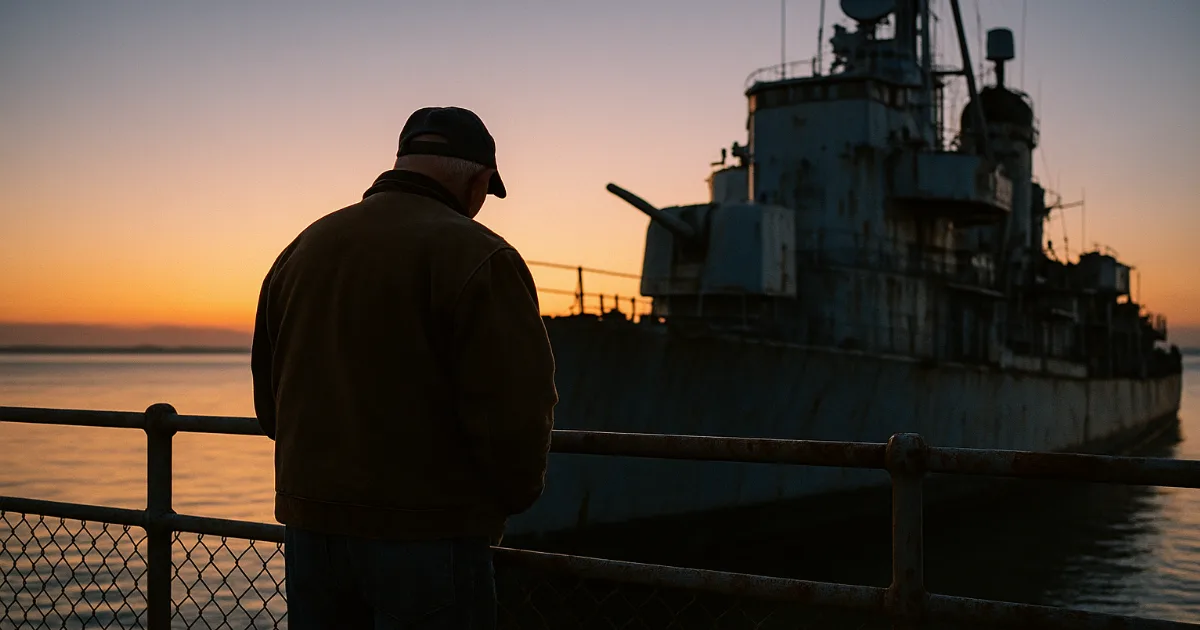
NORFOLK, VA — David Pruitt served eight years in the U.S. Navy, spending most of that time below decks on a destroyer escort, working in engine rooms lined with thermal insulation he never thought twice about. He retired from service in 1981, raised a family in coastal Virginia, and spent the next four decades putting the Navy behind him. Then, at 74, a routine chest scan revealed a mass along his pleura that his pulmonologist described, with clinical detachment, as "consistent with mesothelioma."
Pruitt's story is not unusual. It is, in fact, the story of thousands of American veterans every single year — men and women who encountered asbestos during their military service and are now, sometimes 40 or 50 years later, facing one of the most aggressive cancers known to medicine. What makes Pruitt's case particularly striking is the question his daughter asked his oncologist the week after diagnosis: "Is asbestos even still used? I thought they banned it."
The answer is more complicated — and more troubling — than most Americans realize.
Is Asbestos Still Used in the United States?
Asbestos has not been banned in the United States. Despite decades of scientific consensus linking it to mesothelioma, lung cancer, and asbestosis, the U.S. remains one of the few developed nations that has never enacted a comprehensive prohibition on asbestos use. As of 2026, asbestos is still legally imported, processed, and used in certain industrial and manufacturing applications, including chlor-alkali production, which uses asbestos diaphragms in the manufacture of chlorine and caustic soda.
According to the Environmental Protection Agency, the U.S. imported approximately 100 metric tons of raw chrysotile asbestos in recent years, primarily from Brazil, for use in that chemical manufacturing sector. The EPA's 2019 Significant New Use Rule attempted to restrict some asbestos applications, but it stopped far short of a complete ban. Critics, including Asbestos Nation, an advocacy organization that tracks asbestos policy and industry practices, have pointed out that the rule still permits legacy uses and does not address asbestos already embedded in older buildings, ships, pipelines, and infrastructure.
For veterans, the distinction between "current use" and "legacy exposure" is more than semantic. The asbestos that is harming veterans today was overwhelmingly installed during the mid-20th century, when the military used it extensively in shipbuilding, aircraft manufacturing, barracks construction, and vehicle maintenance. According to the VA's Public Health office, military personnel who served between the 1930s and the early 1980s faced the highest risk of asbestos exposure, with Navy veterans bearing a disproportionate burden because of the materials used in ship construction and repair. You can learn more about veteran-specific asbestos exposure risks and how service history affects diagnosis and benefits.
The latency period for mesothelioma — the time between first exposure and diagnosis — ranges from 20 to 50 years, according to the National Cancer Institute. That means a sailor who breathed asbestos dust in a ship's boiler room in 1975 might not receive a diagnosis until 2025 or later. The cancer was not caused by something that happened last year. It was caused by something that happened half a century ago, in a military environment where asbestos use was not just permitted but mandated.
Why Does This Still Matter for Veterans Today?
Consider what it means for a 70-year-old veteran to receive a mesothelioma diagnosis in 2026. The median survival after diagnosis, according to data from the National Cancer Institute's SEER database, remains between 12 and 21 months for most patients, though newer treatment combinations are extending that window for some. The disease is almost always diagnosed at an advanced stage because early symptoms — shortness of breath, chest pain, a persistent cough — are easy to dismiss and slow to escalate.
Veterans who served during this period of peak military asbestos use are now in their 60s, 70s, and 80s. Many have other service-related health conditions. Many are on fixed incomes. And many have no idea that the VA offers specific disability benefits for asbestos-related diseases, or that decades of legal precedent have established a clear pathway to compensation from the companies that manufactured and sold the asbestos products used on military bases and aboard Navy vessels.
What I tell every veteran I work with is this: your diagnosis did not happen in a vacuum. The companies that made that insulation, those gaskets, those pipe fittings — they knew the risks. They suppressed the research. And they sold their products to the military for decades. You earned the right to hold them accountable.
The VA recognizes that asbestos exposure during military service is a service-connected condition. According to the VA's disability benefits page for asbestos exposure, veterans who develop mesothelioma, asbestosis, or asbestos-related lung cancer may be eligible for disability compensation, VA health care, and survivor benefits for dependents. The eligibility process requires documenting the connection between military service and asbestos exposure — something that is achievable but requires attention to detail and, in most cases, professional guidance. VA health care eligibility outlines the general framework, and the VA's dedicated asbestos exposure resources walk veterans through the specific documentation requirements.
"The tragedy," as one VA oncologist put it during a 2024 conference on veterans' environmental exposures, "is that we're still seeing the full wave of these diagnoses. The exposure happened generations ago, but the disease is arriving now, in full force."
Which Military Branches and Job Specialties Face the Highest Risk?
Not every veteran carries the same level of asbestos exposure risk, though the mineral was used so broadly across military branches that no service was untouched. The Navy has historically been identified as the highest-risk branch, and the reasons are structural. Ships built before the mid-1970s used asbestos extensively in insulation, pipe coverings, engine room linings, boiler systems, and fireproofing materials. Men who worked in confined spaces below deck — machinists, boiler technicians, pipefitters, electricians — were exposed to airborne asbestos fibers in concentrations that would be unthinkable under modern occupational safety standards.
According to the VA's Public Health office on asbestos exposure and veterans, high-risk military occupations included shipyard workers and Navy personnel in ship construction and repair; insulation workers; demolition personnel; miners; milling workers; those working with friction products such as clutches and brakes; and construction workers on military bases. The Army and Air Force also had significant asbestos exposure in barracks, maintenance facilities, and aircraft — many military aircraft manufactured through the 1970s used asbestos-containing brake pads, gaskets, and firewall insulation.
Marine veterans face a compounded risk because many served aboard Navy vessels before deployment, meaning they experienced both shipboard and ground-based asbestos environments. Veterans who were stationed at Camp Lejeune in North Carolina between 1953 and 1987 face additional exposure concerns. According to the VA's Camp Lejeune resource page, the base's water supply was contaminated with toxic chemicals including trichloroethylene and benzene during that period — a separate but related environmental health crisis that has affected hundreds of thousands of Marines and their families.
For veterans trying to understand their own exposure history, the asbestos exposure resource hub provides detailed information about which products, job sites, and military roles carried the highest documented risks. The asbestos encyclopedia entry also covers the specific fiber types and their documented health effects.
What makes the exposure history particularly difficult to reconstruct is that many veterans simply didn't know what they were working with. The chalky white insulation was just part of the ship. The dust was just dust. Nobody handed out safety data sheets in the engine room of a destroyer escort in 1972.
How the VA Disability Claims Process Works for Asbestos Exposure
A retired Marine named Gerald Okafor spent two years trying to navigate the VA disability system after his mesothelioma diagnosis in 2022. He had served as a mechanic at a Marine Corps Air Station in the late 1960s and early 1970s, working on aircraft that used asbestos-containing brake assemblies and insulation. His initial claim was denied because he couldn't provide specific documentation of asbestos exposure at his duty station. It took a veterans service organization, a detailed military occupational history, and a buddy statement from a fellow mechanic to get the claim approved.
Okafor's experience is common, and it illustrates the core challenge of VA asbestos claims: the VA does not presume service connection for asbestos-related diseases the way it does for some other conditions, such as certain cancers associated with Agent Orange exposure or conditions covered under the PACT Act. For asbestos, veterans must establish that they were exposed during service AND that the exposure caused their disease. That two-step burden of proof is manageable, but it requires documentation.
According to the VA's disability eligibility guidelines, veterans seeking compensation for asbestos-related conditions should gather their military service records and DD-214, identify their military occupational specialty and duty stations, obtain a nexus letter from a physician connecting their diagnosis to asbestos exposure, and work with an accredited VA claims agent or veterans service organization. Organizations like the VFW and the American Legion both maintain active advocacy programs to assist veterans with environmental exposure claims.
The VA recognizes that the latency period for mesothelioma means many veterans won't develop symptoms until decades after separation from service. That reality is built into the claims process — the VA does not require that symptoms appeared during active duty, only that the exposure occurred during service. Veterans who are uncertain about their eligibility can use resources like the VA disability benefits page for asbestos exposure as a starting point, and can explore legal options through the answers to legal questions resource.
For veterans who have already received a diagnosis, the financial stakes of getting the claim right are significant. VA disability compensation for mesothelioma is typically rated at 100 percent, which as of 2026 translates to a monthly payment of more than $3,700 for a veteran with no dependents — and higher for those with dependents. That's not charity. That's compensation for a disease caused by decisions made by the military and by the manufacturers who supplied it.

What Civilian Asbestos Laws Mean for Veterans' Legal Claims
Beyond VA benefits, veterans with mesothelioma have access to a separate legal system built specifically to compensate asbestos victims: the network of asbestos bankruptcy trust funds. More than 60 companies that manufactured, distributed, or sold asbestos-containing products have gone through bankruptcy proceedings and established compensation trusts as part of their reorganization. According to legal research compiled in mesothelioma litigation resources, these trusts collectively hold billions of dollars designated for asbestos victims, and claims can be filed against multiple trusts simultaneously.
For veterans, this matters because the asbestos they encountered in military service didn't come from the government. It came from private companies — Johns Manville, Owens Corning, W.R. Grace, Armstrong World Industries, and dozens of others — that sold their products to the military knowing the health risks. When those companies went bankrupt under the weight of asbestos litigation, they were required to fund trusts to compensate current and future victims. Veterans who developed mesothelioma from exposure to those companies' products have the same legal right to file trust fund claims as any civilian worker.
The guide to filing asbestos trust fund claims walks through the process in detail. The short version: claims require proof of diagnosis, evidence of exposure to the specific manufacturer's product, and documentation of the veteran's service history. A mesothelioma attorney who specializes in veterans' cases can identify which trusts apply to a given veteran's exposure history, often uncovering multiple applicable claims that a veteran pursuing the process alone might miss.
Veterans who served during this period should understand that filing a trust fund claim does not affect VA disability benefits. The two compensation streams are legally separate. A veteran can receive VA disability compensation, VA health care benefits, and trust fund settlements simultaneously. What I tell every veteran I work with is that leaving trust fund money on the table is not humility — it's leaving behind compensation that was set aside specifically for people in your situation.
For veterans who want to understand the legal landscape before speaking with an attorney, the directory of mesothelioma lawyers provides access to attorneys who specifically handle veterans' asbestos cases. Many work on contingency, meaning there's no upfront cost to the veteran or their family.
The Treatment Landscape for Veterans with Mesothelioma in 2026
A mesothelioma diagnosis is not the same sentence it was 20 years ago — though it remains one of the most serious cancer diagnoses a person can receive. The standard first-line treatment for pleural mesothelioma continues to be a combination of chemotherapy agents, typically cisplatin and pemetrexed, sometimes followed by surgery or radiation depending on disease stage and patient health. But the addition of immunotherapy has changed outcomes for a meaningful subset of patients.
In 2021, the FDA approved the combination of nivolumab and ipilimumab — marketed as Opdivo and Yervoy — as a first-line treatment for unresectable pleural mesothelioma, based on the CheckMate 743 trial. That trial, published in The Lancet, found that the immunotherapy combination extended median overall survival to 18.1 months compared to 14.1 months for standard chemotherapy. More significantly, patients with non-epithelioid mesothelioma — historically the hardest to treat — saw even greater benefit, with median survival of 18.1 months versus 8.8 months for chemotherapy alone.
For veterans navigating a new diagnosis, understanding the treatment options is inseparable from understanding the financial and logistical support available. VA medical centers with oncology programs can provide mesothelioma treatment, and veterans enrolled in VA health care are entitled to access those services. For veterans who prefer or need to seek treatment outside the VA system, the VA's community care program may cover costs at approved outside facilities. The diagnosis and treatment resource provides a comprehensive overview of current treatment protocols, clinical trials, and what to expect at each stage of care.
Clinical trials remain an important option for veterans with mesothelioma, particularly those whose disease has progressed after first-line treatment. The National Cancer Institute maintains an active registry of ongoing mesothelioma trials, and several major cancer centers — including MD Anderson, Memorial Sloan Kettering, and the University of Chicago — have dedicated mesothelioma programs. Veterans living near major military medical centers may also have access to research programs through those institutions.
What I tell every veteran I work with is that the first 90 days after diagnosis are the most important window for both medical and legal action. Treatment decisions made early affect outcomes. Legal claims filed early preserve evidence and witness availability. Waiting — whether out of shock, denial, or uncertainty about next steps — costs time that matters enormously.
The Fight to Actually Ban Asbestos in the U.S.
For advocates who have spent careers working on asbestos policy, the persistence of legal asbestos use in the United States represents a failure of political will that has real human consequences. More than 55 countries have enacted comprehensive bans on asbestos, including every member of the European Union, the United Kingdom, Australia, Japan, and Canada. The World Health Organization has called for a global ban, citing asbestos as a known human carcinogen with no safe level of exposure.
In the U.S., the EPA's 2024 rule under the Toxic Substances Control Act took a significant step, finalizing a ban on ongoing uses of chrysotile asbestos — the only type still actively imported and used in the country. According to Asbestos Nation, that rule, which took effect in 2024 and is being phased in over several years, will eventually eliminate the chlor-alkali industry's use of asbestos diaphragms. But it does not address the millions of tons of asbestos already embedded in the built environment: in older homes, schools, commercial buildings, water pipes, and yes, in the ships and military facilities where veterans worked decades ago.
The legacy problem is enormous. The U.S. Geological Survey has estimated that hundreds of millions of square feet of asbestos-containing materials remain in buildings constructed before 1980. That material is generally safe when undisturbed, but renovation, demolition, and deterioration can release fibers — creating ongoing exposure risks for construction workers, first responders, and anyone who lives or works in older buildings. For veterans who transitioned into civilian trades after military service, a second wave of occupational asbestos exposure in construction, shipyard work, or industrial maintenance is not uncommon.
The mesothelioma encyclopedia entry covers the full range of exposure pathways and their documented connection to disease development. Understanding the exposure history — both military and post-service — is essential for building the strongest possible VA claim and identifying all applicable legal remedies.
The VFW and the American Legion have both been active in pushing for stronger asbestos regulations and improved VA benefits for affected veterans. According to VFW advocacy materials, the organization has consistently supported legislation that would expand presumptive service connection for asbestos-related diseases, which would eliminate the documentation burden that derails so many legitimate claims. That advocacy work continues in 2026, with several pending legislative proposals that could change the claims landscape for veterans.
Frequently Asked Questions
Is asbestos still legal in the United States in 2026?
Asbestos has not been comprehensively banned in the United States. The EPA finalized a rule in 2024 banning ongoing uses of chrysotile asbestos, the only type still actively imported, primarily for use in chlor-alkali chemical manufacturing. However, asbestos already present in older buildings, ships, and infrastructure is not covered by that rule. The U.S. remains one of the few developed nations without a complete asbestos prohibition, according to the World Health Organization.
Are veterans more likely to develop mesothelioma than the general population?
Yes, significantly. According to the VA's Public Health office, veterans account for approximately 30 percent of all mesothelioma diagnoses in the United States, despite representing a much smaller share of the overall population. Military service between the 1930s and early 1980s involved extensive asbestos exposure through shipbuilding, aircraft maintenance, barracks construction, and other occupational settings. Navy veterans face the highest documented risk due to shipboard asbestos use.
What VA benefits are available to veterans with mesothelioma?
Veterans diagnosed with mesothelioma linked to military asbestos exposure may be eligible for VA disability compensation (typically rated at 100 percent), VA health care services including oncology treatment, and dependency and indemnity compensation for surviving family members. According to the VA's disability benefits page for asbestos exposure, veterans must document both the occurrence of asbestos exposure during service and the medical connection between that exposure and their diagnosis. Veterans service organizations can help with the claims process.
Can a veteran file both a VA claim and a legal lawsuit for mesothelioma?
Yes. VA disability benefits and civil legal claims are legally separate and do not affect each other. Veterans can simultaneously receive VA disability compensation, file claims against asbestos bankruptcy trust funds, and pursue litigation against manufacturers. Many mesothelioma attorneys who work with veterans identify multiple applicable trust fund claims based on the veteran's service history and the specific asbestos products they encountered. Filing a trust fund claim does not reduce VA benefits.
How long after asbestos exposure does mesothelioma develop?
According to the National Cancer Institute, the latency period for mesothelioma — the time between first asbestos exposure and diagnosis — typically ranges from 20 to 50 years. This means veterans who were exposed during service in the 1960s and 1970s are receiving diagnoses today. The long latency period is one reason mesothelioma is often diagnosed at an advanced stage, because neither patients nor physicians connect current symptoms to decades-old exposures.
What should a veteran do immediately after a mesothelioma diagnosis?
The first steps matter enormously. Veterans should seek a second opinion from a mesothelioma specialist, as diagnosis accuracy affects treatment options. They should contact a VA-accredited claims agent or veterans service organization to begin the disability claims process. They should also consult a mesothelioma attorney to evaluate trust fund and litigation options. The compensation estimator tool can provide an initial sense of what financial recovery might be available.
Which military branch has the highest mesothelioma risk?
The Navy has the highest documented mesothelioma risk among military branches, due to the extensive use of asbestos in shipbuilding and ship repair from the 1930s through the mid-1970s. According to the VA's Public Health resources on asbestos exposure, Navy personnel who worked in engine rooms, boiler rooms, and other confined shipboard spaces faced the heaviest concentrations of airborne asbestos fibers. Army and Air Force veterans also face elevated risk from barracks, aircraft, and vehicle maintenance exposure.
Is there a deadline for filing a mesothelioma claim as a veteran?
Statutes of limitations vary by state and claim type, but they are real and they matter. For civil litigation, most states allow one to three years from the date of diagnosis to file a lawsuit. Trust fund claims have their own filing requirements. VA disability claims have no strict statute of limitations, but earlier filing generally results in earlier payment. Veterans should consult both a VA claims specialist and a mesothelioma attorney as soon as possible after diagnosis to avoid missing deadlines. The legal answers resource provides state-specific guidance.
This article provides general information about VA benefits. Eligibility depends on individual service history and medical diagnosis.


Comments (4)
— Larry Gates