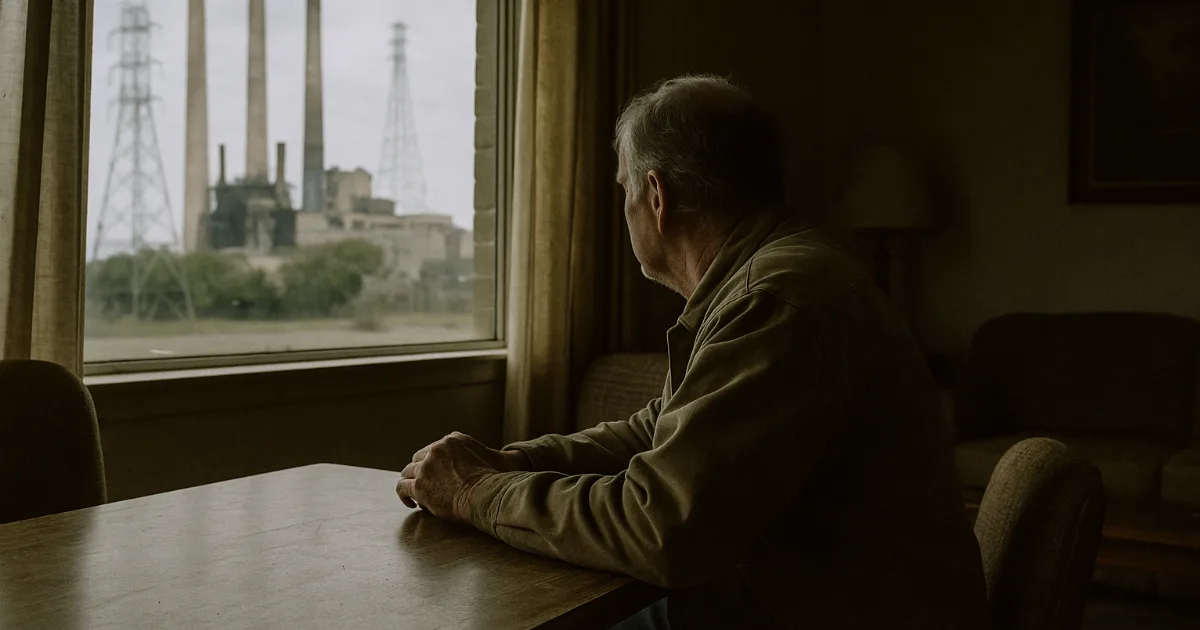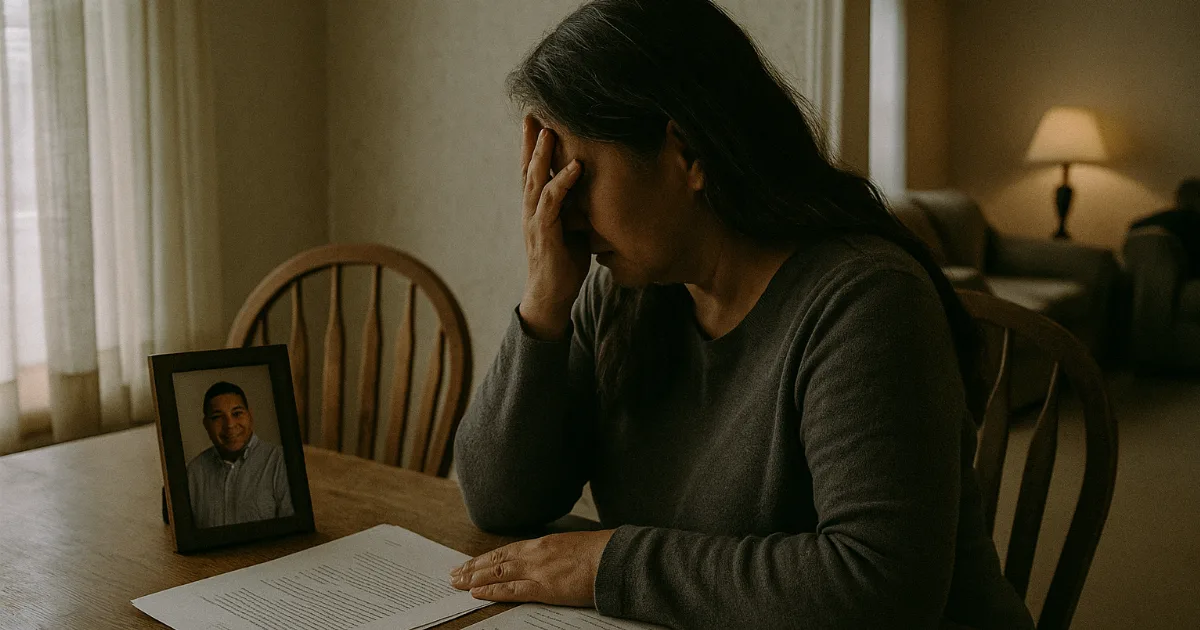


The envelope arrived on a Tuesday morning in March, addressed to the estate of a man who had spent thirty-one years installing pipe insulation at a furniture manufacturing plant in Hickory. He had died fourteen months earlier, at 71, from pleural mesothelioma. His daughter, who had taken over managing the family's affairs, opened the letter at the kitchen table. It was a notice from a Mecklenburg County court. The jury had returned a verdict.
Seven figures. After nearly three years of litigation.
That case — one of several large asbestos verdicts filed or resolved in North Carolina during the past eighteen months — reflects a broader shift that asbestos litigation attorneys have been watching closely. North Carolina, long considered a moderate venue for asbestos claims, is producing larger jury awards, attracting more complex multi-defendant cases, and drawing national attention from plaintiff and defense firms alike. For families who've spent years wondering whether justice was even possible, the answer coming out of the state's courtrooms is increasingly: yes.
What's Driving the Rise in North Carolina Asbestos Verdicts?
North Carolina's emergence as a significant asbestos litigation venue is rooted in several converging factors: the state's industrial history, a plaintiff-friendly evolution in how courts interpret exposure evidence, and a statute of limitations framework that, while strict, has been navigated successfully by experienced attorneys representing dying workers and their families.
The state's manufacturing corridor — stretching from Charlotte through the Piedmont into the Research Triangle — employed hundreds of thousands of workers in textiles, furniture production, chemical plants, and construction trades throughout the mid-twentieth century. Many of those industries relied heavily on asbestos-containing materials for insulation, fireproofing, and industrial equipment. According to the American Bar Association's Tort Trial and Insurance Practice Section, North Carolina's occupational asbestos exposure patterns closely mirror those of industrial states like Ohio and Pennsylvania, but litigation volume historically lagged because of fewer plaintiff-side asbestos specialty firms operating in the state.
That calculus has changed. National mesothelioma litigation firms have expanded into North Carolina, bringing with them the sophisticated exposure databases, industrial hygiene experts, and product identification specialists that turn a difficult case into a winnable one. The result has been a steady increase in both filings and verdict size.
According to litigation data tracked by Bloomberg's asbestos legal coverage, North Carolina saw a measurable uptick in mesothelioma trial activity between 2023 and 2025, with several verdicts exceeding $5 million and at least two surpassing $10 million in combined compensatory and punitive damages. Defense attorneys told Reuters that they are increasingly requesting venue changes to counties they view as more favorable, a signal that plaintiff-side momentum is real and recognized.
In my experience representing mesothelioma families, the shift in North Carolina reflects something we've seen in other states over the past decade: once juries understand that asbestos manufacturers knew about the dangers for decades and chose profit over safety, the awards follow. North Carolina juries are no different from Texas or California juries when they see that evidence.
Why the Statute of Limitations Question Is Critical Here
For any North Carolina family considering a mesothelioma lawsuit, the single most consequential legal question is timing. Under North Carolina General Statutes Section 1-52, the statute of limitations for personal injury claims is three years. But the critical issue is when that clock starts.
North Carolina courts have adopted the "discovery rule" for latent disease cases, meaning the limitations period begins not when the exposure occurred, but when the plaintiff knew or reasonably should have known of the injury and its cause. For mesothelioma — a cancer that typically takes 20 to 50 years to develop after asbestos exposure — this distinction is everything. A shipyard worker exposed to asbestos in 1975 who receives a mesothelioma diagnosis in 2024 is not time-barred simply because the exposure happened five decades ago.
What the courts have consistently recognized in asbestos cases is that the discovery rule exists precisely because diseases like mesothelioma are designed, by their biology, to defeat standard limitations periods. The exposure is long past. The harm arrives decades later. Courts understand this.
However, the three-year window from diagnosis is firm, and courts have not been forgiving of delays after a patient receives a confirmed mesothelioma diagnosis. Families who wait, often because they're focused on treatment decisions and the emotional weight of a terminal diagnosis, sometimes find themselves approaching or past the deadline before they speak with an attorney. The statute of limitations tool available to North Carolina patients can help families quickly assess where they stand on the timeline.
Wrongful death claims add another layer. When a mesothelioma patient dies before a lawsuit is filed or resolved, North Carolina law allows surviving family members to bring a wrongful death action — but that claim carries its own two-year limitations period from the date of death. Missing that window means losing the wrongful death claim entirely, even if the underlying personal injury claim was viable. This is one reason why experienced mesothelioma attorneys emphasize that families should consult legal counsel as early as possible after diagnosis, not after treatment decisions are made.
The Industries at the Heart of North Carolina's Asbestos Cases
Sit in on any mesothelioma trial in a North Carolina courthouse and you'll hear the same industries named, again and again, across decades of cases. The state's asbestos exposure history is not abstract. It is specific, documented, and deeply tied to the working lives of ordinary people.
Textile manufacturing was the backbone of the North Carolina economy for much of the twentieth century. Mills in Kannapolis, Burlington, and Gastonia employed tens of thousands of workers who maintained steam-powered equipment wrapped in asbestos insulation. Boiler room workers, maintenance mechanics, and pipefitters were among the most heavily exposed. Many of those workers are now in their 60s, 70s, and 80s — the precise age range when mesothelioma typically presents, given the disease's long latency period.
Construction trades represent another major source of North Carolina claims. Drywall workers, insulators, and electricians who worked on commercial and residential projects throughout the 1960s, 1970s, and into the 1980s encountered asbestos-containing joint compounds, floor tiles, ceiling materials, and pipe insulation daily. According to the RAND Corporation's comprehensive analysis of asbestos litigation patterns, construction trade workers account for a disproportionate share of mesothelioma diagnoses nationally, and North Carolina's building boom during that era created significant exposure opportunities.
Naval and military installations also contribute to North Carolina's asbestos caseload. Camp Lejeune, Cherry Point Marine Corps Air Station, and Fort Bragg — now Fort Liberty — all used asbestos extensively in base construction and vehicle maintenance facilities. Veterans who served at these installations and later developed mesothelioma may have claims against both the manufacturers of asbestos-containing products used on base and, in some cases, through the VA system. The patients and families resource section provides specific guidance for military families navigating these parallel tracks.
Shipbuilding and repair operations in Wilmington and Morehead City round out the picture. Workers who loaded, unloaded, or maintained vessels at these ports often worked alongside heavily insulated engine rooms and cargo holds where asbestos was present in virtually every structural component.
How North Carolina Verdicts Compare to National Benchmarks
A family sitting in a North Carolina courtroom might reasonably wonder: how do our state's verdicts compare to what juries are awarding in California, Texas, or New York? The answer is nuanced, but the gap has been closing.
California has historically produced some of the largest asbestos verdicts in the country. According to Law.com's coverage of California asbestos litigation, several California cases have resulted in verdicts exceeding $20 million in compensatory damages alone, with punitive awards in some cases pushing total verdicts past $50 million. California Code of Civil Procedure Section 340.2 provides a one-year limitations period for asbestos claims, but California's plaintiff bar has developed sophisticated strategies for maximizing both liability findings and damage awards.
North Carolina verdicts have generally been more modest, reflecting both the state's conservative jury culture in some counties and the relative newness of large-scale mesothelioma litigation infrastructure there. But "more modest" is relative. A $6 million verdict in Mecklenburg County or a $9 million award in Wake County still represents meaningful justice for a family that watched a loved one suffocate over eighteen months. And punitive damages, while not routine, have been awarded in North Carolina cases where defendants knew about asbestos dangers and concealed them.
The national median for mesothelioma lawsuit settlements, according to data compiled by Justia's mesothelioma and asbestos law resources, falls between $1 million and $1.4 million, with trial verdicts averaging considerably higher when cases go to jury. Families in North Carolina who are weighing whether to settle or proceed to trial should use a compensation estimator to understand the range of outcomes based on their specific exposure history, diagnosis, and circumstances.
For context, the asbestos bankruptcy trust system — which operates parallel to the civil litigation system — has distributed more than $20 billion to asbestos victims nationally since the first trusts were established in the 1980s, according to the RAND Corporation's landmark analysis. Many North Carolina families are eligible for trust fund compensation in addition to, or instead of, civil litigation, depending on which companies manufactured the asbestos products they were exposed to.
Paul Danziger, who has represented mesothelioma families for decades, noted that the most effective legal strategies in 2026 often combine trust fund claims with civil litigation: "The two tracks aren't mutually exclusive. A family in Greensboro whose father worked with Johns-Manville insulation products and Owens Corning pipe covering may have trust fund claims from both companies' bankruptcy estates while simultaneously pursuing a civil lawsuit against solvent defendants who supplied other products at the same job site."
What Should North Carolina Patients and Families Do Next?
The practical reality for a family in Winston-Salem, Raleigh, or Asheville who has just received a mesothelioma diagnosis is that the legal and medical decisions need to happen on parallel tracks, not sequentially. Waiting until treatment is complete, or until the patient's condition stabilizes, often means losing time that cannot be recovered under North Carolina's limitations framework.
The first step is finding a mesothelioma attorney with specific asbestos litigation experience, not a general personal injury lawyer who handles car accidents and slip-and-falls. Mesothelioma cases require industrial hygiene experts, occupational history analysis, product identification research, and familiarity with the asbestos bankruptcy trust system. These are specialized skills that general practitioners don't have. The legal answers section of this site provides a structured overview of what to expect from the initial consultation.
The second step, happening simultaneously, is connecting with a mesothelioma treatment center. North Carolina is home to several institutions with dedicated thoracic oncology programs, including the UNC Lineberger Comprehensive Cancer Center in Chapel Hill and Duke Cancer Center in Durham. Both institutions have experience with the full range of mesothelioma treatment options, including surgery, chemotherapy protocols, and immunotherapy. The treatment center directory can help families identify the closest specialized facility based on their location.
Families should also understand that mesothelioma is not the only asbestos-related cancer that can support a legal claim. Lung cancer caused by asbestos exposure is a compensable injury under both civil litigation and the trust fund system, though the legal standards differ somewhat from mesothelioma cases. Workers who smoked and were also heavily exposed to asbestos face a more complex causation analysis, but experienced attorneys have successfully resolved these cases.
Documentation is the foundation of any successful claim. Families should begin gathering employment records, union membership cards, Social Security work history statements, and any surviving co-workers who can testify about the products used at specific job sites. Old pay stubs, personnel files, and even photographs of work environments can be critical evidence. If the patient is still living, a recorded deposition — called a "preservation deposition" — should be taken as soon as possible, while the patient can still provide testimony about their work history and exposure.
The locations resource at mesothelioma-lung-cancer.org/locations/ provides state-by-state guidance for families trying to navigate both the legal and medical systems simultaneously.
The Defendants Who Keep Appearing in North Carolina Cases
Any experienced mesothelioma attorney in North Carolina will tell you that certain defendant names appear repeatedly across cases, decade after decade. Some of these companies no longer exist as operating entities — their asbestos liabilities were discharged through bankruptcy, and their successor trusts now pay claims. Others remain solvent and are actively defending cases in North Carolina courts today.
Among the trust fund defendants whose products appear most frequently in North Carolina industrial exposure cases: Johns Manville (now the Manville Personal Injury Settlement Trust), Owens Corning, Armstrong World Industries, and W.R. Grace. These companies manufactured insulation, pipe covering, ceiling tile, and construction materials that were distributed throughout North Carolina's industrial facilities and construction sites for decades.
Solvent defendants — companies that remain financially operational and are defending civil lawsuits today — include major industrial equipment manufacturers, gasket and packing suppliers, and companies that distributed or installed asbestos-containing products without adequately warning workers. The specific defendants in any North Carolina case depend heavily on the patient's work history: which plants they worked at, which products were used there, and which companies supplied those products.
What the courts have consistently recognized, across hundreds of North Carolina asbestos cases, is that a defendant's knowledge of asbestos hazards is not speculative. Internal corporate documents produced in litigation over the past four decades have shown that major asbestos product manufacturers knew about the link between asbestos and cancer as early as the 1930s and 1940s — and chose not to warn workers. That documented concealment is what drives punitive damage awards when cases go to trial.
According to litigation insights from LexisNexis's asbestos litigation analysis, the trend in recent years has been toward larger punitive damage awards in cases where defendants' internal documents show deliberate concealment, as opposed to simple negligence. North Carolina juries, like juries elsewhere, respond powerfully to evidence that a company knew workers were dying and said nothing.
Emerging Trends: What 2026 Looks Like for North Carolina Families
Several legal developments are reshaping the landscape for North Carolina mesothelioma cases as 2026 progresses.
First, the ongoing consolidation of asbestos bankruptcy trusts is creating both opportunities and complications for claimants. Some trusts have raised their payment percentages in recent years as claims volumes have stabilized, while others have reduced payment rates due to higher-than-projected claim volumes. Families filing trust claims in 2026 need attorneys who track these payment percentage changes in real time, because a claim filed against the wrong trust category can result in significantly lower compensation.
Second, North Carolina courts are seeing an increase in secondary exposure cases — claims brought by family members of asbestos workers who developed mesothelioma from washing contaminated work clothes or living in homes where workers brought asbestos fibers home on their skin and hair. These cases are legally more complex, requiring proof of secondary exposure pathways and causation, but they have succeeded in North Carolina when the exposure evidence is strong.
Third, the intersection of mesothelioma litigation with workers' compensation law continues to create strategic decisions for North Carolina families. Workers' compensation in North Carolina generally provides immunity from civil suit for employers, but does not protect third-party product manufacturers. Most mesothelioma cases in North Carolina are brought against product manufacturers and distributors, not against the employer directly, which preserves the civil litigation route even when workers' compensation benefits have been received.
According to the National Law Review's litigation and dispute resolution coverage, the national trend toward larger mesothelioma verdicts is expected to continue through 2026, driven in part by improved medical documentation of asbestos causation and in part by a plaintiff bar that has become increasingly sophisticated in presenting exposure evidence to lay juries.
In my experience representing mesothelioma families, the cases that produce the best outcomes share a common thread: early action, thorough documentation of the work history, and a legal team that understands both the trust fund system and the civil litigation track. North Carolina families who move quickly after diagnosis consistently have more options than those who wait.
For families across the state, from the mountains to the coast, the message from recent courtroom outcomes is clear: North Carolina juries are listening. They are awarding significant compensation when the evidence shows that a loved one's death was preventable, that the companies responsible knew about the danger, and that they chose not to act. That accountability, hard-won in courtrooms across the state, is the legal landscape for asbestos victims in North Carolina today.
Frequently Asked Questions
How long do I have to file a mesothelioma lawsuit in North Carolina?
North Carolina's statute of limitations for personal injury claims, including mesothelioma, is three years from the date of diagnosis or from when the patient reasonably knew the diagnosis was related to asbestos exposure, according to North Carolina General Statutes Section 1-52. Wrongful death claims carry a separate two-year limitations period from the date of death. Consulting an attorney immediately after diagnosis is strongly recommended.
Can North Carolina mesothelioma patients file trust fund claims in addition to a lawsuit?
Yes. The asbestos bankruptcy trust system and civil litigation are parallel legal tracks, not mutually exclusive options. Many North Carolina families file claims against multiple asbestos bankruptcy trusts while simultaneously pursuing civil lawsuits against solvent defendants. According to the RAND Corporation's analysis of asbestos litigation, more than $20 billion has been distributed through these trusts nationally, and North Carolina patients may be eligible depending on which products they were exposed to.
Which industries in North Carolina have the highest rates of asbestos exposure?
Textile manufacturing, construction trades, furniture manufacturing, military installations, and port operations are the industries most frequently associated with asbestos exposure in North Carolina mesothelioma cases. Workers in boiler rooms, maintenance departments, and insulation installation were particularly heavily exposed throughout the mid-twentieth century, according to RAND Corporation research on occupational asbestos exposure patterns.
How much can a North Carolina mesothelioma family expect to receive from a lawsuit?
Settlement amounts in North Carolina mesothelioma cases vary widely based on exposure history, diagnosis specifics, number of defendants, and whether the case goes to trial or settles. National median mesothelioma lawsuit settlements fall between $1 million and $1.4 million according to Justia's asbestos law resources, while trial verdicts average considerably higher. North Carolina has seen several verdicts exceeding $5 million in recent years. Using a compensation estimator can provide a personalized range.
What is a preservation deposition and why does it matter in North Carolina mesothelioma cases?
A preservation deposition is a recorded legal testimony taken from a mesothelioma patient while they are still able to testify, preserving their account of their work history and asbestos exposure for use at trial even if the patient dies before the case is resolved. North Carolina courts allow this testimony to be presented to juries. Experienced mesothelioma attorneys typically recommend scheduling a preservation deposition as early as possible after diagnosis, given the aggressive nature of the disease.
Can family members who developed mesothelioma from secondhand exposure file a North Carolina lawsuit?
Yes. Secondary exposure cases, where a family member developed mesothelioma from asbestos fibers brought home on a worker's clothing or skin, have been successfully litigated in North Carolina. These cases require more complex causation evidence but have resulted in significant verdicts and settlements when the exposure pathway is well-documented. According to the American Bar Association's Tort Trial and Insurance Practice Section, secondary exposure claims represent a growing category of asbestos litigation nationally.
Do North Carolina veterans have additional legal options for mesothelioma claims?
Yes. Veterans who served at North Carolina installations including Camp Lejeune, Cherry Point, or Fort Liberty and later developed mesothelioma may pursue VA disability benefits and healthcare in addition to civil litigation and asbestos trust fund claims. The VA system and civil litigation operate independently, and receiving VA benefits does not prevent a veteran from pursuing a lawsuit against the manufacturers of asbestos-containing products used at military facilities. Legal counsel familiar with both tracks is essential.
Attorney Advertising. Past results do not guarantee future outcomes. Every case is unique. The verdicts and settlements described are not a guarantee of similar results. Every case is different.