
Transcript: Understanding Your Mesothelioma Diagnosis: How It Is Made
Duration: 1:27 · Published April 14, 2026
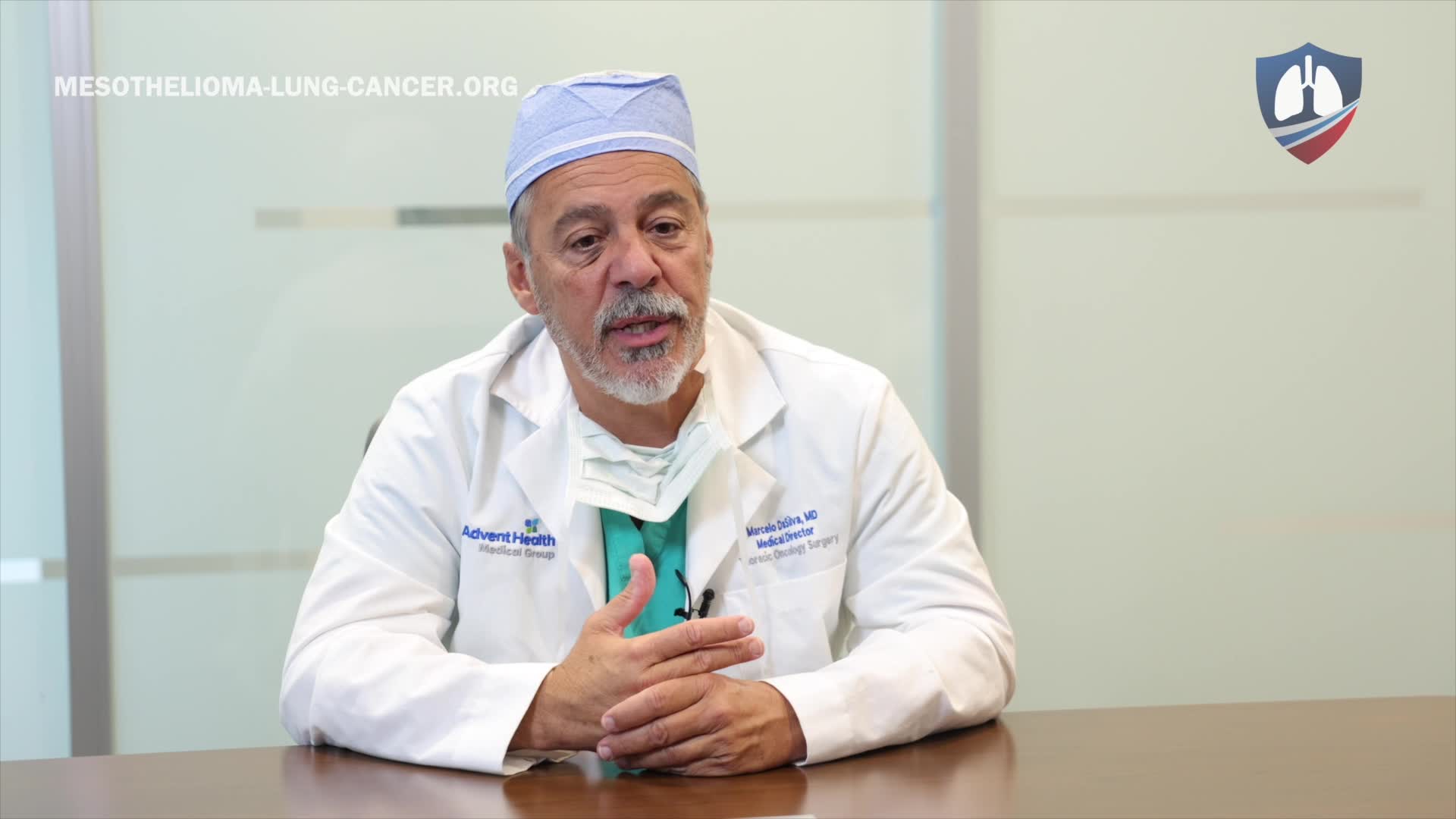 1:27
1:27
Summary
A mesothelioma physician explains how the diagnosis is made through specific cell markers (WT1 and others) and next-generation sequencing testing, why there is a 30-40 year latency between asbestos exposure and diagnosis, and why most patients come in only after multiple drainings.
Key Points
- Diagnosis depends on identifying specific cell markers (such as WT1) through pathology staining.
- Next-generation sequencing is now used alongside traditional marker testing.
- On-site testing at specialized cancer centers can deliver results in hours instead of days.
- Latency between asbestos exposure and diagnosis is typically 30 to 40 years.
- Rapid onset after exposure is a red flag for aggressive sarcomatoid-type mesothelioma.
- Many patients are drained multiple times before anyone pursues a surgical biopsy — which is often what's needed.
Full Transcript
It's important for patients to realize that the diagnosis of mesothelioma really lies on the markers — specific cell markers. Parts of the cells float on top of cells, and we can track them, diagnose, and mark them — stain them specifically.
We do our own testing at the Cancer Institute, and we also do next-generation sequencing testing on our patients. Some of the markers — WT1 and others — we mark. That's done in hours. We don't send that out.
Most patients come to us with mesothelioma they've had for years — they just don't know about it. We all know that there is a huge latency from exposure to the time the patient is diagnosed: maybe 30 years, maybe 40 years.
When they're diagnosed very rapidly in relation to the exposure, we believe that's a more aggressive type, such as the sarcomatoid type of mesothelioma.
Most patients come in with a history of six months, nine months, 12 months of being drained three, four, five times. No one made the diagnosis until someone says, "Maybe this isn't just a pleural effusion — maybe you need to pursue a surgical biopsy."
About This Transcript
This transcript has been lightly edited from the automatic captioning for readability and accuracy. The speaker is a mesothelioma physician; medical opinions expressed are the speaker's own and are provided for educational purposes. This is not medical advice. Consult a qualified mesothelioma specialist about your specific situation.
Questions About Your Case?
If you or a loved one has been diagnosed with mesothelioma, our attorneys can help you understand your options. Free, confidential consultation — no fees unless we recover compensation.