
Transcript: What Is Mesothelioma? A Physician Explains
Duration: 1:21 · Published April 14, 2026
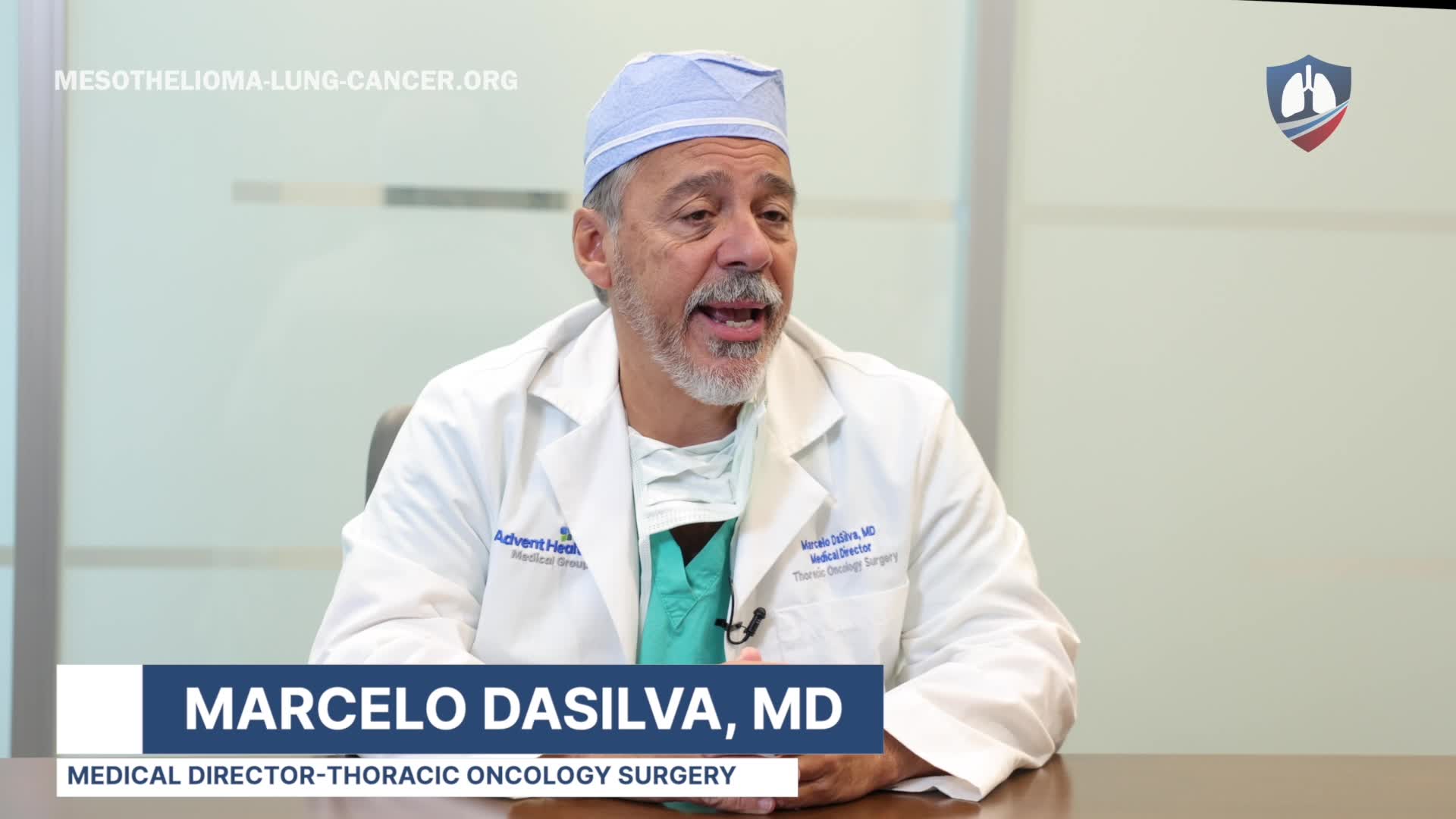 1:21
1:21
Summary
A mesothelioma physician explains what mesothelioma is, why it is different from lung cancer, how asbestos exposure causes it in the pleura (the thin lining around the lungs), and how patients typically first present with fluid buildup and shortness of breath.
Key Points
- Mesothelioma is not lung cancer — it affects the pleura, the thin lining around the lungs and chest wall.
- Asbestos exposure causes cells in the pleural membrane to thicken with malignant cells over years or decades.
- Most patients first present with pleural effusion (fluid in the chest), shortness of breath, and persistent cough.
- Initial drainings (thoracentesis) are rarely diagnostic on their own — further testing is needed.
Full Transcript
That's a question I get quite often from our patients. Sometimes they get confused with cancer of the lung — but it is not a cancer of the lungs. It is a cancer of the lining of the lung and the lining on the chest wall, what we call the pleura, which is a paper-thin layer.
Over the years, due to asbestos exposure, the cells in that membrane — it's like a glove; if you put your hand in a glove, that thin layer of glove is the pleura — start getting thicker and thicker and thicker with malignant cells. And then they produce water.
Most patients go see their doctors because they have water floating in their chest cavity. They're short of breath. They have this cough that doesn't go away. They get tapped, they get drained — not diagnostic yet, but that's how it is. It's not a tumor of the lung; it's a tumor of the covering of the lung.
So mesothelioma is a malignant tumor of the pleura, which is the surface of the lungs.
About This Transcript
This transcript has been lightly edited from the automatic captioning for readability and accuracy. The speaker is a mesothelioma physician; medical opinions expressed are the speaker's own and are provided for educational purposes. This is not medical advice. Consult a qualified mesothelioma specialist about your specific situation.
Questions About Your Case?
If you or a loved one has been diagnosed with mesothelioma, our attorneys can help you understand your options. Free, confidential consultation — no fees unless we recover compensation.