


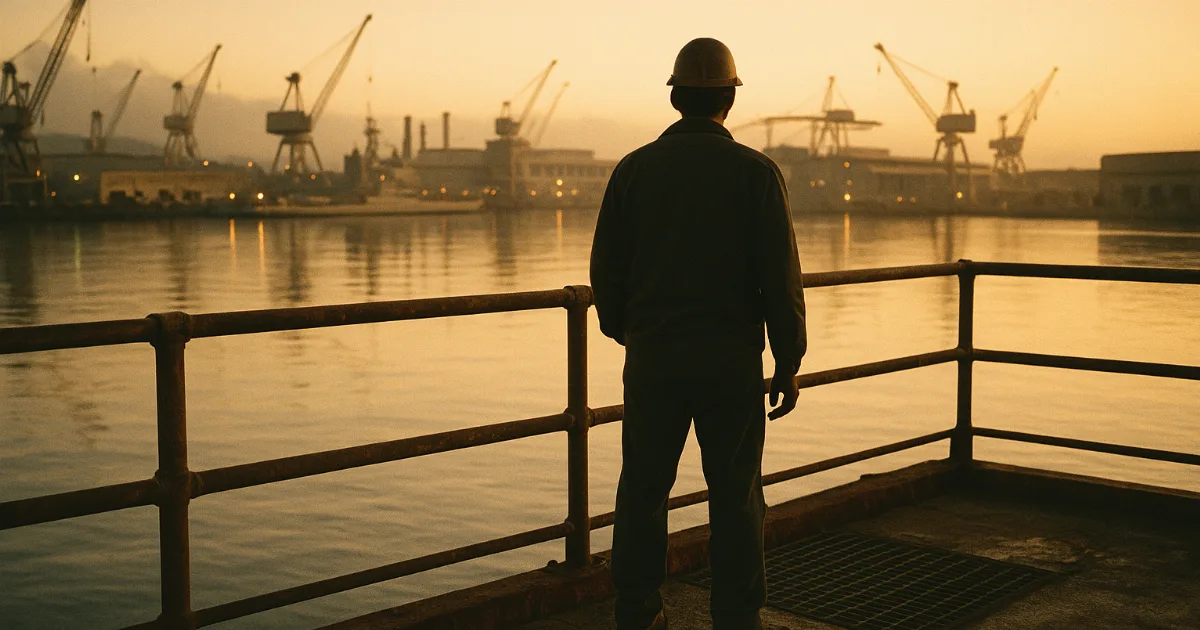
HONOLULU, HI — Somewhere on Oahu, a retired Navy machinist is sitting across from a pulmonologist, processing a word he's heard only in passing: mesothelioma. He spent 22 years repairing steam systems aboard vessels that came through Pearl Harbor Naval Shipyard, breathing air thick with asbestos dust that no one warned him about. Now, decades later, the clock on his legal rights is already running.
Hawaii occupies a singular place in the national mesothelioma landscape. Its shipyard history runs deep, its veteran population is among the most asbestos-exposed in the country, and its courts handle a category of cases that reflect the islands' unique industrial past. But the legal terrain here is unforgiving, and families who wait too long often find their options have quietly disappeared.
Hawaii's Shipyard Legacy and the Asbestos Exposure It Left Behind
Pearl Harbor Naval Shipyard wasn't just a military installation. For much of the 20th century, it was one of the most active ship repair facilities in the Pacific, and like virtually every major shipyard of that era, it ran on asbestos. Pipe insulation, gaskets, boiler linings, valve packing — asbestos was woven into the infrastructure of every vessel that passed through for overhaul. Workers who cut, sanded, or simply stood nearby inhaled fibers that would take 20 to 50 years to produce symptoms.
According to litigation coverage tracked by Law360, asbestos-related claims arising from naval shipyard exposure represent one of the most consistently active categories in American courts, and Hawaii's Pearl Harbor cases have contributed steadily to that docket for years. The exposure sites directory maintained by mesothelioma advocacy organizations lists Pearl Harbor Naval Shipyard as among the highest-risk facilities in the Pacific region, a designation that reflects decades of documented asbestos use.
For veterans who served at or passed through Pearl Harbor, the stakes are particularly high. The VA has recognized mesothelioma as a service-connected illness for veterans with documented shipyard exposure, and VA benefits eligibility can run concurrently with civil litigation — meaning families don't have to choose between one path and the other. But navigating both systems simultaneously requires legal counsel with specific experience in asbestos cases, not a generalist.
The Legal Clock Hawaii Families Can't Afford to Ignore
Hawaii's statute of limitations for mesothelioma claims gives victims two years from the date of diagnosis, or two years from when they reasonably should have known the diagnosis was linked to asbestos exposure. That distinction matters enormously. A patient diagnosed in January 2026 who doesn't connect the dots to occupational exposure until six months later may have a different starting point than one whose oncologist makes the asbestos connection explicit on day one.
What the courts have consistently recognized in asbestos litigation is that the "discovery rule" can extend a victim's filing window when exposure was genuinely hidden or unknown. But that doctrine has limits, and it requires careful legal argument. According to the American Bar Association's Tort Trial and Insurance Practice Section, asbestos statutes of limitations are among the most frequently litigated procedural issues in personal injury law, precisely because the latency period between exposure and diagnosis is so extreme.
"In my experience representing mesothelioma families, the single most common mistake I see is waiting," said Paul Danziger, a board-certified personal injury trial attorney who has handled asbestos cases for decades. "Families are dealing with a devastating diagnosis, they're focused on treatment, and the legal deadline feels abstract. But Hawaii's two-year window moves faster than people expect, especially when you factor in the time needed to investigate exposure history and identify the responsible defendants."
For families trying to understand their options, the legal answers hub provides a starting point for understanding how Hawaii cases are typically structured and what kinds of compensation may be available.
What Hawaii's Courts Are Actually Deciding in 2026
Hawaii mesothelioma cases typically proceed along two parallel tracks: direct civil litigation against asbestos manufacturers and distributors, and claims filed against asbestos bankruptcy trusts. According to the RAND Corporation's research on asbestos bankruptcy trusts, more than 60 trusts have been established by companies that declared bankruptcy under the weight of asbestos liability, and those trusts collectively hold billions of dollars available to qualifying claimants.
The legal landscape for asbestos victims in Hawaii is complicated by the fact that many of the most culpable companies — insulation manufacturers, gasket producers, equipment suppliers — went bankrupt decades ago. That means a significant portion of compensation for Hawaii families comes not from jury verdicts but from trust fund claims filed administratively. According to Bloomberg's asbestos legal coverage, trust fund recoveries have become an essential component of total compensation packages in naval shipyard cases, often running alongside jury awards or settlements against solvent defendants.
Families evaluating their options should understand the difference between these paths. A detailed comparison of lawsuit versus trust fund claims can help clarify which route or combination of routes makes sense given a specific exposure history.
!Weathered hands grip medical diagnosis letter at kitchen table in home, moment of private reckoning
What Families Should Do Right Now
The practical reality for a Hawaii family facing a mesothelioma diagnosis in 2026 is this: the medical and legal timelines are running simultaneously, and neither waits for the other. Treatment decisions and legal decisions need to happen in parallel, not sequentially.
According to Reuters' litigation reporting, experienced asbestos attorneys typically offer free consultations and work on contingency, meaning no upfront fees. The investigation into exposure history, identification of responsible parties, and filing of claims can proceed while a patient is actively receiving treatment. In many cases, attorneys can gather the necessary documentation without requiring significant time or energy from the patient.
For Hawaii veterans specifically, the combination of VA benefits and civil litigation represents the most complete financial recovery available. The VA's presumptive service connection for mesothelioma, combined with trust fund claims and potentially a direct lawsuit, can produce compensation that reflects the full scope of what was taken from a family by decades of corporate negligence.
The families who fare best in Hawaii's courts are those who move quickly, choose attorneys with genuine asbestos litigation experience, and understand that the two-year clock is a hard deadline, not a suggestion. For a retired Pearl Harbor machinist sitting in that oncologist's office today, the most important call he can make isn't to a general practice law firm. It's to a Hawaii mesothelioma lawyer who has stood in those specific courtrooms before.
Attorney Advertising. Past results do not guarantee future outcomes. Every case is unique. The verdicts and settlements described are not a guarantee of similar results. Every case is different.



Comments (4)
— Paul