

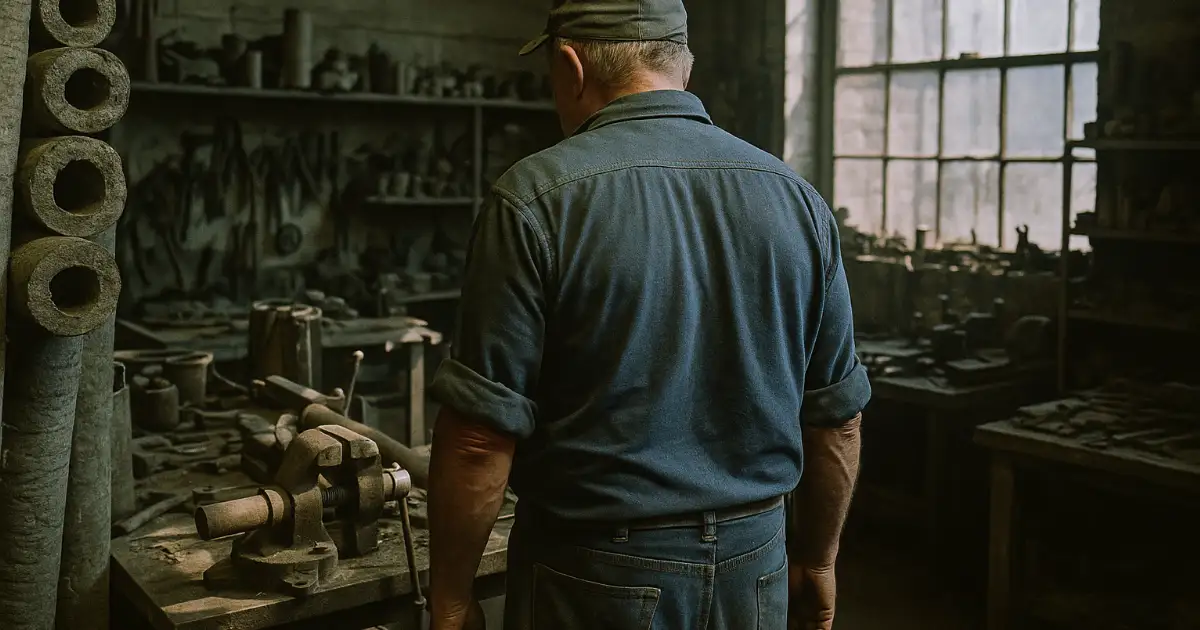
PEORIA, IL — The retired boilermaker had not thought about the insulation dust in nearly 40 years. Then the shortness of breath started.
His pulmonologist ordered a CT scan. Within three weeks, a thoracic surgeon confirmed what the imaging had suggested: malignant pleural mesothelioma, the cancer tied almost exclusively to asbestos exposure. The man had spent 28 years at a Peoria-area manufacturing facility that, records show, used asbestos-containing pipe insulation well into the 1980s. He had no idea he could still pursue a legal claim.
Why Illinois Keeps Producing New Mesothelioma Cases
What the exposure data reveals, year after year, is that Illinois is not a state where asbestos is a historical footnote. It is an ongoing public health crisis hiding in plain sight. Workers in industries ranging from steel fabrication in the Chicago metro to chemical processing along the Illinois River corridor were exposed to asbestos-containing materials for decades, and the disease those materials cause has a latency period of 20 to 50 years, according to the National Cancer Institute. That gap between exposure and diagnosis is precisely why new cases keep emerging in 2026 from worksites that closed before some patients' children were born.
The legal landscape in Illinois reflects that reality. Cook County Circuit Court remains one of the most active asbestos litigation venues in the country, drawing cases not just from the Chicago area but from downstate counties where petrochemical plants, rail yards, and power-generating facilities once employed tens of thousands of workers. Illinois mesothelioma attorneys who specialize in these cases maintain detailed databases of worksites, product manufacturers, and corporate ownership chains that allow them to identify liable parties even when the original employer no longer exists.
From an occupational health perspective, the industries that drove Illinois's 20th-century economy were precisely the ones with the heaviest asbestos use. Pipefitters, electricians, insulators, millwrights, and maintenance workers at these facilities often had far greater asbestos exposure than the primary production workers anyone would assume were most at risk. Secondary exposure, where a worker's family member was sickened by fibers carried home on work clothes, has also generated a significant share of Illinois claims.
What an Experienced Illinois Mesothelioma Lawyer Actually Does
"Most families come in thinking they missed their chance," said Anna Jackson, occupational health advocate and contributor to Mesothelioma-Lung-Cancer.org. "They don't realize that Illinois has a two-year statute of limitations that starts from the date of diagnosis, not the date of exposure. That distinction has preserved the rights of thousands of families who thought their window had closed."
The legal work itself is more investigative than most clients expect. Illinois mesothelioma attorneys begin by constructing a complete occupational history, often spanning 30 or 40 years of employment. They cross-reference that history against product identification databases, OSHA inspection records, union work orders, and corporate acquisition documents to determine which asbestos manufacturers supplied materials to each worksite. In many cases, those manufacturers have since entered bankruptcy and established asbestos trust funds. According to estimates from asbestos litigation researchers, more than 60 active trusts are currently paying claims, with individual fund payouts ranging from a few thousand dollars to several hundred thousand dollars per claimant depending on the trust's payment percentage and the severity of the diagnosis.
Families navigating this process can find detailed guidance on how to file an asbestos trust fund claim and can compare the relative advantages of lawsuits versus trust fund claims before deciding on a strategy. In many Illinois cases, attorneys pursue both simultaneously.
What This Means for Newly Diagnosed Patients and Their Families
A mesothelioma diagnosis triggers a cascade of decisions that most families are completely unprepared for. Treatment options, legal timelines, VA benefits eligibility if the patient is a veteran, and financial planning all become urgent at once. The disease's median survival without treatment is roughly 12 months from diagnosis, according to survival data from the American Cancer Society, which makes early action on every front essential.
On the treatment side, Illinois patients have access to major academic medical centers in Chicago, including facilities affiliated with the National Cancer Institute's research network. First-line treatment for unresectable pleural mesothelioma now typically involves the immunotherapy combination of nivolumab plus ipilimumab, which the New England Journal of Medicine reported showed a median overall survival of 18.1 months compared to 14.1 months with chemotherapy alone in the CheckMate 743 trial. Patients and families can explore current mesothelioma diagnosis and treatment options and connect with verified mesothelioma specialists through available resources.
For Illinois families, the legal and medical paths are not separate. They run in parallel, and the pace at which a family moves on both can determine whether they access the full compensation and care available to them. Workers in these industries gave decades of labor to facilities that knew, in many cases, that the materials surrounding them were dangerous. The legal system, imperfect as it is, exists to answer for that.
Families who have recently received a diagnosis can find additional support resources and guidance through mesothelioma patient and family services tailored to the specific challenges of this disease.
This article is for informational purposes only and does not constitute medical advice. Consult your healthcare provider for guidance specific to your situation.