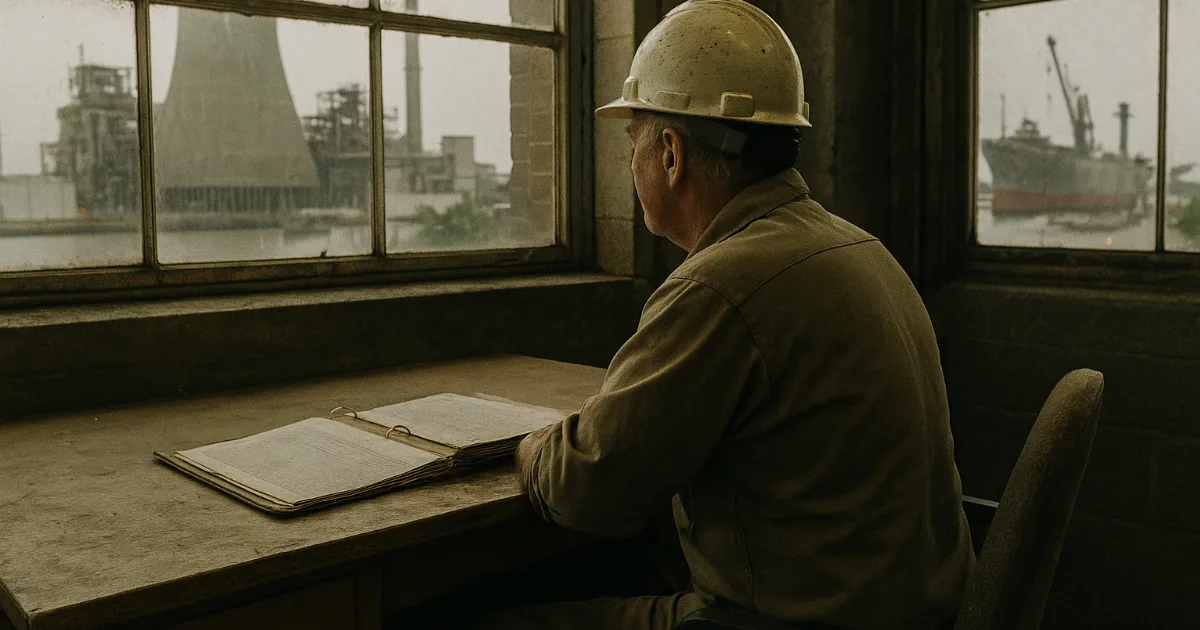


CHICAGO, IL — For most of his working life, Thomas Wierzbicki figured the dust was just part of the job. He spent two decades as a boilermaker at a heavy industrial facility on the South Side, breathing air thick with particulate matter he never thought twice about. When he was diagnosed with pleural mesothelioma at 67, his family had no idea where to begin — or that Illinois courts had become one of the most active legal battlegrounds in the country for exactly this kind of case.
His story isn't unusual. What the exposure data reveals, year after year, is that Illinois has a uniquely dense concentration of asbestos-heavy industries: steel mills, refineries, shipbuilding facilities along Lake Michigan, power generation plants, and sprawling railroad infrastructure. Workers in these industries spent careers surrounded by asbestos-containing insulation, gaskets, pipe coverings, and fireproofing materials — and many are only now receiving diagnoses, given the disease's latency period of 20 to 50 years.
Why Illinois Remains a Focal Point for Mesothelioma Litigation
Cook County Circuit Court has handled more asbestos-related civil cases than nearly any other jurisdiction in the United States. That's not an accident. Illinois's industrial geography, combined with plaintiff-friendly venue rules that have historically allowed out-of-state cases to be filed in Cook County, created a legal ecosystem where mesothelioma litigation has flourished for decades.
From an occupational health perspective, the state's exposure profile is extraordinary. According to the U.S. Environmental Protection Agency's documentation on asbestos use in industrial settings, shipbuilding operations were among the highest-risk workplaces for asbestos exposure in American history. Illinois facilities that supported Great Lakes shipping, naval supply chains, and heavy manufacturing employed tens of thousands of workers who had daily, sustained contact with asbestos-containing materials throughout the mid-20th century.
The legal implications of that history are still playing out. Mesothelioma lawyers in Illinois currently pursue multiple compensation channels simultaneously: personal injury lawsuits against manufacturers and distributors of asbestos products, asbestos bankruptcy trust fund claims, and veterans' benefits for those who also served in the military. According to legal records and compensation research compiled by patient advocacy groups, Illinois mesothelioma verdicts have climbed significantly in recent years, with some jury awards exceeding $10 million for individual plaintiffs.
What the Research Shows About Illinois Exposure Sites
Understanding where exposure happened is the foundation of any mesothelioma legal case. Illinois's industrial corridor, stretching from Chicago's lakefront through Gary, Indiana, and down through the Mississippi River industrial zones, was built on asbestos-intensive construction and manufacturing methods. Steel production, in particular, relied on asbestos insulation in blast furnaces, ladles, and pipe systems. Refinery workers, electricians, pipefitters, and HVAC technicians at those facilities were exposed through both primary contact and secondary inhalation of disturbed asbestos fibers.
For families navigating a new diagnosis, identifying the specific worksites, employers, and product manufacturers involved in the exposure is critical. This is the kind of documentation work that experienced Illinois mesothelioma lawyers specialize in — reconstructing exposure histories through employment records, union files, coworker testimony, and manufacturer databases. The strength of a legal case often comes down to how precisely that history can be established.
"The families who get the best outcomes are the ones who preserve every piece of paper and every memory they have about where their loved one worked," said Anna Jackson, occupational health advocate. "An experienced attorney can do a lot with a solid occupational history."
For workers also dealing with related respiratory conditions, understanding the connection between asbestos exposure and lung cancer is equally important, since both diagnoses can generate separate legal claims depending on the circumstances.
What Illinois Families Should Know Right Now
Time is the most consequential factor in any mesothelioma legal case. Illinois's statute of limitations for mesothelioma personal injury claims is generally two years from the date of diagnosis, not from the date of exposure. For wrongful death claims, the clock typically starts from the date of death. Missing those deadlines permanently eliminates the right to pursue compensation through the courts.
The good news is that Illinois families have access to multiple compensation pathways even when the responsible companies have gone bankrupt. More than 60 asbestos bankruptcy trusts remain active and accepting claims, holding an estimated $30 billion in reserved funds for victims. Families can use the compensation estimator tool to get a preliminary sense of what their case might be worth across different claim types.
For those unsure where to start, the statute of limitations checker provides state-specific deadline information, which is especially important for families dealing with a recent diagnosis who may not yet have consulted an attorney. Illinois mesothelioma lawyers who specialize in this area typically work on contingency, meaning there are no upfront legal fees — the attorney is paid only if the case succeeds.
Beyond the legal process, newly diagnosed patients in Illinois have access to NCI-designated cancer centers with dedicated mesothelioma programs, including the Robert H. Lurie Comprehensive Cancer Center at Northwestern University and the University of Chicago Medicine. The National Cancer Institute's network of designated cancer centers, according to its own research infrastructure documentation, provides patients with access to clinical trials and multidisciplinary care teams that community hospitals often can't match.
For families ready to explore all available options, the compensation hub provides a comprehensive overview of trust funds, lawsuits, and veterans' benefits — the three channels that experienced Illinois attorneys typically pursue in parallel to maximize recovery for their clients.
This article is for informational purposes only and does not constitute medical advice. Consult your healthcare provider for guidance specific to your situation.