
Asbestos exposure is the direct, established cause of mesothelioma — a rare and serious cancer of the lining of the lungs, abdomen, or heart — as well as asbestosis, lung cancer, and other diseases. If you or someone you love has received a mesothelioma or asbestos-related diagnosis, or if you are trying to understand a past work or military history, this guide explains what asbestos exposure means medically, who faces the greatest risk, what products carried the fibers, and what your realistic options look like. Every statistic and medical claim here comes from verified physician-reviewed sources, cited inline.
Why This Matters for You
The central fact families need to understand first is this: there is no known safe level of asbestos exposure. Even brief, low-level contact with asbestos fibers can cause mesothelioma decades after the original exposure occurred (Source: WHO; OSHA). That long latency — sometimes 20 to 50 years between exposure and diagnosis — is why so many people are caught off guard. A retired pipefitter in his seventies, a Navy veteran in her sixties, a homeowner who renovated a 1950s kitchen: none of them felt any effect at the time. The disease comes much later, quietly and without warning.
This latency also makes diagnosis harder. Connecting a current diagnosis to an exposure that happened 30 or 40 years ago requires a careful occupational history, imaging findings, and often the input of a pulmonologist or oncologist — but it starts with understanding where and how the exposure happened.
One more thing families ask us almost immediately: is asbestos still used? The answer is nuanced. Asbestos is not fully banned in the United States as of this writing. Certain legacy products remain in place in older buildings, ships, and infrastructure, and some limited uses have continued under regulatory oversight. So while new construction asbestos is far less common than it once was, exposure risk from existing materials — particularly during demolition, renovation, and maintenance work — remains real (Source: EPA; OSHA).
What Asbestos Is and How It Harms the Body
Asbestos is a naturally occurring group of silicate minerals whose fibers are extremely fine, durable, and heat-resistant. Those same properties that made it a prized industrial material also make it dangerous. When asbestos-containing materials are disturbed — cut, sanded, drilled, broken apart — microscopic fibers become airborne. Once inhaled, they lodge in lung tissue and in the pleura (the membrane surrounding the lungs). The body cannot break them down or expel them effectively.
Over time, those embedded fibers cause chronic inflammation, cellular DNA damage, and eventually malignant transformation. The result can be pleural mesothelioma (the most common form), peritoneal mesothelioma, pericardial mesothelioma, or asbestos-related lung cancer. A separate non-malignant condition, asbestosis, involves progressive scarring of the lung tissue itself and leads to serious breathing impairment.
On imaging — chest X-ray or CT scan — a radiologist may identify pleural plaques, which are areas of asbestos-related scarring on the lining of the lung. These plaques are not cancer, but their presence on imaging strongly supports a finding of significant prior asbestos exposure and is recognized as a marker of asbestos causation in both medical and legal contexts (Source: NCI).
Who Is Most at Risk: Industries and Occupations
High-Risk Industries
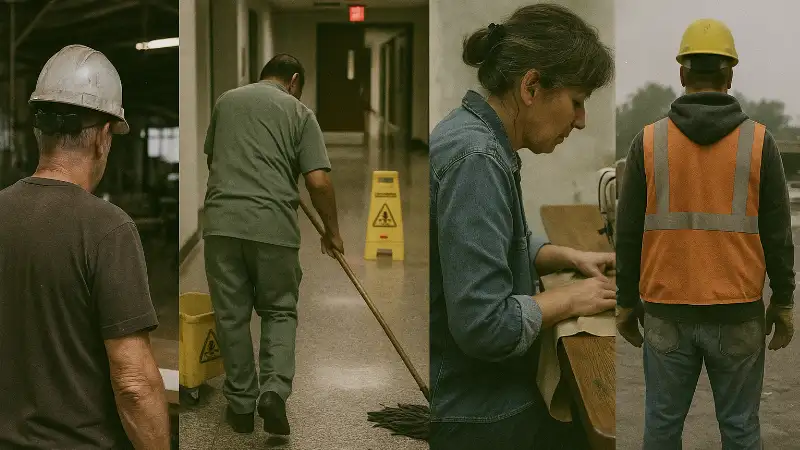
Certain industries have historically relied on asbestos so heavily that workers within them carry a disproportionate burden of asbestos-related disease. According to OSHA, the highest-risk industries include construction, shipbuilding and repair, oil refineries, power plants, automotive, steel works, and railroads (Source: OSHA). These are environments where asbestos was present in insulation, pipe systems, gaskets, flooring, and structural fireproofing for decades — and where aging infrastructure means legacy exposures continue during maintenance and demolition work today.
High-Risk Occupations
Within those industries, specific trades carried the most concentrated daily exposure. OSHA identifies the occupations at greatest risk as insulators, shipyard workers, pipefitters and plumbers, boilermakers, electricians, HVAC mechanics, brake mechanics, and demolition workers (Source: OSHA).
What is less often recognized is that many of these workers' family members also faced exposure. Wives and children who laundered work clothes covered in asbestos dust, or who lived near job sites, represent a category of secondary or "take-home" exposure that has resulted in real diagnoses. The same principle applies — there is no safe level, regardless of source (Source: WHO; OSHA).
Military Veterans
Veterans deserve particular attention. Veterans represent an estimated 30% of all mesothelioma diagnoses in the United States, a figure that reflects decades of asbestos use inside military facilities and, above all, aboard naval vessels (Source: U.S. Department of Veterans Affairs).
The U.S. Navy is the highest-risk military branch for asbestos exposure. Ships built before 1980 contained extensive asbestos in insulation, pipe lagging, boiler and engine rooms, and living quarters (Source: U.S. Department of Veterans Affairs). A Navy machinist's mate, a boiler technician, or even a cook whose sleeping quarters were insulated with asbestos-containing materials could accumulate significant exposure without ever handling the material directly. Veterans pursuing a mesothelioma diagnosis have specific VA benefit pathways available, and the VA's own published guidance acknowledges this causal relationship directly.
!Who Is Most at Risk: Industries and Occupations for mesothelioma research cases
Asbestos-Containing Products: What to Know
Understanding which products contained asbestos is essential for reconstructing an exposure history — a process that matters both medically and legally. According to the EPA and OSHA, common asbestos-containing products include:
- Pipe and boiler insulation — one of the most significant exposure sources for insulators, pipefitters, and boilermakers
- Fireproofing spray — applied extensively in commercial construction from the 1950s through the 1970s
- 9×9 vinyl floor tiles — a reliable marker in homes and commercial buildings built before 1980; the adhesive beneath them often also contained asbestos
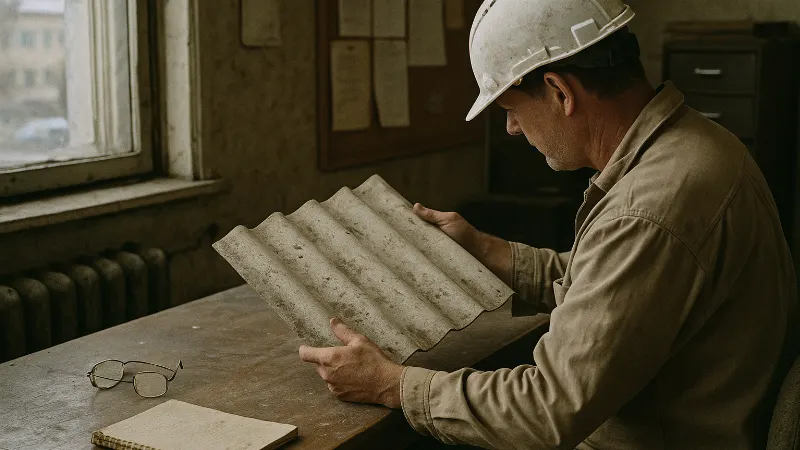
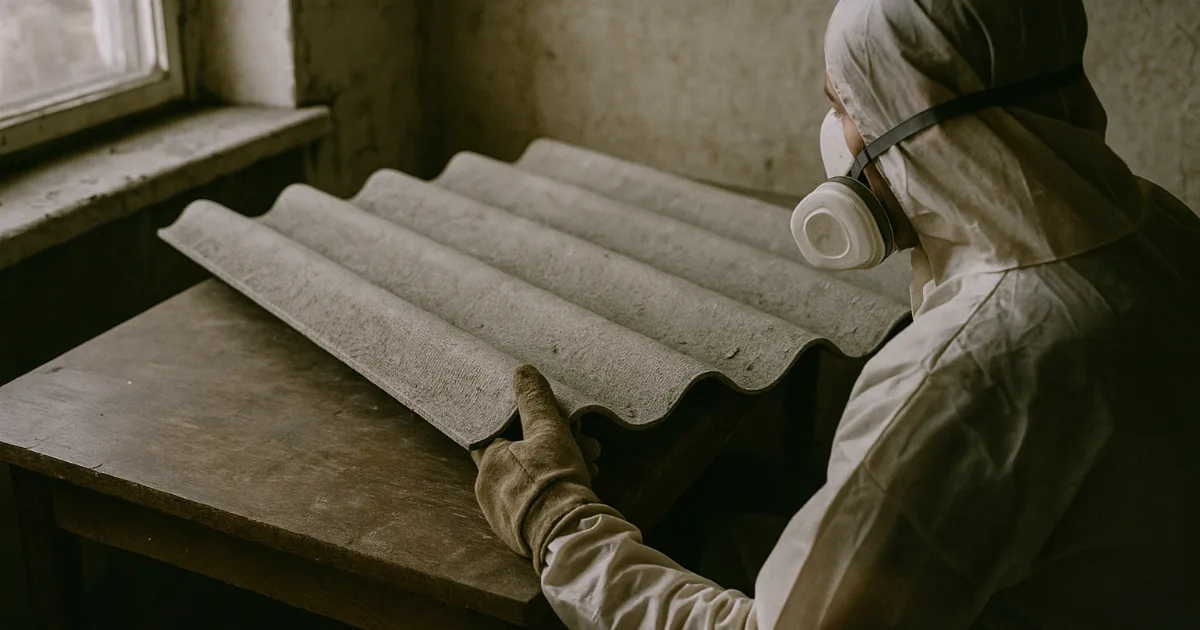
- Roof shingles — particularly cement-asbestos shingles used in mid-century residential construction
- Joint compound (drywall mud) — used by drywall finishers, tapers, and even homeowners doing finish work; sanding joint compound created fine, respirable dust
- Brake pads and gaskets — significant for automotive and fleet mechanics who worked with older vehicles
- Transite cement board — used in siding, flue pipes, and laboratory work surfaces
- Vermiculite insulation — notably the Zonolite brand, much of which came from a mine in Libby, Montana, heavily contaminated with naturally occurring asbestos fibers
(Source: EPA; OSHA)
One additional exposure source worth knowing: talcum powder. Talc deposits are often geologically co-located with asbestos, and talcum powder products contaminated with asbestos fibers have been linked to mesothelioma (Source: IARC).
A Composite Patient Illustration
(A composite based on common cases — not an actual client)
Consider a man who spent 28 years as a boilermaker at a power plant, retiring in the early 1990s. Throughout his career, he worked in confined mechanical spaces where pipe and boiler insulation was routinely cut and removed. He never wore a respirator — that was standard for the era. By the time he developed a persistent dry cough in his late sixties, he assumed it was from years of smoking. A CT scan ordered by his pulmonologist revealed a pleural effusion and a thickened pleura. The same scan showed bilateral pleural plaques — the scarring that, as the NCI confirms, supports a finding of asbestos causation (Source: NCI). His eventual diagnosis was pleural mesothelioma.
When his family sought guidance, the most useful first step turned out to be a careful occupational history: listing every job site, every product he handled, every employer from his working years. That history formed the basis of his oncology care plan. His case is unremarkable in the sense that it follows the same pattern seen across thousands of industrial workers — long exposure, long latency, late diagnosis.
Frequently Asked Questions
Q: Is asbestos still used in the United States today?
A: Asbestos has not been comprehensively banned in the U.S. as of this writing. While its use declined sharply after regulatory action beginning in the 1970s and 1980s, certain legacy materials remain in place in older buildings, industrial facilities, and ships. Exposure risk today is most significant during renovation, demolition, and maintenance of structures built before the 1980s. The EPA and OSHA continue to regulate asbestos exposure limits and handling procedures for this reason (Source: EPA; OSHA).
Q: Can I get mesothelioma from a single or short-term asbestos exposure?
A: Yes. There is no known safe level of asbestos exposure, and even brief or low-level contact can lead to mesothelioma decades later (Source: WHO; OSHA). This does not mean all exposures carry equal risk — duration and fiber concentration matter — but no exposure can be declared categorically safe. This is why even secondary or bystander exposures (such as a family member laundering a worker's clothing) have resulted in documented diagnoses.
Q: Why do so many veterans develop mesothelioma?
A: Veterans represent an estimated 30% of all mesothelioma diagnoses in the U.S. (Source: U.S. Department of Veterans Affairs). The primary reason is asbestos use aboard naval vessels and in military facilities, particularly ships built before 1980, which contained asbestos in insulation, pipe lagging, boiler and engine rooms, and living quarters (Source: U.S. Department of Veterans Affairs). The U.S. Navy is the highest-risk military branch for this exposure. Veterans may be eligible for VA disability compensation and healthcare benefits, and the VA recognizes the connection between military asbestos exposure and mesothelioma.
Q: What are pleural plaques, and do they mean I have cancer?
A: Pleural plaques are areas of asbestos-related scarring on the lining of the lung. They are not cancer and do not directly cause symptoms in most cases, but their presence on a chest X-ray or CT scan is medically significant: they support a finding of prior asbestos exposure and asbestos causation when they appear in the context of a lung or pleural disease evaluation (Source: NCI). If pleural plaques are found incidentally, you should discuss asbestos exposure history with your physician and ask about a structured monitoring plan.
Q: What products should I be most concerned about in an older home?
A: In homes built before 1980, the products most likely to contain asbestos include 9×9 vinyl floor tiles and their adhesive, joint compound used in drywall finishing, vermiculite attic insulation, roof shingles, and pipe insulation around furnace or hot-water systems (Source: EPA; OSHA). Materials in good condition that are not being disturbed generally pose lower risk. The danger increases significantly when these materials are cut, sanded, broken, or removed — as happens during renovation. Before any renovation project in an older home, testing by a certified asbestos inspector is the appropriate first step.
Q: Can talcum powder exposure cause mesothelioma?
A: Yes — when the talcum powder was contaminated with asbestos fibers. Talc and asbestos are often found in the same geological deposits, so some talcum powder products have carried asbestos contamination, which can cause mesothelioma (Source: IARC). If you have a mesothelioma diagnosis and a history of regular talcum powder use without obvious occupational asbestos exposure, mention it to your physician as part of your exposure history.
!Is asbestos still used support and guidance for mesothelioma research cases
A Sensible Next Step
If you are processing a recent diagnosis — your own or a family member.s — a useful immediate action is to document the occupational, military, and product exposure history as completely and specifically as possible. Names of employers, job sites, products handled, and the years involved all matter. Bring that history to your treating oncologist or pulmonologist: it helps inform the diagnosis and the care plan, and it gives you a clearer picture of what you and your family are facing.
You do not need to rush. Take the time you need to understand your situation and the medical resources available to you.
Medically reviewed by Marcelo C. DaSilva, MD, FACS, FICS · Written by david-foster