
Transcript: The Biggest Misconceptions About Mesothelioma
Duration: 1:20 · Published April 14, 2026
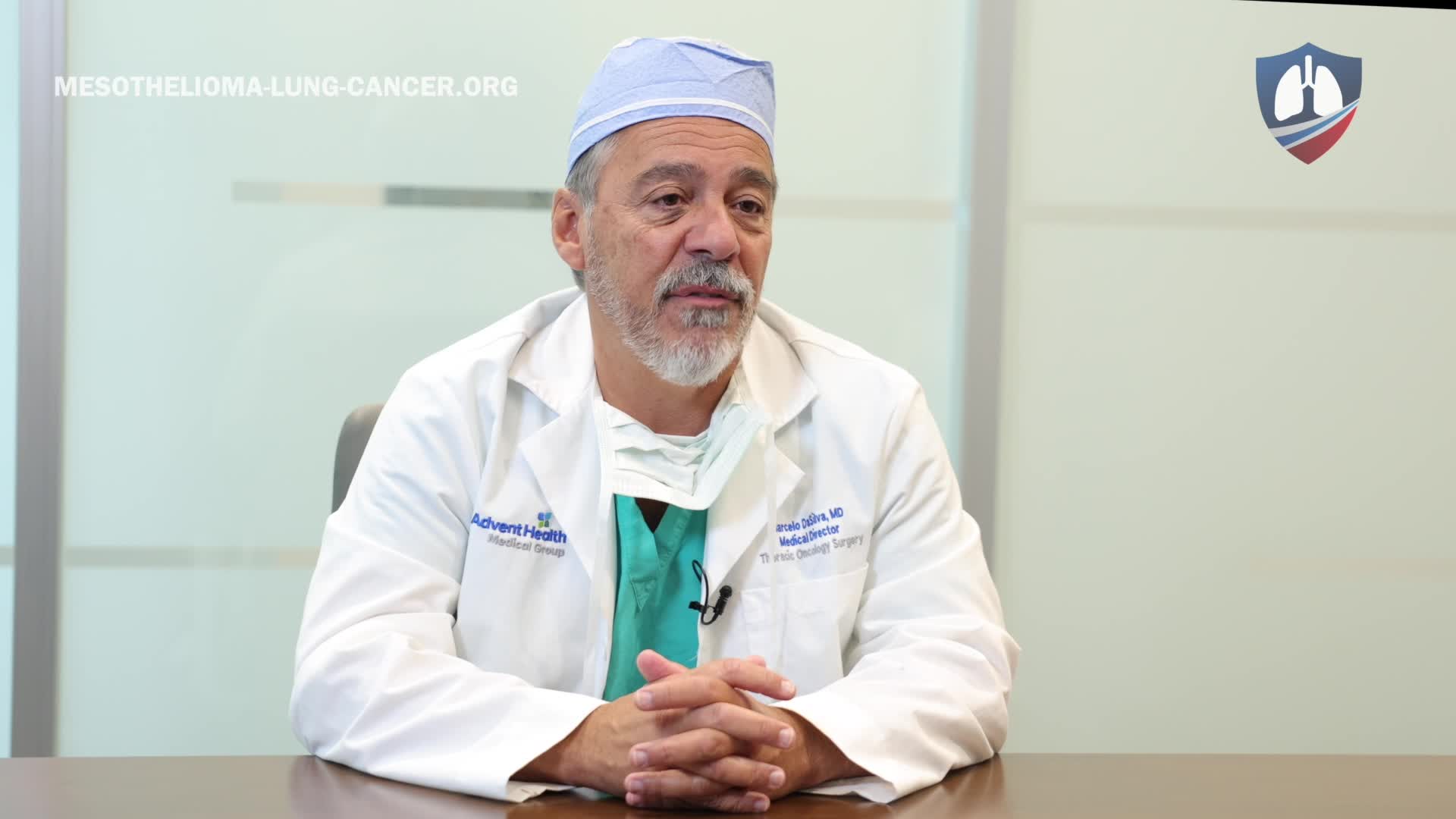 1:20
1:20
Summary
A mesothelioma surgeon addresses the greatest misconception about mesothelioma — that diagnosis means death within three months — and explains how immunotherapy, chemotherapy, surgery, and intraoperative treatments have produced survivors at 10, 15, and 17 years.
Key Points
- The most dangerous misconception: that mesothelioma means death within three months. It's not true.
- Modern treatment tools include immunotherapy, chemotherapy, surgery, radiofrequency ablation, and intraoperative chemotherapy.
- Long-term survivors exist — 10, 15, even 17 years without recurrence.
- Recurrence is common but manageable: as the speaker puts it, "If you recur, you're living. You're not dying."
- Hope is a legitimate part of mesothelioma care. Dr. David Sugarbaker, a pioneering mesothelioma surgeon, emphasized that when hope is part of the equation, anything is possible.
Full Transcript
One of the greatest misconceptions we find in patients when they come with the diagnosis is that they're going to die within three months. That's the end of the road. There's no hope. There's not much to do. That's simply not true.
Today we have immunotherapy, chemotherapy, surgery, radiofrequency ablation that I use in the OR. We have so many tools — intraoperative chemotherapy — that we can use in the OR to help those patients extend their lives.
We've had survivors 10, 15, 17 years on without recurrence. Most of them do recur — yes, they do. That's the nature of the disease. We used to tell patients: if you recur, you're living. You're not dying.
So I think the greater challenge, the great misconception, was that patients thought that was the end of the line. And we said, that's not true.
As a matter of fact, I learned from Dr. Sugarbaker that when there's hope in the equation, anything's possible. We brought hope to our patients. That, to me, was probably what led me to embrace mesothelioma.
About This Transcript
This transcript has been lightly edited from the automatic captioning for readability and accuracy. The speaker is a mesothelioma physician; medical opinions expressed are the speaker's own and are provided for educational purposes. This is not medical advice. Consult a qualified mesothelioma specialist about your specific situation.
Questions About Your Case?
If you or a loved one has been diagnosed with mesothelioma, our attorneys can help you understand your options. Free, confidential consultation — no fees unless we recover compensation.