
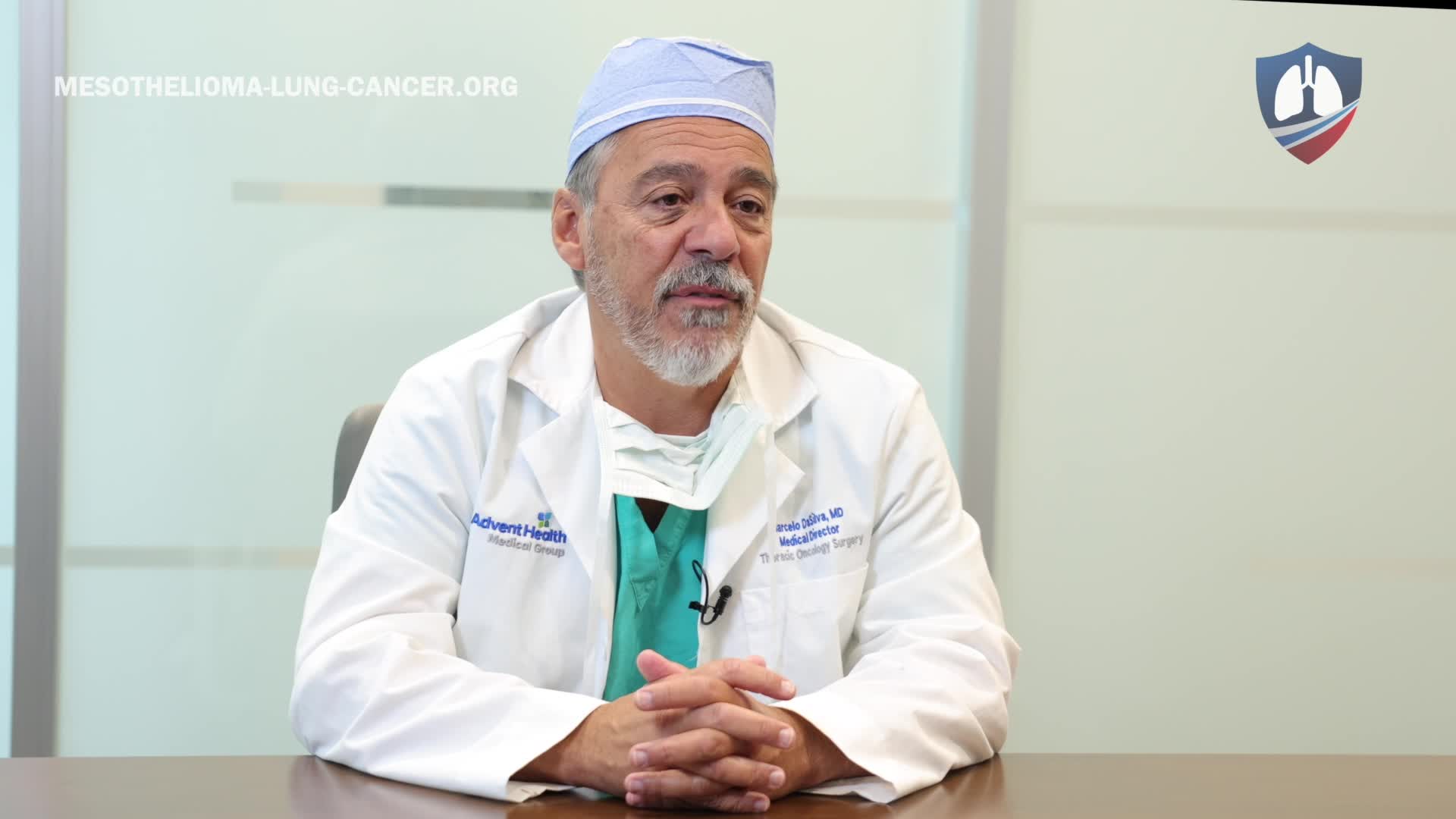
 1:20
1:20
The Biggest Misconceptions About Mesothelioma
A mesothelioma surgeon addresses the greatest misconception about mesothelioma — that diagnosis means death within three months — and explains how immunotherapy, chemotherapy, surgery, and intraoperative treatments have produced survivors at 10, 15, and 17 years.
Need to talk to someone? 1-800-400-1805
Key Points From This Video
- The most dangerous misconception: that mesothelioma means death within three months. It's not true.
- Modern treatment tools include immunotherapy, chemotherapy, surgery, radiofrequency ablation, and intraoperative chemotherapy.
- Long-term survivors exist — 10, 15, even 17 years without recurrence.
- Recurrence is common but manageable: as the speaker puts it, "If you recur, you're living. You're not dying."
- Hope is a legitimate part of mesothelioma care. Dr. David Sugarbaker, a pioneering mesothelioma surgeon, emphasized that when hope is part of the equation, anything is possible.
Important Note
This video presents medical information from a mesothelioma specialist for educational purposes. It is not a substitute for personalized medical advice. Every patient's situation is unique — please consult a qualified mesothelioma physician about your specific diagnosis, treatment options, and prognosis.
Video Transcript
One of the greatest misconceptions we find in patients when they come with the diagnosis is that they're going to die within three months. That's the end of the road. There's no hope. There's not much to do. That's simply not true.
Today we have immunotherapy, chemotherapy, surgery, radiofrequency ablation that I use in the OR. We have so many tools — intraoperative chemotherapy — that we can use in the OR to help those patients extend their lives.
More Videos
Watch more from our educational video library.
What Is Mesothelioma? A Physician Explains
A mesothelioma physician explains what mesothelioma is, why it is different from lung cancer, how asbestos exposure causes it in the pleura (the thin lining around the lungs), and how patients typically first present with fluid buildup and shortness of breath.
The Three Types of Mesothelioma: Epithelioid, Sarcomatoid, and Mixed
A mesothelioma specialist explains the three main cell types — epithelioid, sarcomatoid, and biphasic (mixed) — and why about 40% of tumors contain multiple cell types, which can affect treatment decisions and lead to misdiagnosis.
How Mesothelioma Treatment Has Evolved
A mesothelioma surgeon describes the evolution of mesothelioma care — from weekly multimodality tumor boards to combining immunotherapy, chemotherapy, and surgery, and why treatment approaches must evolve with each patient.
Client Testimonial: A Family's Mesothelioma Case Experience
A family shares their experience working with our mesothelioma attorneys after an asbestos exposure diagnosis. Hear how the legal team at Danziger & De Llano helped them navigate the process from first consultation through compensation recovery.
Have Questions About Your Mesothelioma Case?
Our experienced mesothelioma attorneys can help you understand your legal rights, document your asbestos exposure history, and pursue the compensation you deserve.
Or call us: 1-800-400-1805
Related Resources
Continue learning about mesothelioma, diagnosis, treatment, and your options.
What Is Mesothelioma?
Comprehensive overview of the disease — types, symptoms, stages, and treatment options.
Diagnosis & Treatment Guide
Full guide to diagnosis, staging, treatment protocols, and finding a specialist.
Compensation Guide
Understand your legal rights and the types of compensation available to mesothelioma patients.
Compensation Estimator
Get a personalized estimate of potential mesothelioma compensation based on your situation.
Trust Fund Checker
Find which of the 60+ active asbestos trust funds may apply to your case.
Patient & Family Resources
Support resources, caregiving guides, and emotional support for families.