
Transcript: How Mesothelioma Treatment Has Evolved
Duration: 1:20 · Published April 14, 2026
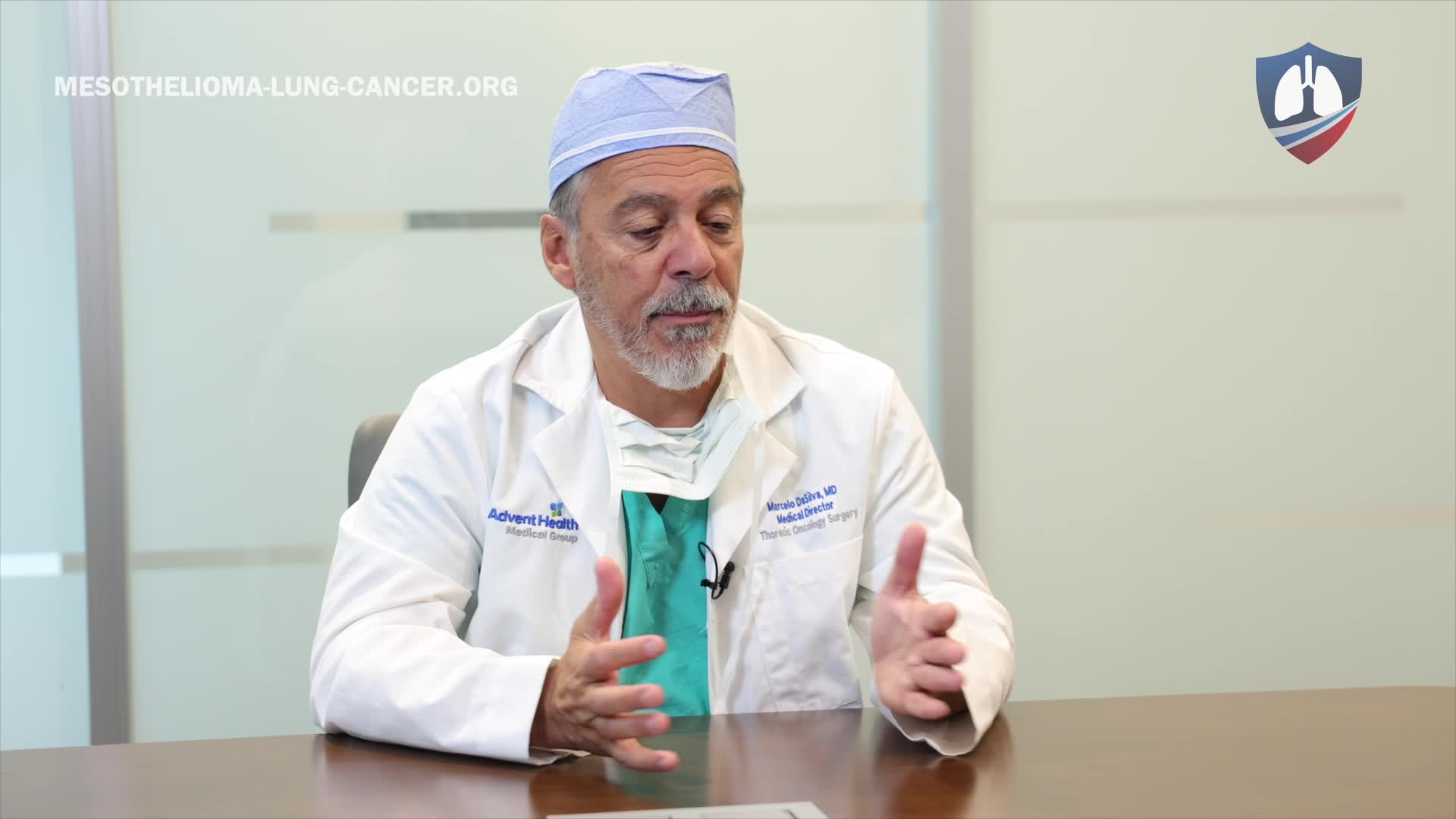 1:20
1:20
Summary
A mesothelioma surgeon describes the evolution of mesothelioma care — from weekly multimodality tumor boards to combining immunotherapy, chemotherapy, and surgery, and why treatment approaches must evolve with each patient.
Key Points
- Modern mesothelioma treatment is delivered through multimodality care — multiple specialties working together.
- Weekly tumor boards bring together 30+ specialists including radiologists, oncologists, pathologists, pulmonary doctors, and surgeons to plan individualized treatment.
- Standard approach for surgical candidates: immunotherapy and chemotherapy first, then surgery.
- Immunotherapy combined with chemotherapy is producing remissions that sometimes make surgery unnecessary.
- Treatment approaches continue to evolve — rigid protocols are being replaced by adaptive, patient-specific care.
Full Transcript
What we see in the treatment of mesothelioma today is a complete — I don't want to say revolution, but an evolution of care. We have a very robust multimodality treatment center here.
Every Wednesday we'll have tumor boards with about 30 professionals — radiologists, radiation oncologists, medical oncologists, pathologists, pulmonary doctors, surgeons — and we discuss all the cases and how we're going to treat every individual patient. We review them, and most of the time they get immunotherapy, chemotherapy, followed by surgery. That's our approach, if the patient is a surgical candidate.
That's changed quite a bit with immunotherapy in combination with chemotherapy. Some of our patients get treated and they go into remission, and we're glad to say, "You don't need surgery right now. We just need to continue to follow up with you."
So we're not set in the way we do things. We actually change our approach as the patient and the treatment change. I think being stuck in one way of doing it is probably not the right thing for me as a clinician. We needed to evolve and work along with our medical colleagues.
About This Transcript
This transcript has been lightly edited from the automatic captioning for readability and accuracy. The speaker is a mesothelioma physician; medical opinions expressed are the speaker's own and are provided for educational purposes. This is not medical advice. Consult a qualified mesothelioma specialist about your specific situation.
Questions About Your Case?
If you or a loved one has been diagnosed with mesothelioma, our attorneys can help you understand your options. Free, confidential consultation — no fees unless we recover compensation.