
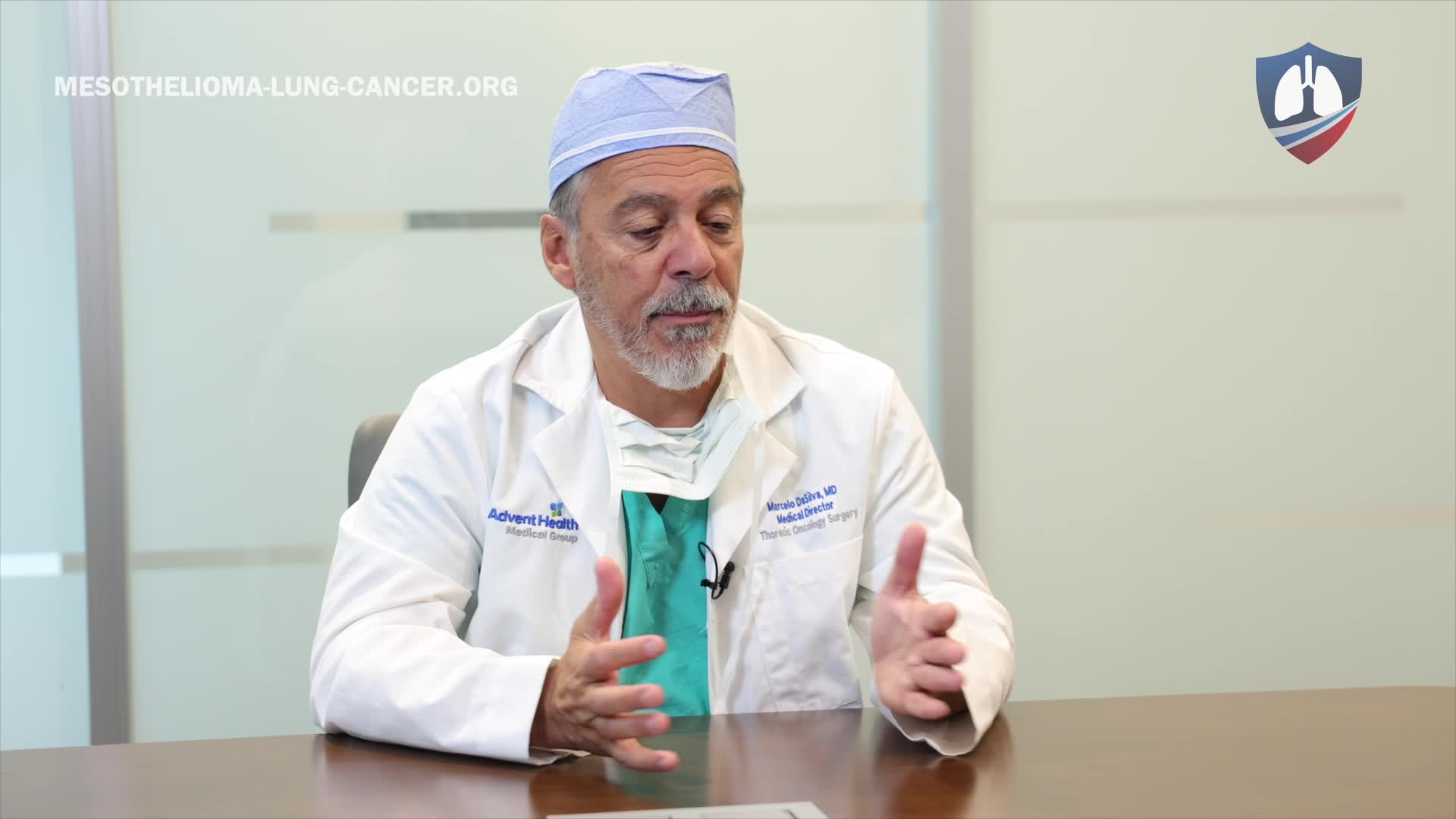
 1:20
1:20
How Mesothelioma Treatment Has Evolved
A mesothelioma surgeon describes the evolution of mesothelioma care — from weekly multimodality tumor boards to combining immunotherapy, chemotherapy, and surgery, and why treatment approaches must evolve with each patient.
Need to talk to someone? 1-800-400-1805
Key Points From This Video
- Modern mesothelioma treatment is delivered through multimodality care — multiple specialties working together.
- Weekly tumor boards bring together 30+ specialists including radiologists, oncologists, pathologists, pulmonary doctors, and surgeons to plan individualized treatment.
- Standard approach for surgical candidates: immunotherapy and chemotherapy first, then surgery.
- Immunotherapy combined with chemotherapy is producing remissions that sometimes make surgery unnecessary.
- Treatment approaches continue to evolve — rigid protocols are being replaced by adaptive, patient-specific care.
Important Note
This video presents medical information from a mesothelioma specialist for educational purposes. It is not a substitute for personalized medical advice. Every patient's situation is unique — please consult a qualified mesothelioma physician about your specific diagnosis, treatment options, and prognosis.
Video Transcript
What we see in the treatment of mesothelioma today is a complete — I don't want to say revolution, but an evolution of care. We have a very robust multimodality treatment center here.
Every Wednesday we'll have tumor boards with about 30 professionals — radiologists, radiation oncologists, medical oncologists, pathologists, pulmonary doctors, surgeons — and we discuss all the cases and how we're going to treat every individual patient. We review them, and most of the time they get immunotherapy, chemotherapy, followed by surgery. That's our approach, if the patient is a surgical candidate.
More Videos
Watch more from our educational video library.
What Is Mesothelioma? A Physician Explains
A mesothelioma physician explains what mesothelioma is, why it is different from lung cancer, how asbestos exposure causes it in the pleura (the thin lining around the lungs), and how patients typically first present with fluid buildup and shortness of breath.
The Three Types of Mesothelioma: Epithelioid, Sarcomatoid, and Mixed
A mesothelioma specialist explains the three main cell types — epithelioid, sarcomatoid, and biphasic (mixed) — and why about 40% of tumors contain multiple cell types, which can affect treatment decisions and lead to misdiagnosis.
Understanding Your Mesothelioma Diagnosis: How It Is Made
A mesothelioma physician explains how the diagnosis is made through specific cell markers (WT1 and others) and next-generation sequencing testing, why there is a 30-40 year latency between asbestos exposure and diagnosis, and why most patients come in only after multiple drainings.
Client Testimonial: A Family's Mesothelioma Case Experience
A family shares their experience working with our mesothelioma attorneys after an asbestos exposure diagnosis. Hear how the legal team at Danziger & De Llano helped them navigate the process from first consultation through compensation recovery.
Have Questions About Your Mesothelioma Case?
Our experienced mesothelioma attorneys can help you understand your legal rights, document your asbestos exposure history, and pursue the compensation you deserve.
Or call us: 1-800-400-1805
Related Resources
Continue learning about mesothelioma, diagnosis, treatment, and your options.
What Is Mesothelioma?
Comprehensive overview of the disease — types, symptoms, stages, and treatment options.
Diagnosis & Treatment Guide
Full guide to diagnosis, staging, treatment protocols, and finding a specialist.
Compensation Guide
Understand your legal rights and the types of compensation available to mesothelioma patients.
Compensation Estimator
Get a personalized estimate of potential mesothelioma compensation based on your situation.
Trust Fund Checker
Find which of the 60+ active asbestos trust funds may apply to your case.
Patient & Family Resources
Support resources, caregiving guides, and emotional support for families.