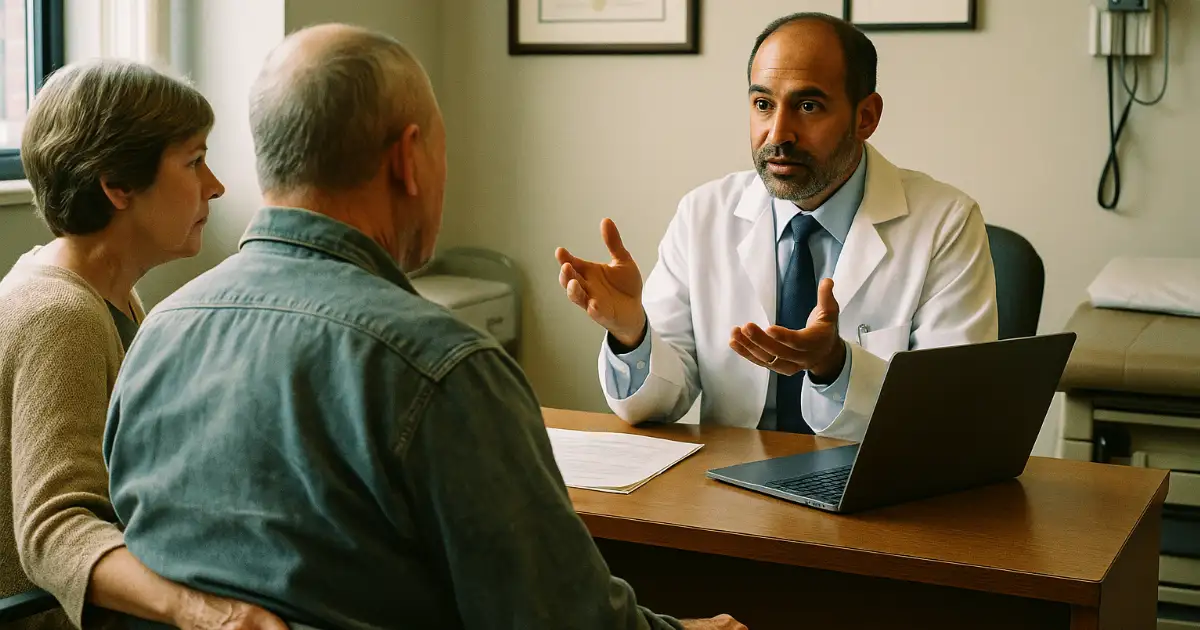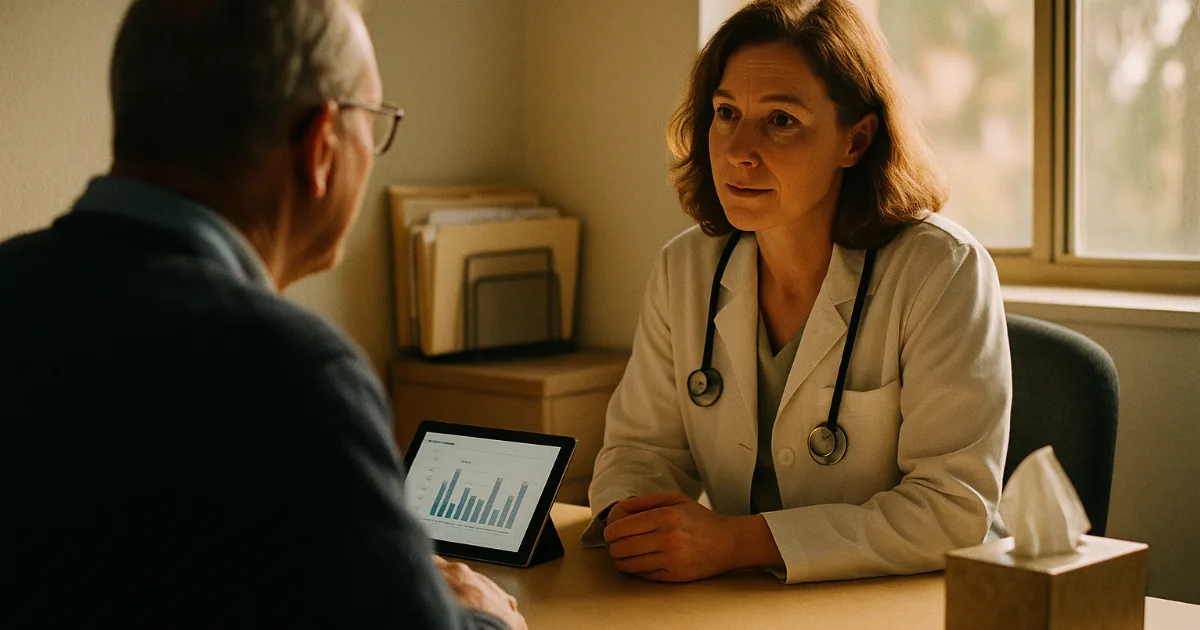

BOSTON, MA — Raymond Okafor was 67 years old when his oncologist at Brigham and Women's Hospital sat across from him and used a phrase he'd never expected to hear after a mesothelioma diagnosis: "We have options."
Okafor, a retired pipefitter from Quincy who had spent two decades working around asbestos-insulated pipes, had been diagnosed with pleural mesothelioma in the spring of 2024. His wife had already started calling family. His daughter had quietly begun researching hospice timelines. But his care team was pointing him toward a clinical trial combining two immunotherapy agents, a protocol that had been reshaping survival curves in ways the previous decade of chemotherapy alone never could. Eighteen months later, Raymond's tumor had not grown. He was still working in his garden.
His story is not universal. But it is no longer rare. And that shift — from mesothelioma as an automatic death sentence to mesothelioma as a disease with emerging, meaningful treatment options — is one of the most significant developments in oncology over the past several years.
What Has Changed in Mesothelioma Treatment?
For most of the early 2000s, the standard of care for malignant pleural mesothelioma was a single chemotherapy combination: pemetrexed plus cisplatin, approved by the FDA in 2004 under the brand name Alimta. According to FDA drug approval records, pemetrexed represented the first major advance in mesothelioma treatment in decades, improving median survival compared to cisplatin alone. But even with that progress, median overall survival for most patients hovered between 12 and 18 months, and the disease continued to carry one of the most sobering prognoses in thoracic oncology.
What changed the equation was immunotherapy. Specifically, the emergence of immune checkpoint inhibitors — drugs that essentially remove the molecular "brakes" that cancer cells use to hide from the immune system. According to a comprehensive review published in a National Institutes of Health-indexed journal on advances in immunotherapy for mesothelioma, checkpoint inhibitors targeting the PD-1/PD-L1 and CTLA-4 pathways have demonstrated meaningful clinical activity in mesothelioma, a disease that researchers had long assumed would be resistant to immune-based approaches.
The pivotal moment came with the CheckMate 743 trial, which tested the combination of nivolumab (a PD-1 inhibitor) and ipilimumab (a CTLA-4 inhibitor) against standard chemotherapy in previously untreated pleural mesothelioma patients. The results, which reshaped clinical guidelines, showed that the dual immunotherapy combination improved overall survival compared to chemotherapy, with a particularly striking benefit in patients with non-epithelioid histology — the subtypes that had historically responded worst to treatment. According to data reviewed by the National Cancer Institute's treatment guidelines for mesothelioma, this combination has now become an accepted first-line option for eligible patients.
That's a meaningful sentence. For the first time in two decades, oncologists are recommending something other than pemetrexed-based chemotherapy as the default starting point for some mesothelioma patients.
The science behind why immunotherapy works in mesothelioma — when it works — is still being refined. Research published in Clinical Cancer Research has explored tumor microenvironment factors, including the density of tumor-infiltrating lymphocytes and PD-L1 expression levels, as potential predictors of response. The honest answer, according to researchers, is that biomarker-driven patient selection for immunotherapy in mesothelioma remains an active area of investigation. Not every patient responds. But the patients who do respond can experience durable disease control that simply wasn't possible under chemotherapy-only regimens.
Why This Matters for Mesothelioma Patients Right Now
For patients and families navigating a new diagnosis, the practical meaning of these advances can be hard to translate from clinical trial data into lived reality. What I hear from patients going through this is that the statistics feel abstract until someone explains what they mean for their specific situation — their tumor type, their overall health, their treatment goals.
Here is what the data suggests in plain terms. According to the National Cancer Institute's patient-facing treatment guidelines, treatment options now vary significantly based on whether the disease is pleural or peritoneal, what cell type is present, and whether the patient is a candidate for surgery. Epithelioid mesothelioma, which accounts for the majority of cases according to research on pathological diagnosis and cell type published in an NIH-indexed journal, tends to respond better to most therapies than sarcomatoid or biphasic subtypes. But the immunotherapy data has been particularly encouraging for sarcomatoid patients, who previously had almost no effective options.
For patients with peritoneal mesothelioma, the treatment picture is different but also evolving. Cytoreductive surgery combined with heated intraperitoneal chemotherapy, known as HIPEC, has produced survival outcomes in eligible peritoneal patients that far exceed what systemic chemotherapy achieves. The Brigham and Women's Hospital Mesothelioma and Pleural Disease Program, one of the most specialized centers in the country, has published outcomes data showing median survival exceeding five years in carefully selected peritoneal mesothelioma patients who undergo complete cytoreduction with HIPEC. That number, in a disease historically measured in months, deserves to be read twice.
The most important step you can take right now, if you or someone you love has just received a mesothelioma diagnosis, is to get a second opinion at a mesothelioma specialty center before committing to any treatment plan. The difference between a general oncologist and a mesothelioma specialist is not subtle — it can mean the difference between a standard chemotherapy protocol and a clinical trial that wasn't even on the table.
"The patients who reach us after getting a second opinion at a specialty center almost always have more options than they were originally told. That gap in information is one of the most consequential things we see."
— Yvette Abrego, Patient Advocate
How Are Clinical Trials Expanding Access to New Therapies?
Clinical trials are no longer the last resort. That reframing matters enormously for how patients should think about their options, particularly in 2026 when the pipeline of mesothelioma-specific trials is more active than at any point in the disease's documented history.
Take California as one example. According to ClinicalTrials.gov, there are currently multiple recruiting mesothelioma trials across California institutions, spanning immunotherapy combinations, CAR-T cell approaches, targeted therapies, and novel drug delivery mechanisms. This is not unique to California — major cancer centers across the country are enrolling mesothelioma patients in trials that are testing approaches that didn't exist five years ago.
Some of the most closely watched current research involves combinations that build on the immunotherapy foundation. Researchers are investigating whether adding anti-angiogenic agents (drugs that cut off tumor blood supply) to checkpoint inhibitor regimens can improve response rates. Others are exploring whether certain chemotherapy agents, when used in sequence rather than in combination with immunotherapy, can prime the immune system to respond more effectively. According to research indexed in NIH-supported journals on immunotherapy advances in mesothelioma, the tumor microenvironment in mesothelioma is uniquely complex, and understanding how to manipulate it therapeutically is an area of intense scientific focus.
For patients who are considering treatment options and want to understand what trials might be available, the starting point is a consultation with a mesothelioma specialist who actively participates in research. General oncologists, even excellent ones, may not have visibility into trials that are only enrolling at academic medical centers or that have specific eligibility criteria that require specialist interpretation.
There's also a geographic access issue that the mesothelioma community has been slow to confront. Many of the most promising trials are concentrated at a handful of elite institutions. Patients in rural areas, or patients without the financial resources to travel for treatment, face real structural barriers to accessing these advances. Many patients and families I've worked with have found that patient advocacy organizations and hospital social work departments can help navigate travel assistance programs — but patients have to know to ask.
Blood-based biomarkers are another area of active development that has direct implications for trial eligibility and treatment monitoring. Research on fibulin-3 and soluble mesothelin-related peptides (SMRPs), published in an NIH-indexed study on blood-based biomarkers for mesothelioma, has explored whether these markers can help detect disease earlier and track treatment response non-invasively. While neither marker is yet used as a standalone diagnostic tool, they are increasingly incorporated into research protocols and may eventually help clinicians identify which patients are responding to therapy before imaging changes become visible.
!Retired worker's hands tend garden eighteen months after mesothelioma diagnosis
What Role Does Histology Play in Treatment Selection?
Sit in a mesothelioma tumor board meeting at a major cancer center and you'll hear the word "histology" more than almost any other. That's because the cell type of a patient's tumor — epithelioid, sarcomatoid, or biphasic — is one of the most powerful predictors of how they'll respond to treatment, and it drives nearly every major decision about what to recommend.
According to research on pathological diagnosis and the importance of cell type, published in an NIH-indexed journal, epithelioid mesothelioma accounts for roughly 50 to 70 percent of pleural mesothelioma cases and generally carries a better prognosis than sarcomatoid disease. Sarcomatoid mesothelioma, which makes up perhaps 10 to 20 percent of cases, has historically been the most treatment-resistant subtype. Biphasic tumors, which contain elements of both, fall somewhere in between, with prognosis often depending on the ratio of sarcomatoid to epithelioid components.
This is where the immunotherapy story becomes particularly compelling. The CheckMate 743 data showed that the nivolumab-plus-ipilimumab combination produced its most dramatic survival benefit specifically in non-epithelioid patients — the very group that had been most underserved by chemotherapy. According to the National Cancer Institute's treatment PDQ, the overall survival benefit in non-epithelioid patients receiving dual immunotherapy was substantial compared to chemotherapy, a finding that has led many oncologists to consider immunotherapy the preferred first-line approach for sarcomatoid and biphasic patients.
For epithelioid patients, the picture is more nuanced. Chemotherapy with pemetrexed and platinum still produces meaningful responses in epithelioid disease, and some oncologists continue to recommend it as first-line therapy for epithelioid patients, particularly those who are not good candidates for immunotherapy due to autoimmune conditions or other contraindications. The Brigham and Women's mesothelioma program and similar specialty centers typically evaluate each patient's histology, performance status, and comorbidities before recommending a treatment sequence.
Understanding your tumor's histology isn't just academic. It's the foundation of your treatment plan. If you haven't had a pathology report that specifically identifies your cell type, that is a conversation to have with your oncologist immediately. And if you're not sure whether your diagnosis was reviewed by a pathologist with mesothelioma expertise, that's worth asking about too. According to research on the importance of cell type in mesothelioma diagnosis, accurate histological classification can be challenging and benefits from specialist review.

What Should Patients and Families Do Next?
There's a moment that happens in almost every mesothelioma family's journey — usually a few days after the diagnosis, when the shock begins to lift and the questions start pouring in. What does this mean? What are the options? Is there anything that actually works?
The answer, in 2026, is more complicated and more hopeful than it would have been ten years ago. Here's how to translate that hope into action.
First, understand your diagnosis completely. That means knowing your specific mesothelioma type (pleural, peritoneal, or pericardial), your histological subtype (epithelioid, sarcomatoid, or biphasic), and your disease stage. These details determine what treatments are appropriate. If you haven't received a clear answer on all three, ask. If your care team can't provide them, that's a signal to seek a second opinion.
Second, seek a second opinion at a mesothelioma specialty center. The National Cancer Institute's treatment guidelines for mesothelioma explicitly acknowledge the complexity of this disease and the value of multidisciplinary evaluation. Centers like Brigham and Women's Hospital's Mesothelioma and Pleural Disease Program have dedicated teams — thoracic surgeons, medical oncologists, radiation oncologists, pathologists, and palliative care specialists — who work together on mesothelioma cases specifically. That level of coordination is not available everywhere.
Third, ask about clinical trials before accepting a standard treatment plan. This is not about rejecting conventional therapy. It's about ensuring you have complete information. Your oncologist should be able to tell you whether any trials are currently enrolling patients with your profile. If they don't know, ClinicalTrials.gov is a publicly searchable database where you can look by condition, location, and status.
Fourth, understand the legal and financial dimensions of your diagnosis. Mesothelioma is almost always caused by asbestos exposure, and in many cases that exposure was the result of negligence by manufacturers or employers who knew about the risks. Compensation through asbestos trust funds and litigation is available to many patients and families, and it can make a meaningful difference in your ability to access the best possible care. Understanding statute of limitations deadlines in your state is critical — these windows close, and missing them can forfeit your rights entirely.
For families supporting a loved one through treatment, the patients and families resource section provides guidance on navigating the caregiving role alongside the medical and legal complexities of this disease. And for patients who want to understand how mesothelioma differs from other thoracic malignancies, the comparison of mesothelioma versus lung cancer is a useful starting point for understanding why mesothelioma requires specialized care rather than a standard lung cancer protocol.
The Emerging Science: What's on the Horizon?
Beyond immunotherapy, researchers are pursuing several other therapeutic directions that could further expand options for mesothelioma patients in the coming years.
CAR-T cell therapy, which involves engineering a patient's own immune cells to recognize and attack cancer, has produced early-stage results in mesothelioma that have generated cautious interest in the research community. The approach faces real challenges in solid tumors — mesothelioma included — because the tumor microenvironment can suppress engineered immune cells before they can do their work. But early-phase trials are ongoing, and the field is advancing.
Targeted therapies remain an active area of investigation, though mesothelioma has proven more difficult to target molecularly than some other cancers. Unlike lung cancer, where driver mutations like EGFR and ALK have enabled precision medicine approaches, mesothelioma's most common molecular alterations — including BAP1 loss and NF2 mutations — have not yet yielded approved targeted drugs. Research published through journals indexed in the Nature mesothelioma research collection continues to explore these pathways, with several early-phase trials testing agents designed to exploit specific molecular vulnerabilities.
Radiation therapy is also evolving. Intensity-modulated radiation therapy and proton beam therapy are being studied as components of multimodal treatment regimens, particularly in patients who undergo surgery. The goal is to deliver higher doses to the tumor while sparing surrounding healthy tissue — a particular challenge in pleural mesothelioma, where the disease lines the chest cavity and lies adjacent to the heart and lungs.
For patients who want to understand where their asbestos exposure occurred — which is often relevant both for legal claims and for understanding their diagnosis — the exposure sites directory provides a searchable database of known asbestos-containing worksites across the country. Knowing where and how exposure occurred can also inform conversations with your oncologist about your occupational history.
!Researcher analyzes biomarker data in immunotherapy clinical trial laboratory

What Patients Should Know About Biomarkers and Early Detection
One of the persistent challenges in mesothelioma treatment is that most patients are diagnosed at an advanced stage, when the disease has already spread and surgical options are limited. The long latency period between asbestos exposure and disease development — often 20 to 50 years — means that by the time symptoms appear, the window for early intervention may have passed.
This is why biomarker research matters beyond just treatment monitoring. According to research on blood-based biomarkers including fibulin-3 and SMRPs, these markers have shown promise in distinguishing mesothelioma patients from asbestos-exposed individuals who have not developed cancer. If validated in larger prospective studies, such markers could eventually support surveillance programs for high-risk individuals — retired shipyard workers, former insulation installers, veterans with documented asbestos exposure — who currently have no standardized screening protocol.
For now, the practical implication is this: if you have a documented history of significant asbestos exposure and you develop any respiratory symptoms — persistent cough, shortness of breath, chest pain, unexplained weight loss — do not wait. Ask your physician specifically about mesothelioma and request imaging. The difference between a stage I and a stage III diagnosis can be the difference between surgical candidacy and palliative-only options.
Many patients and families I've worked with have told me that the hardest part wasn't the treatment itself — it was the months they spent dismissing symptoms, or the months their primary care physicians spent treating them for something else. Early suspicion, in a disease with this kind of latency, is a form of advocacy.
The science of mesothelioma treatment in 2026 is not a story of cure. It's a story of meaningful, measurable progress — of patients like Raymond Okafor tending their gardens eighteen months after a diagnosis that once carried a near-certain twelve-month timeline. It's a story of researchers who have spent careers on a disease that affects relatively few patients each year but devastates the lives of everyone it touches. And it's a story that is still being written, in clinical trial wards and tumor boards and laboratory notebooks, one patient at a time.
This article is for informational purposes only and does not constitute medical advice. Consult your healthcare provider for guidance specific to your situation.